Gorilla Row: How-to, Benefits & Variations
Gorilla rows target the back and biceps with a wide stance. Row dumbbells alternately from the floor. Builds back strength and grip.
Gorilla Row: How-to, Benefits & Variations
Most people think this exercise is too basic to matter. It's not. The gorilla row is a targeted intervention that addresses specific weakness patterns, especially during perimenopause.
Sophie Jones includes it in Wellls workouts because the movement builds exactly what daily life breaks down: muscle strength, joint stability, and bone density.
Strength Training: Strength Fundamentals 6
Sophie Jones
How to Do Gorilla Rows
Place two dumbbells or kettlebells on the floor about shoulder-width apart. Stand over them with a wide stance, toes turned out slightly.
Hinge at your hips and bend your knees to grab both weights. Your back should be flat, chest up, core braced. This is the starting position.
Row the right dumbbell toward your hip, keeping your elbow close to your body. The left hand stays on its weight for balance.
Lower the right dumbbell and immediately row the left one. Alternate sides without pausing.
Keep your hips level throughout. The common mistake is rotating your torso with each row. Your upper body should stay square to the floor.
Muscles Worked
Primary
Primary muscles
The main muscles targeted by the gorilla row, responsible for producing the movement force.
Secondary
Stabilizer muscles
Support the primary movers and maintain proper joint alignment throughout the movement.
Why this matters in perimenopause
Women lose lean muscle mass progressively from their 30s, and the decline accelerates during perimenopause as estrogen levels drop. Regular resistance training directly counteracts this decline by stimulating muscle protein synthesis and providing mechanical loading for bone health.
Coach's Tips
"I row once, I row twice, and then I double it up." That's Sophie Jones's cue. This detail makes the difference between an effective rep and a wasted one.
Sophie Jones
"I don't want you to pull with your elbows still bent. Make sure you go from a nice lengthened position." That's Sophie Jones's cue. This detail makes the difference between an effective rep and a wasted one.
Sophie Jones
If anything feels sharp rather than challenging, stop immediately. Drop the weight and check your form. Discomfort is fine. Pain is a message.
Start with bodyweight only until the movement feels natural. Add resistance gradually.
Why This Matters for You
The gorilla row directly addresses three perimenopause priorities: muscle preservation, bone loading, and metabolic health. Estrogen decline after 40 accelerates sarcopenia, the age-related loss of lean muscle that changes body composition, weakens joints, and slows metabolism. Resistance training is the strongest evidence-backed countermeasure.
A 2023 network meta-analysis of 19 RCTs involving 919 postmenopausal women found moderate-intensity resistance training 3 days per week significantly improved lumbar spine and femoral neck bone mineral density. The effect was most pronounced during the first 48 weeks, meaning early adoption matters. The gorilla row loads the exact skeletal sites and muscle groups that perimenopause targets first.
Variations & Modifications
Benefits
Builds muscle where it matters most
The gorilla row targets muscles that daily life either neglects or actively weakens. Desk work, driving, and couch sitting all create specific weakness patterns that this exercise reverses.
Strengthens bones at critical sites
Resistance training is the single most effective non-pharmaceutical intervention for bone density. A 2023 meta-analysis of 17 RCTs confirmed significant BMD improvements at the lumbar spine and femoral neck with regular strength training.
Fights perimenopause muscle loss
Women lose 3-5% of lean muscle mass per decade after 30. During perimenopause, estrogen decline accelerates the process. Resistance exercises directly counteract this by stimulating muscle protein synthesis.
No gym required
This exercise needs minimal or no equipment. A dumbbell, a resistance band, or nothing at all. The barrier to entry is low, which means the consistency of doing it stays high.
Common Mistakes to Avoid
Using momentum instead of muscle control
If you need to swing or jerk the weight, it is too heavy. Drop 20% and control every inch of the movement.
Inconsistent range of motion
Every rep should look the same. Full range from start to finish. Partial reps build partial strength.
Holding your breath throughout
Exhale on the exertion phase, inhale on the return. Breath-holding spikes blood pressure and reduces core stability.
Ignoring the eccentric (lowering) phase
The lowering phase builds more muscle than the lifting phase. Take 2-3 seconds to lower. Do not let gravity do the work.
Workouts Featuring This Exercise
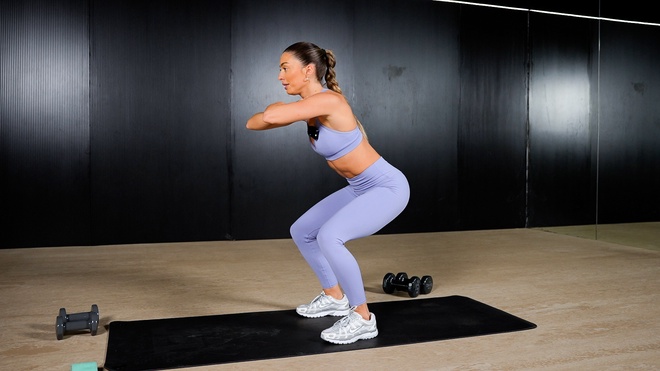
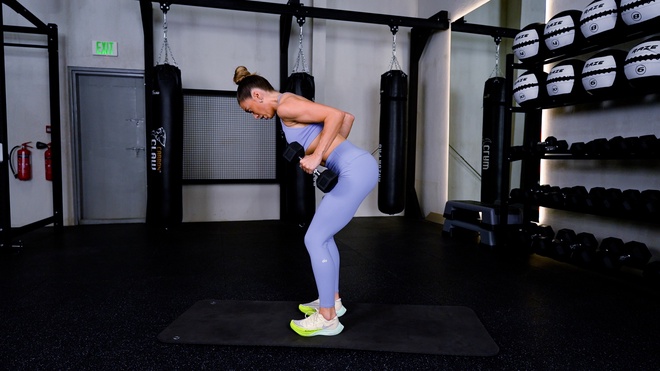
Join women building strength and bone density with certified trainers
Frequently Asked Questions
Related Exercises
Bent Over Row
Complements the gorilla row by targeting related muscle groups and movement patterns.
Reverse Fly
Complements the gorilla row by targeting related muscle groups and movement patterns.
Knees to Chest
Complements the gorilla row by targeting related muscle groups and movement patterns.
Knee Hug
Complements the gorilla row by targeting related muscle groups and movement patterns.
This exercise helps with
Get gorilla rows in a guided workout
Access 2 workouts featuring this exercise, plus personalized plans from Dr. Wellls.
Join women building strength and bone density with certified trainers
Your membership funds independent women's health research