Goblet Squat: How-to, Benefits & Variations
The goblet squat targets quads, glutes, and core. Hold a dumbbell at chest height, squat to parallel, drive through heels. Builds bone density and fights muscle loss during perimenopause.
Goblet Squat: How-to, Benefits & Variations
I teach the goblet squat before any other loaded squat. Every single time. Not because it's easy. Because it's honest. Hold a dumbbell at your chest and suddenly your body has no choice but to organize itself: chest up, core braced, hips tracking over ankles. You can't fake goblet squat form the way you can with a barbell behind your neck.
This exercise hits a sweet spot most moves miss. It loads the quads and glutes without crushing your spine. It teaches your pelvic floor to co-contract under load. And the bone-density payoff? A 2022 network meta-analysis of 919 women found moderate-intensity resistance training was the single best protocol for lumbar spine mineral density. The goblet squat is exactly that kind of load.
14-Day Glow Up Challenge: Day 9
Sophie Jones
How to Do Goblet Squat
Stand with feet slightly wider than hip-width. Turn your toes out about 15-30 degrees. Grab a dumbbell vertically and tuck your hands underneath the head of it, pulling it snug against your chest.
Pinch your shoulder blades back and down. Sophie Jones cues this as imagining a string pulling through the top of your head, keeping the spine long. This matters more than the weight you pick.
Inhale, brace your core like someone's about to poke your stomach, then push your hips back and down. Think about sitting into a chair that's slightly behind you.
Sink until your elbows brush the insides of your knees. Your thighs should be at least parallel to the floor. Keep your chest tall. If your upper body folds forward, the weight is too heavy.
Drive through your heels (not the balls of your feet) and squeeze your glutes hard as you stand. Exhale on the way up. Danielle Harrison cues: elbows go towards your inner knee on the way down, glutes squeeze on the way up.
Avoid locking your knees at the top. Keep a slight bend to maintain tension on the muscles through the entire rep.
Muscles Worked
Primary
Quadriceps
Drive knee extension during the upward phase. A squat biomechanics review found depth and stance width directly influence quad recruitment, with goblet squat depth typically producing high vastus medialis activation.
Glutes (gluteus maximus & medius)
Power hip extension and control pelvic stability. The wider stance of goblet squats increases gluteus medius demand compared to narrow-stance variations.
Core (transverse abdominis, rectus abdominis)
Stabilize the spine under front-loaded weight. The goblet position forces anterior core engagement that a back squat doesn't.
Secondary
Adductors (inner thighs)
Assist with hip stability at depth, especially with a wider stance.
Erector spinae
Maintain spinal extension throughout the movement. The front load actually makes this easier than a barbell back squat.
Hip flexors
Control the descent and stabilize the pelvis at the bottom position.
Why this matters in perimenopause
Women lose 30-40% of lean muscle mass relative to total body weight as they age, and the process starts earlier than most people realize. Estrogen loss accelerates it. A meta-analysis of 27 RCTs (1,989 participants) showed resistance training improved lean body mass, handgrip strength, and knee extension strength in menopausal women. Three sessions per week, 20-90 minutes, for at least 6 weeks. The goblet squat hits the largest muscle groups in your body, which is exactly where sarcopenia bites hardest.
Coach's Tips
"Imagine something's being pulled through the top of my head, keeping the spine nice and straight." That's Sophie Jones, word for word. This cue fixes 80% of goblet squat form issues. If your spine is long, your chest stays up, your hips track properly, and the weight doesn't pull you forward.
Sophie Jones
"Hold that dumbbell like a goblet... feet are nice and wide, turn them out slightly." Danielle Harrison's setup cue. The goblet grip means tucking your hands under the dumbbell head, not gripping the handle. This keeps the weight centered at your sternum instead of pulling your wrists down.
Danielle Harrison
"Pinch those shoulder blades back." Another Sophie cue. When you retract your scapulae, you create a shelf for the dumbbell to rest against. Skip this and the weight drifts forward, your thoracic spine rounds, and your lower back takes over. Not what we want.
Sophie Jones
"Are the hips coming down at the same time?" Sophie checks for hip symmetry mid-set. One hip dropping lower than the other is shockingly common, especially if you've carried babies on one side for years. Watch yourself in a mirror for the first few sets.
Sophie Jones
Exhale as you drive upward. This isn't just about oxygen. Exhaling on the push engages your deep core and supports your pelvic floor under load. Hold your breath on the way down if the weight is heavy, but never on the way up.
Sophie Jones
"I'm gonna leave mine on for the last set, just for an extra little bit of resistance." Sophie's talking about a resistance band above the knees. It changes the exercise completely. Your gluteus medius has to fight abduction the entire time, which is exactly what stabilizes your knees and pelvis.
Sophie Jones
If your heels lift off the floor at the bottom, your ankles are the problem, not your legs. Put a thin plate or folded towel under your heels until ankle mobility improves. Forcing depth with lifted heels shifts load to your knees and lower back.
Why This Matters for You
Here's what nobody tells you about squatting during perimenopause. The same hormonal shift that causes hot flashes and brain fog also strips muscle from your legs and density from your spine. A cross-sectional study of female athletes versus sedentary women (ages 18-69) found no difference in body fat or lean mass between youngest and oldest athletes. The older exercisers had metabolic rates closer to the young athletes than to sedentary women their own age. That's not genetics. That's training.
The goblet squat hits three perimenopause priorities at once: bone loading (lumbar spine and femoral neck), muscle preservation (quads and glutes are the first to go), and pelvic floor co-contraction (the exhale-on-exertion pattern teaches your deep core to fire under load). A dedicated Kegel program before starting resistance training reduced stress incontinence significantly more than resistance training alone. So if leaking is a concern, do the pelvic floor work first. Then squat.
Variations & Modifications
Bodyweight Goblet Squat
lowSame movement, no dumbbell. Clasp your hands at chest height. This is where everyone should start. Focus on depth and spine position before adding load. If you can't hit parallel with your chest tall and heels down, adding weight will only cement bad patterns.
Banded Goblet Squat
medium-highPlace a resistance band just above both knees. Now you're fighting two battles: the squat itself and the band trying to collapse your knees inward. This variation hammers the gluteus medius, the muscle that stabilizes your pelvis when you walk, run, or stand on one leg. Sophie programs this into her Peach Project workouts.
Tempo Goblet Squat
high3 seconds down, 1-second pause at the bottom, 1 second up. The slow descent strips away momentum and forces your muscles to control every inch of the movement. A heavier dumbbell or a slower tempo, that's the progression. Sophie cues: keep that tension on.
Goblet Squat to Calf Raise
mediumStandard goblet squat, but at the top you rise onto your toes for a 2-second calf raise before descending again. Adds a balance challenge and works the calves, which most squat variations ignore entirely.
Benefits
Teaches safe squat mechanics
The front-loaded position forces an upright torso. You literally cannot round your back and still hold the weight. This makes it the safest squat variation for women returning to strength training after years away.
Builds bone density where it matters most
A 2022 network meta-analysis of 19 RCTs (919 postmenopausal women) found moderate-intensity resistance training significantly improved lumbar spine and femoral neck bone mineral density. The goblet squat loads the exact skeletal sites where osteoporosis hits first.
Strengthens the pelvic floor under load
Contrary to the myth that squatting damages your pelvic floor, research shows that resistance training preceded by pelvic floor awareness actually reduces stress urinary incontinence. The goblet squat's bracing pattern teaches your core and pelvic floor to co-contract.
Fights sarcopenia
Lean muscle mass starts declining earlier than most people think. By perimenopause, the drop accelerates because estrogen potentiates growth hormone secretion, and that signal weakens. A 10-week resistance training study found POST-M women gained 73-79% lower body strength. The goblet squat targets the two largest muscle groups (quads and glutes), which is where sarcopenia does the most damage.
Minimal equipment, maximum return
One dumbbell. A small patch of floor. That's it. No rack, no spotter, no gym membership required. The goblet squat benefits stack up fast when the barrier to entry is this low.
Common Mistakes to Avoid
Heels lifting off the floor
This is an ankle mobility issue, not a strength issue. Place a thin plate or folded towel under your heels temporarily. Long-term, work on ankle dorsiflexion with wall stretches.
Chest collapsing forward at the bottom
The dumbbell is too heavy, or your thoracic spine is stiff. Drop the weight. Use Sophie's cue: imagine a string pulling through the top of your head. If the chest drops, everything downstream fails.
Knees caving inward
Weak gluteus medius. Danielle cues "elbows to inner knees" specifically to counter this. Adding a band above the knees during warm-up sets teaches your body to push out against collapse.
Not squatting deep enough
If you stop above parallel, you're leaving glute activation on the table. The glutes don't fully engage until the hip crease drops below the knee line. Sophie cues: make sure we're sitting nice and low into the squat.
Workouts Featuring This Exercise

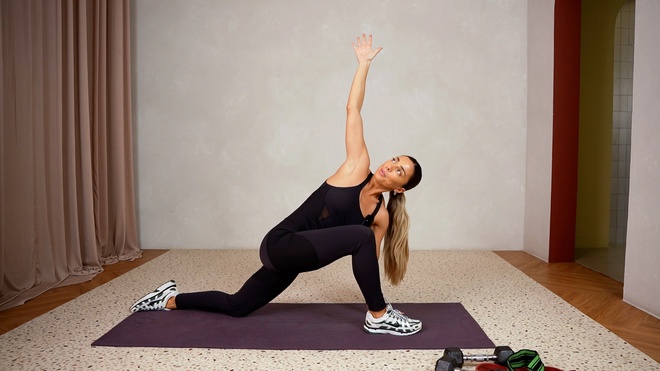
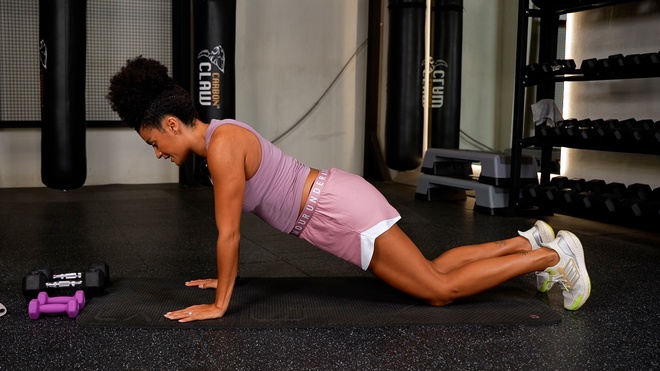
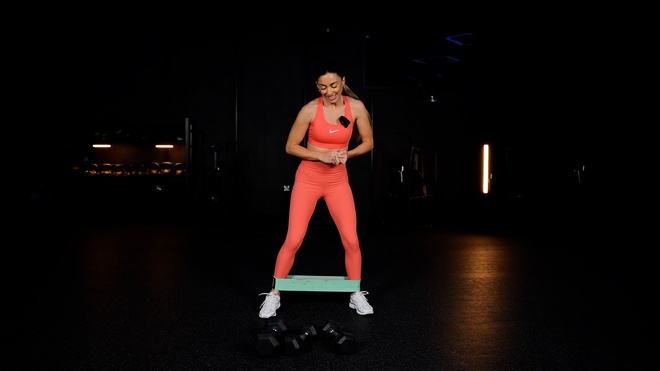
Join women building strength and bone density with certified trainers
Frequently Asked Questions
Related Exercises
Crunches
Pairs with goblet squats for a full lower body + core session.
Glute Bridge
Isolates the glutes that goblet squats build. Great warm-up or superset.
Bulgarian Split Squat
Progression from goblet squat for single-leg strength and balance.
Romanian Deadlift
Complements the quad-dominant goblet squat with posterior chain work.
Lateral Raises
Upper body pairing for a complete full-body dumbbell workout.
This exercise helps with
Get goblet squat in a guided workout
Access 4 workouts featuring this exercise, plus personalized plans from Dr. Wellls.
Join women building strength and bone density with certified trainers
Your membership funds independent women's health research