Overhead Squat: How-to, Benefits & Variations
Overhead squats expose and improve total-body mobility. Hold a bar or stick overhead, squat to parallel, keep arms straight. Reveals ankle, hip, and thoracic mobility limitations in one move.
Overhead Squat: How-to, Benefits & Variations
Hold a broomstick straight overhead. Now squat to parallel. If the stick drifts forward, your thoracic spine is tight. If your heels lift, your ankles are locked. If your knees cave, your hips are weak. The overhead squat is less an exercise and more a full-body audit. It reveals every mobility gap you have been working around, and it rewards you when you fix them.
Hiit Blast 2
Natalia Gunnlaugs
How to Do Overhead Squats
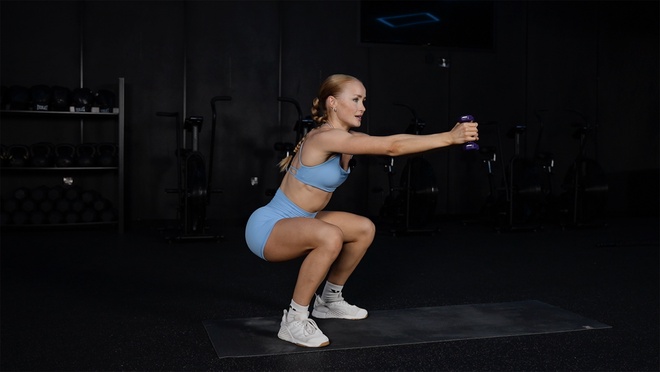
Set up in the starting position for overhead squat. Feet hip-width apart (or as the exercise requires). Engage your core before initiating any movement.
Begin the movement with control. Natalia Gunnlaugs cues: "Keep the dumbbells overhead. This should activate the core."
Complete the full range of motion. "Trying to keep those arms as high as possible."
Return to the starting position with control. Don't rush the eccentric (lowering) phase.
Natalia Gunnlaugs adds: "Squeeze those glutes on the way up."
Muscles Worked
Primary
Secondary
Why this matters in perimenopause
resistance training preserves muscle mass and bone density during perimenopause. The overhead squat directly supports this by targeting key muscle groups.
Coach's Tips
"Keep the dumbbells overhead. This should activate the core." - Natalia Gunnlaugs
Natalia Gunnlaugs
"Trying to keep those arms as high as possible." - Natalia Gunnlaugs
Natalia Gunnlaugs
"Squeeze those glutes on the way up." - Natalia Gunnlaugs
Natalia Gunnlaugs
"We're never holding our breath throughout any movement." - Natalia Gunnlaugs
Natalia Gunnlaugs
Why This Matters for You
resistance training preserves muscle mass and bone density during perimenopause. The overhead squat loads bones and builds lean muscle during a time when the body needs it most. Research supports resistance training for women during the menopausal transition.
Variations & Modifications
Benefits
Builds strength
The overhead squat targets a key muscle group, making it efficient for building functional strength that transfers to daily activities.
Supports your body through hormonal changes
resistance training preserves muscle mass and bone density during perimenopause. The overhead squat directly addresses this.
Requires minimal equipment
No equipment needed. You can do the overhead squat at home, in a hotel room, or between meetings.
Common Mistakes to Avoid
Using momentum instead of muscle
Slow down. If you can't complete the overhead squat with a two-second pause at the hardest point, the weight is too heavy or you're moving too fast.
Holding your breath
Exhale during the effort phase, inhale during the return. Holding your breath spikes blood pressure and reduces core stability.
Workouts Featuring This Exercise
Join women building strength and confidence with certified trainers
Frequently Asked Questions
This exercise helps with
Get overhead squats in a guided workout
Access 2 workouts featuring this exercise, plus personalized plans from Dr. Wellls.
Join women building strength and confidence with certified trainers
Your membership funds independent women's health research