Savasana: How-to, Benefits & Variations
Savasana is active relaxation that integrates your practice. Lie flat, arms open, eyes closed, breathe naturally. Five minutes resets your nervous system. Never skip the final pose.
Savasana: How-to, Benefits & Variations
The hardest yoga pose is the one where you do nothing. Lie on your back, arms at your sides, palms up, eyes closed. No movement. No agenda. Just breathing. Savasana looks like napping, but it is active relaxation. Your nervous system uses this time to integrate everything you just practiced. Skipping it is like leaving a restaurant before dessert. Sure, you ate, but you missed the best part.
Yoga For Back Relief 5
Petra Kapiciakova
How to Do Savasana
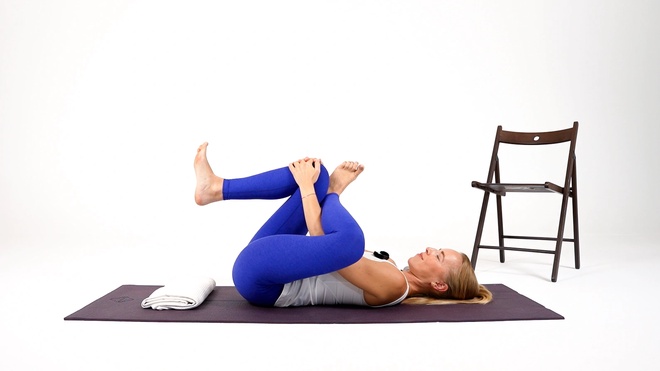
Start in the initial position for savasana. Breathe steadily and find your alignment before moving deeper.
Move into the stretch slowly, following your breath. Never force past discomfort.
Hold the position for 20-30 seconds, breathing deeply into the stretch.
Release slowly and repeat on the other side if applicable.
Petra Kapiciakova adds: "Just scanning your body from the crown of your head... Relaxing your entire body."
Muscles Worked
Primary
Full Body
Primary mover during the savasana.
Secondary
Why this matters in perimenopause
yoga reduces cortisol and anxiety symptoms that spike during perimenopause. The savasana directly supports this by targeting Full Body.
Coach's Tips
"Palms facing up if you want to receive the energy, or palms facing down if you want to ground yourself." - Petra Kapiciakova
Petra Kapiciakova
"Release the legs. Release the arms next to your body. This is your savasana time." - Nuni Soriano
Nuni Soriano
"Just scanning your body from the crown of your head... Relaxing your entire body." - Petra Kapiciakova
Petra Kapiciakova
"You can bring your pillow under your knees or just extend your legs" - Petra Kapiciakova
Petra Kapiciakova
"Connecting with your breath here." - Nuni Soriano
Nuni Soriano
Why This Matters for You
yoga reduces cortisol and anxiety symptoms that spike during perimenopause. The savasana supports overall functional fitness during a time when the body needs it most. Research supports this type of exercise for women during the menopausal transition.
Variations & Modifications
Savasana with Body Scan
lowSavasana & Full Body Stretch
lowSavasana with Visualization
lowSavasana with Diaphragmatic Breathing
lowBenefits
Strengthens and conditions full body
The savasana builds functional capacity that supports everything from carrying groceries to hiking.
Supports your body through hormonal changes
yoga reduces cortisol and anxiety symptoms that spike during perimenopause. The savasana directly addresses this.
Requires minimal equipment
No equipment needed. You can do the savasana at home, in a hotel room, or between meetings.
Common Mistakes to Avoid
Forcing the stretch past pain
Discomfort is acceptable. Sharp or stabbing pain is not. Back off until you feel a pull, not a stab.
Holding your breath during the hold
Breathe steadily and deeply. The stretch actually deepens when you exhale and relax into it.
Workouts Featuring This Exercise
Join women building strength and confidence with certified trainers
Frequently Asked Questions
Related Exercises
Get savasana in a guided workout
Access 5 workouts featuring this exercise, plus personalized plans from Dr. Wellls.
Join women building strength and confidence with certified trainers
Your membership funds independent women's health research