Split Squat Jump: How-to, Benefits & Variations
Split squat jumps build explosive leg power. Start in a lunge, jump and switch legs mid-air, land softly. Maintains fast-twitch muscle fibers.
Split Squat Jump: How-to, Benefits & Variations
Try this. Do five reps with perfect form. Notice which muscles fatigue first. That is your body telling you exactly what the split squat jump is designed to fix.
This exercise targets the gaps that daily life and desk work create. Danielle Harrison uses it in multiple Wellls workouts because it addresses weakness patterns that compound over time.
Pilates: Strong Pilates 6
Danielle Harrison
How to Do Split Squat Jumps
Start in a split stance with your right foot forward and left foot back. Both knees bent to about 90 degrees.
Explode upward, driving through both feet to leave the ground. Swing your arms for momentum.
While airborne, switch your legs so you land with the left foot forward and right foot back.
Land softly with bent knees, immediately sinking into the split squat position. Absorb the impact through your muscles.
Continue alternating legs with each jump. If the impact is too much, step through the switch instead of jumping.
Muscles Worked
Primary
Quadriceps
Generate explosive force to leave the ground from the split stance.
Glutes
Power hip extension during the jump and stabilize the landing.
Hamstrings
Assist the jump and decelerate the body during landing.
Secondary
Calves
Provide the final push-off force and absorb landing impact.
Core
Keeps the trunk upright during the explosive movement and mid-air switch.
Why this matters in perimenopause
Women lose lean muscle mass from their 30s, accelerating during perimenopause as estrogen drops. Regular resistance training counteracts this by stimulating muscle protein synthesis and bone loading.
Coach's Tips
"Pulse, pulse, jump for me, and I've also added weights." Use this modification when the standard version is too challenging.
Danielle Harrison
Focus on control through the entire range of motion. Danielle Harrison cues every rep in Wellls workouts because form determines whether an exercise builds your body or breaks it down.
Danielle Harrison
If anything feels sharp rather than challenging, stop immediately. Drop the weight and check your form. Discomfort is fine. Pain is a message.
Exhale on exertion, inhale on return. This engages your deep core and supports your pelvic floor under load.
Why This Matters for You
The split squat jump directly addresses three perimenopause priorities: muscle preservation, bone loading, and metabolic health. Estrogen decline after 40 accelerates sarcopenia, the age-related loss of lean muscle that changes body composition, weakens joints, and slows metabolism. Resistance training is the strongest evidence-backed countermeasure.
A 2023 network meta-analysis of 19 RCTs involving 919 postmenopausal women found moderate-intensity resistance training 3 days per week significantly improved lumbar spine and femoral neck bone mineral density. The split squat jump loads the exact skeletal sites and muscle groups that perimenopause targets first.
Variations & Modifications
Split Squat Pulse with Jump
mediumVariation of the split squat jump that modifies the standard movement pattern for different training emphasis.
Split Squat Jumps (Right Leg Base)
mediumVariation of the split squat jump that modifies the standard movement pattern for different training emphasis.
Split Squat Jumps (Left Leg Base)
mediumVariation of the split squat jump that modifies the standard movement pattern for different training emphasis.
Benefits
Builds muscle where it matters most
The split squat jump targets muscles that daily life either neglects or weakens. Desk work, driving, and sitting all create weakness patterns this exercise reverses.
Strengthens bones at critical sites
Resistance training is the most effective non-pharmaceutical intervention for bone density. Regular strength training improves BMD at the lumbar spine and femoral neck.
Fights perimenopause muscle loss
Women lose 3-5% of lean mass per decade after 30. Resistance exercises directly counteract this by stimulating muscle protein synthesis.
No gym required
This exercise needs minimal or no equipment. The barrier to entry is low, which means consistency stays high.
Common Mistakes to Avoid
Landing with stiff legs
Every landing must be soft. Absorb impact by bending your knees immediately. Stiff landings send shock through your joints.
Not switching legs fully mid-air
If you cannot complete the switch, reduce the height of the jump. A small, controlled switch beats a big sloppy one.
Upper body rocking forward
Keep your eyes on a fixed point at eye level. This stabilizes your trunk during the explosive movement.
Too much forward lean on landing
Land with your weight centered between both feet. If you tip forward, your front step is too short.
Workouts Featuring This Exercise
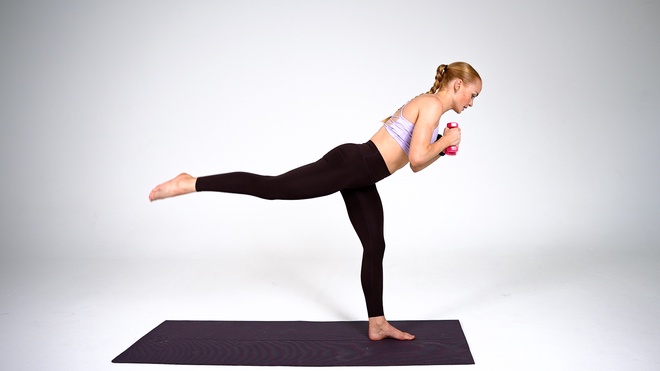
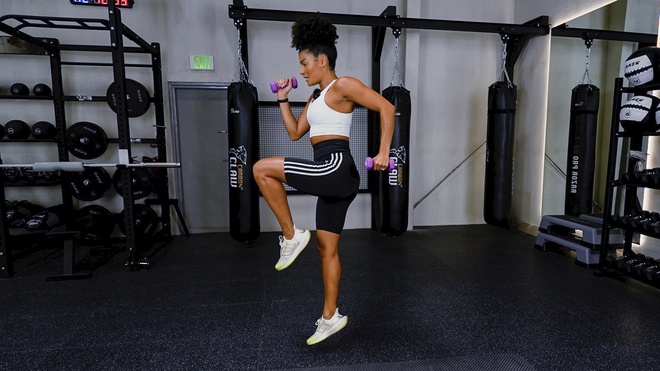
Join women building strength and bone density with certified trainers
Frequently Asked Questions
Related Exercises
Crunches
Complements the split squat jump by targeting related muscle groups and movement patterns.
Lateral Raise
Complements the split squat jump by targeting related muscle groups and movement patterns.
Romanian Deadlift
Complements the split squat jump by targeting related muscle groups and movement patterns.
Bulgarian Split Squat
Complements the split squat jump by targeting related muscle groups and movement patterns.
Glute Bridge
Complements the split squat jump by targeting related muscle groups and movement patterns.
This exercise helps with
Get split squat jumps in a guided workout
Access 2 workouts featuring this exercise, plus personalized plans from Dr. Wellls.
Join women building strength and bone density with certified trainers
Your membership funds independent women's health research