Public safety anxiety affects over 53% of US women who don't feel safe walking alone at night. In midlife, declining progesterone reduces GABA-A receptor modulation, amplifying threat responses. Evidence-based approaches include vagal nerve techniques, vigorous exercise (comparable to SSRIs per 49 RCTs), and hormonal evaluation.
You used to just go places. Now you scan every room for exits.
53% of US women report not feeling safe walking alone at night (Gallup 2023). 36% of Americans avoid public places due to mass shooting fears.
“I live in Texas. There's absolutely no fucking way I'm engaging with someone who's going off their tits and is aggravated to the max.”


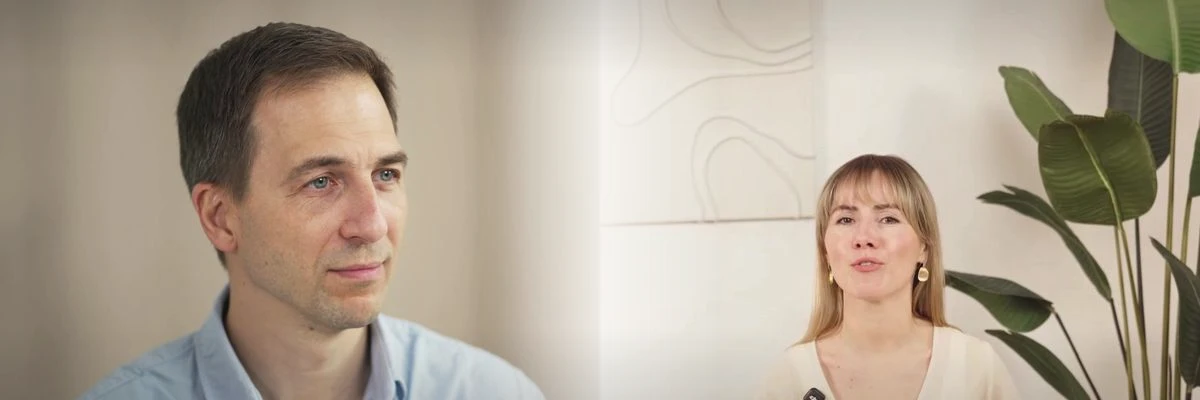
Dr. A. Rybakova, Dr. A. Rybakov · Lifestyle Medicine
For informational purposes only. Not a substitute for professional medical advice.
You used to walk into a grocery store thinking about what you needed for dinner. Now you walk in thinking about where the exits are. You do it automatically. You scan parking lots. You sit with your back to the wall at restaurants. You track the man behind you on the sidewalk until he turns a different direction. And the worst part isn't the fear itself. The worst part is that nobody taught you to do this. Your body just started doing it, sometime in the last few years, and you never gave it permission. You're not paranoid. But try explaining that at 2 AM when you're lying awake because you heard a car door slam.
Key takeaways
- Public safety anxiety affects over 53% of US women who don't feel safe walking alone at night.
- In midlife, declining progesterone reduces GABA-A receptor modulation, amplifying threat responses.
- Evidence-based approaches include vagal nerve techniques, vigorous exercise (comparable to SSRIs per 49 RCTs), and hormonal evaluation.
- Amygdala threat sensitivity bias from chronic threat exposure
The Science Behind Public Safety Anxiety
I've spent years reading the research on anxiety about going out in public, and I need to tell you something the clinical literature doesn't say clearly enough: your fear of going out is not a broken threat detection system. For many women, particularly those in midlife, it's a functioning threat detection system operating in an environment that has genuinely become more threatening, while simultaneously losing its biochemical capacity to modulate the response. That's a mouthful. Let me break it down. Your amygdala processes threat signals in roughly 12 milliseconds, before your conscious mind forms a thought. Dr. Joseph LeDoux at NYU demonstrated this 'low road' pathway. It's why you flinch before you know why. The system was designed to err on the side of caution. But it was designed for predators and snakes, not for a world where a woman processes an average of 11 news stories about violence per day, where the FBI recorded 61 active shooter incidents in 2023 alone, where the UN documents that women in every country experience sexual harassment in public spaces as routine.
I am going to lay out the neuroscience of why this happens, the epidemiology of how common it is, and the evidence for what helps. My approach is not to tell you your fear is irrational. Much of it is not. My approach is to help you distinguish between the rational threat assessment and the hormonal amplification, so you can act on the first and treat the second. Anxiety about going out in public during perimenopause sits at an intersection that nobody else is addressing, and I find that absence unacceptable.
The amygdala rewiring nobody warned you about
Dr. Elizabeth Phelps at Harvard demonstrated that repeated exposure to threat-related stimuli literally rewires the amygdala to fire more readily, with less provocation. The clinical term is threat sensitivity bias. Your brain isn't malfunctioning. It's adapting to a threatening environment the only way evolution equipped it to adapt. And I find it profoundly unfair that the medical system then tells you the problem is your brain. Now layer the hormonal piece: progesterone drops in the mid-thirties, pulling allopregnanolone, a GABA-A receptor modulator ten times more potent than benzodiazepines, right out from under your nervous system's feet. Dr. Torbjorn Backstrom at Umea University has studied this for thirty years. The amygdala fires. There's less to pull it back down. You're not imagining that it got worse after 35. The neurochemistry confirms it.
What this looks like in your daily life is specific. The parking garage that felt fine at 35 now triggers a racing heart at 43. The evening walk you used to enjoy becomes something you calculate the risk of. The grocery store at night feels different. Not because the grocery store changed. Because your amygdala's threshold for triggering a fear response lowered when your neurosteroid levels dropped.
I find it important to name that this is not agoraphobia, though it can be misdiagnosed as such. Agoraphobia is a fear of situations where escape might be difficult. Anxiety about going out in public during perimenopause is a hormonally amplified threat response to genuinely unsafe conditions. The distinction matters because the treatment differs.
What Gallup found that nobody wants to talk about
Fifty-three percent of women don't feel safe walking alone at night. That's from Gallup's 2023 Crime and Safety poll, and it represents a thirty-year high. Let me reframe that: the majority of women in the United States do not feel safe performing one of the most basic human activities. Dr. Jiepin Cao's 2024 study found that feeling unsafe in public spaces was associated with 2.61 times the odds of clinical anxiety. Women who avoided public spaces, who stopped leaving home, had even higher rates. The avoidance meant to protect them was compounding the damage. This is the cruel paradox of public safety anxiety in women. Retreat causes its own harm. Social isolation drives depression, accelerates cognitive decline, increases cardiovascular risk. But staying exposed in spaces that feel unsafe floods your HPA axis with cortisol. There's no clean answer. I wish there were.
The behavioral implications are enormous. My reading of the public health literature is that we consistently underestimate the health costs of women's safety anxiety. Reduced physical activity. Increased social isolation. Constricted life radius. Higher driving rates to avoid walking. More screen time to replace in-person socializing. The fear of going out has downstream effects that touch every dimension of health, and yet it is rarely included in discussions of women's health outcomes during the menopausal transition.
When I talk to women about anxiety about going out in public, I hear the same phrase repeatedly: I used to be brave. You were not braver then. Your neurochemistry was different then. The shift is not in your character. It is in your GABA receptor modulation.
Key mechanisms
Deep scientific content for Public safety anxiety is coming in Wave 3.
Our team is reviewing research papers and clinical guidelines.


Talk to Dr. Wellls — free consultation
4 free messages — no account required
Dr. Wellls AI
Quick start — tap or speak:
Powered by Lifestyle Medicine evidence. Not a substitute for medical advice.
You're Not Alone
women are talking about public safety anxiety right now
Thousands of women have been through the same thing. Here's what they say.
“My first instinct is to protect myself, so I would have left the Post Office immediately. I do not voluntarily engage with angry people. Reading about so many incidents of public violence and unhinged people, I would have assumed right away that the situation...”
“I live in Texas. There's absolutely no way I'm engaging with someone who's going off their tits and is aggravated to the max. I'm getting the hell out of there and calling the cops from my car. I don't want to die being a 'hero'.”
“As a woman, sorry, I'm not intervening in that situation. It's too dangerous. It's just a fact. The men around can do it. End of.”
+ 2 more stories from real women
Understanding Your Public Safety Anxiety
A brief assessment to understand how safety fears affect your daily life, whether hormonal changes are amplifying your threat response, and what approaches match your pattern.
3,867 women got their profile this month
Free · 5 min · 100% private
This is not a clinical assessment. For medical concerns, consult a healthcare provider.
Take a moment for yourself
These evidence-based techniques can help manage public safety anxiety symptoms right now.
Curated Exercise Sets
4 personalized routines with 20 exercises from professional trainers

public-safety-anxiety — Morning Activation
Jessica Casalegno
Professional Trainer
The many faces of public safety anxiety
4 distinct patterns we've identified from real women's experiences
You're not imagining it. Your nervous system actually recalibrated. The exits, the man too close behind you in the cereal aisle, the car that slowed down when you were on your evening walk. These aren't paranoid thoughts. They're your amygdala running a threat assessment that used to operate in the background and now runs in the foreground, at full volume, all the time.
From our data
Here is a number that should make you angry: a Gallup poll in 2023 found that personal safety fears in the United States hit a three-decade high. Fifty-three percent of women reported not feeling safe walking alone at night within a mile of their home. Fifty-three percent. That's not a mental health epidemic. That's a rational response to an irrational environment. And yet the medical system files it under 'anxiety disorder' and reaches for a prescription.
Connected problems
What women with public safety anxiety also experience
Your personalized protocol
A lifestyle medicine approach to public safety anxiety, built on 6 evidence-based pillars
Hormonal Assessment
If you're over 35 and this anxiety is new, request progesterone, estradiol, and cortisol testing from your GP. A menopause-literate clinician is ideal. Micronized progesterone at bedtime may restore some GABA-A support.
Structured News Diet
Check news once daily, text format only (no video autoplay). No news after 7 PM. This directly reduces amygdala sensitization from chronic threat exposure.
Progressive Exposure Protocol
With a therapist or self-directed: reintroduce one avoided place per week, starting with lowest perc...
Exercise as Anxiolytic
Build to 150 minutes/week of vigorous exercise. Prioritize outdoor movement where possible. This has...
Community Safety Network
Walk with a neighbor. Join a women's running group. Build real safety through real connections, not ...
2,847 women explored their anxiety plan this month
Start your protocolJoin 95+ women discussing public safety anxiety
Real experiences shared across Reddit, TikTok, and health forums
My first instinct is to protect myself, so I would have left the Post Office immediately. I do not voluntarily engage with angry people. Reading about so many incidents of public violence and...
You’re not wrong for saying something but it is always a risk getting involved. I live in New York City and this is a calculus many of us have to make not infrequently. People think NYers are...
I live in Texas. There's absolutely no fucking way I'm engaging with someone who's going off their tits and is aggravated to the max. I'm getting the hell out of there and calling the cops from my...
Reading others' stories is the first step. Join to share yours.
Community
A safe space for women navigating public safety anxiety
Frequently asked questions
Common questions about Public safety anxiety
How we research and fact-check
Every article on Wellls is researched using peer-reviewed medical literature, clinical guidelines, and real patient experiences from 8 online discussions.
Sources: We reference 49 PubMed-indexed studies, ACOG/NAMS clinical guidelines, and validated screening tools.
Review: Content is written by our editorial team, enriched from a medical knowledge base of 15,000+ sources. Evidence standards and clinical methodology guided by our Medical Advisory Board: Dr. Alexandra Rybakova and Dr. Alexander Rybakov, Lifestyle Medicine Physicians with 35+ years combined clinical practice.
This content is for informational purposes only and does not constitute medical advice. Our editorial standards · Medical advisory board
References
49 sources reviewed for this public safety anxiety guide
- 1.
- 2.
- 3.
- 4.
- 5.
- 6.
- 7.
- 8.
- 9.
- 10.
History of updates
Current version (March 11, 2026) — Content reviewed and updated based on latest research
First published (March 9, 2026)
Explore related problems
Women who experience public safety anxiety often also deal with these
Your personalized plan is ready
You've spent years scanning rooms for exits. You've stopped going places you used to love. The fear isn't imaginary, but the isolation is making everything worse. Your personalized plan addresses both the hormonal and the environmental, because you deserve a world you can walk through without holding your breath.
2,847 women explored their anxiety plan this month
Free assessment · Takes 2 minutes · No account required
Medical disclaimer: This content is for informational purposes only and does not constitute medical advice, diagnosis, or treatment. Always consult a qualified healthcare provider for personal medical decisions. Content is based on peer-reviewed research and updated regularly. Learn about our editorial standards.