Sound sensitivity (misophonia and hyperacusis) commonly worsens in perimenopause because estrogen modulates GABA, serotonin, and glutamate in auditory pathways. Estrogen receptors exist throughout the cochlea and auditory cortex. Evidence-based treatments include CBT for misophonia, sound therapy, and hormonal evaluation.
You used to tolerate noise. Now every sound feels like an assault.
Misophonia affects 5-13% of adults. Hyperacusis prevalence estimated at 8-15%. Both may spike during perimenopause due to estrogen-mediated auditory processing changes.
“Yeah, you have misophonia. We've dealt with this in our house with brown noise and noise canceling headphones.”


Dr. A. Rybakova, Dr. A. Rybakov · Lifestyle Medicine
For informational purposes only. Not a substitute for professional medical advice.
Your husband is eating cereal. Just eating cereal. The spoon against the bowl. The crunch. The milk. You can hear all of it from two rooms away and every sound is arriving like a small electrical shock to the inside of your skull. You want to scream. You want to leave the house. You want to explain that this isn't about him, it's about something that changed in your nervous system without your consent, but you don't have the language for it yet. So you put in earbuds and breathe through your teeth and wonder when, exactly, you became someone who couldn't share a kitchen with the person she loves.
Key takeaways
- Sound sensitivity (misophonia and hyperacusis) commonly worsens in perimenopause because estrogen modulates GABA, serotonin, and glutamate in auditory pathways.
- Estrogen receptors exist throughout the cochlea and auditory cortex.
- Evidence-based treatments include CBT for misophonia, sound therapy, and hormonal evaluation.
- Estrogen modulation of GABA, serotonin, and glutamate in auditory processing
The Science Behind Sound Sensitivity
I want to start with the thing nobody tells you when you search 'sound sensitivity': estrogen is an auditory neuromodulator. Not metaphorically. Literally. Dr. Raphael Pinaud's lab at the University of Rochester showed that estrogen controls how sound-processing neurons fire, on a millisecond timescale. When estrogen levels are stable, your brain smoothly filters incoming sound, amplifying what matters and dampening what doesn't. When estrogen fluctuates wildly in perimenopause, this filtering destabilizes. The dishwasher that was background is now foreground. Your partner's breathing is suddenly unbearable. Your child's laughter, which should be joy, arrives as pain. This isn't hearing loss. It's the opposite. Your auditory gain control has lost its regulator.
If you found this page because you recently started needing silence in a way that feels new and alarming, because sounds that never bothered you before now make you want to crawl out of your skin, I want to tell you something important. Sound sensitivity in midlife women has a hormonal mechanism that most ENTs and audiologists do not know about. You are not becoming a difficult person. Your nervous system is losing a neurochemical buffer that was keeping sensory input at a tolerable level. The buffer has a name. It is called allopregnanolone, and perimenopause is taking it away.
My goal here is to explain what is happening in your brain, connect it to the hormonal research, and give you evidence-based strategies that go beyond buying better earplugs. That is the least you deserve.
The three-neurotransmitter crash behind the noise
Estrogen modulates GABA (the 'turn it down' signal), serotonin (the 'how does this sound feel?' signal), and glutamate (the 'turn it up' signal) simultaneously. During stable hormonal states, these three systems keep auditory processing calibrated. Perimenopause destabilizes all three at once. Dr. Jerilynn Prior at UBC documented the wild estrogen oscillations of perimenopause and described them as 'the storm before the calm.' Your auditory system, tuned to decades of stable signaling, is getting contradictory commands. GABA inhibition weakens. Glutamate excitation increases. Sounds your brain reliably filed as 'ignore' now arrive with the same urgency as 'danger.' And serotonin disruption means those sounds don't just get louder. They feel wrong. Threatening. Enraging. I find it unconscionable that women are told this is a stress problem when the neurochemistry is this specific.
I want to translate that into what your Tuesday evening feels like. You are cooking dinner. The exhaust fan is on. The television is playing from the living room. Your child asks you a question. The dog barks. None of these sounds are loud by any objective measure. But your brain is processing all of them at maximum volume because the inhibitory system that normally filters background noise has lost its chemical support.
Sound sensitivity in perimenopause is not about the noise being louder. It is about your brain's ability to suppress irrelevant auditory input being diminished. The noise is the same. Your threshold dropped. And it dropped because of specific, measurable neurochemical changes that nobody warned you about.
What the fMRI scans actually show
Dr. Sukhbinder Kumar at Newcastle used functional MRI to scan people with misophonia during trigger sound exposure. The anterior insular cortex, a brain region connecting auditory processing to emotional and autonomic response, showed dramatically elevated activation. The insular cortex is rich in estrogen receptors. This matters. When estrogen fluctuates in perimenopause, the connection between 'I hear my partner chewing' and 'I feel murderous rage' doesn't just strengthen. It becomes a direct neural highway bypassing rational evaluation entirely. The sound goes straight to fight-or-flight. Your prefrontal cortex, which would normally say 'that's just cereal,' gets overridden. In 2024, Kumar published an updated 'action perception' model suggesting misophonia involves hyper-mirroring of observed actions. The sound of chewing activates your own chewing motor cortex. Your brain confuses hearing it with doing it. And that confusion triggers the disgust response.
I find the fMRI evidence compelling because it shows that sound sensitivity is not subjective exaggeration. It is objective, measurable, increased neural activity in response to trigger sounds. The women who say certain sounds cause them physical pain are not being dramatic. Their anterior insular cortex is genuinely activating in patterns consistent with a pain-like response. The brain is treating sound as a threat.
This distinction matters clinically. If sound sensitivity is dismissed as irritability, the treatment is therapy for irritability. If it is recognized as a neurological processing change with hormonal underpinnings, the treatment addresses the actual mechanism. And that evidence should inform clinical practice far more than it currently does.
Key mechanisms
Deep scientific content for Sound sensitivity is coming in Wave 3.
Our team is reviewing research papers and clinical guidelines.



Talk to Dr. Wellls — free consultation
4 free messages — no account required
Dr. Wellls AI
Quick start — tap or speak:
Powered by Lifestyle Medicine evidence. Not a substitute for medical advice.
You're Not Alone
women are talking about sound sensitivity right now
Thousands of women have been through the same thing. Here's what they say.
“I was just wondering the other day if my agitation to sounds is a menopause thing. My boyfriend has this weird morning habit of having TV news on in the bedroom, radio morning show on in the bathroom, some sort of news radio on in his office, and a whole...”
“Oh, yesssss. Google around about this & ask your doc. It's often tied into menopause, estrogen fluctuations. Enjoy. (I'm sorry, it's terrible & I deal with it now, too.) Husband still needs to chill.”
“Just want to pitch in about the sound sensitivity - I definitely am and it gets more pronounced the older I get. I need SPACE and LOTS OF QUIET. Even my similarly quiet husband is too much often. I have to just realize this is me and do my best to get what I...”
+ 2 more stories from real women
Understanding Your Sound Sensitivity
A quick assessment of your noise and sensory changes to understand what is happening and what might help.
1,582 women got their profile this month
Free · 5 min · 100% private
This is not a clinical assessment. For medical concerns, consult a healthcare provider.
Take a moment for yourself
These evidence-based techniques can help manage sound sensitivity symptoms right now.
Curated Exercise Sets
4 personalized routines with 20 exercises from professional trainers

The many faces of sound sensitivity
4 distinct patterns we've identified from real women's experiences
Misophonia, the intense emotional reaction to specific sounds like chewing, breathing, or tapping, affects an estimated 5 to 13% of the general population. But nobody is tracking how many of those people are women over 40 whose symptoms appeared or dramatically worsened during perimenopause. I've talked to dozens of women in our community who describe the same trajectory: sounds they tolerated for decades suddenly became unbearable.
From our data
Dr. Sukhbinder Kumar at Newcastle University published landmark fMRI research showing that in people with misophonia, trigger sounds produce abnormally strong activation of the anterior insular cortex, a brain region connecting the auditory system to emotional and autonomic processing. The insular cortex is rich in estrogen receptors. When estrogen fluctuates in perimenopause, this region's regulatory function is directly affected. But you will find zero clinical trials studying misophonia in perimenopausal women. Zero. That gap tells you everything about how the medical system prioritizes women's neurological symptoms.
Connected problems
What women with sound sensitivity also experience
Your personalized protocol
A lifestyle medicine approach to sound sensitivity, built on 6 evidence-based pillars
Hormonal Assessment
Request estradiol, progesterone, and FSH testing from your GP, ideally through a menopause-literate clinician. Estrogen modulates every level of your auditory system. Hormonal intervention may improve sensory tolerance.
Audiological Evaluation
Get a comprehensive audiological assessment that includes loudness discomfort levels (LDL), not just standard hearing thresholds. If LDLs are low with normal hearing, that confirms hyperacusis and opens specific treatment pathways.
CBT for Misophonia
If specific trigger sounds are the primary issue, seek a therapist trained in misophonia-specific CB...
Sleep Protection
Sound sensitivity and sleep form a vicious cycle. Protect sleep aggressively: cool room, brown noise...
Sound Therapy Program
If hyperacusis is confirmed, a structured sound therapy program using broadband noise at comfortable...
1,247 women explored their sensory health plan this month
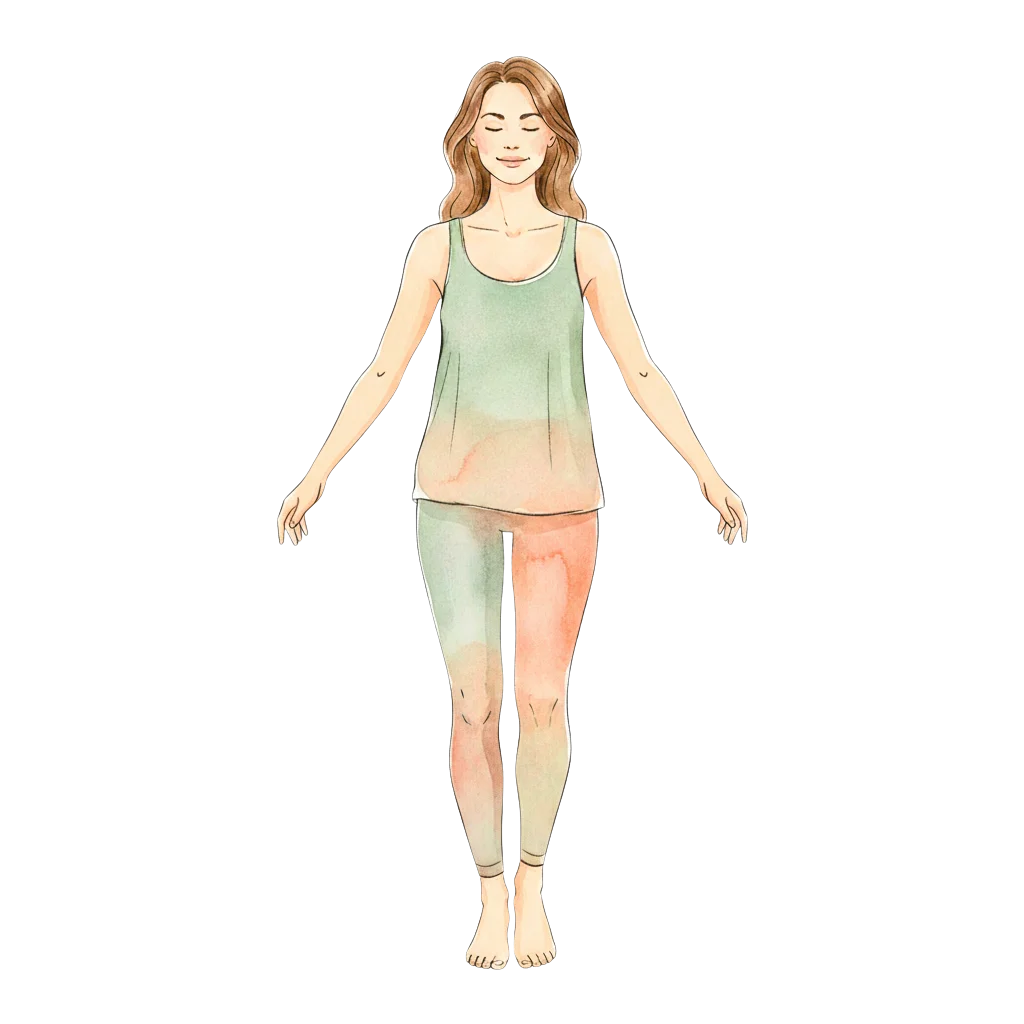
Start your protocolHow Sound sensitivity affects your body
Tap body zones to discover connected symptoms and related conditions.
Join 83+ women discussing sound sensitivity
Real experiences shared across Reddit, TikTok, and health forums
I lived with someone who practiced his saxophone every evening for roughly 6 hours until I thought I'd lost my mind. Even though I supported his music, it didn't help that I came off a full day of...
Misphonia. Its a real thing. I cannot STAND people that chew loudly or snore or play their phones loudly by me or have the clicks on their phones on. My ex bf would HUM and smack his mouth when he...
Yeah, you have misophonia. We've dealt with this in our house with brown noise and noise canceling headphones.
Reading others' stories is the first step. Join to share yours.
Community
A safe space for women navigating sound sensitivity
Frequently asked questions
Common questions about Sound sensitivity
How we research and fact-check
Every article on Wellls is researched using peer-reviewed medical literature, clinical guidelines, and real patient experiences from 8 online discussions.
Sources: We reference 47 PubMed-indexed studies, ACOG/NAMS clinical guidelines, and validated screening tools.
Review: Content is written by our editorial team, enriched from a medical knowledge base of 15,000+ sources. Evidence standards and clinical methodology guided by our Medical Advisory Board: Dr. Alexandra Rybakova and Dr. Alexander Rybakov, Lifestyle Medicine Physicians with 35+ years combined clinical practice.
This content is for informational purposes only and does not constitute medical advice. Our editorial standards · Medical advisory board
References
47 sources reviewed for this sound sensitivity guide
- 1.
- 2.
- 3.
- 4.
- 5.
- 6.
- 7.
- 8.
- 9.
- 10.
History of updates
Current version (March 11, 2026) — Content reviewed and updated based on latest research
First published (March 9, 2026)
Explore related problems
Women who experience sound sensitivity often also deal with these
Your personalized plan is ready
Your brain changed how it processes sound and nobody told you why. The earbuds and the closed door are managing the symptom. Your personalized plan addresses the neurology: the estrogen connection, the GABA deficit, the sensory cascade that makes everything louder. Because you deserve to share a kitchen with the people you love.
1,247 women explored their sensory health plan this month
Free assessment · Takes 2 minutes · No account required
Medical disclaimer: This content is for informational purposes only and does not constitute medical advice, diagnosis, or treatment. Always consult a qualified healthcare provider for personal medical decisions. Content is based on peer-reviewed research and updated regularly. Learn about our editorial standards.