Vulvar skin issues affect 40-90% of postmenopausal women. Lichen sclerosus (1 in 70) is misdiagnosed as yeast in 49% of cases.
Why Does the Skin Down There Burn, Itch, and Look Different Than It Used To?
Vulvar skin conditions affect 40-90% of postmenopausal women (GSM); lichen sclerosus affects 1 in 70 women; vulvodynia affects 10-28% of women. Treatment rates remain below 7%.
“I know popping a pimple is tempting, but we all have staph on our skin, and in a warm moist environment, a deep seated lesion is susceptible to greater infection-a staph infection- when we try and treat these “haphazardly “.”


Dr. A. Rybakova, Dr. A. Rybakov · Lifestyle Medicine
For informational purposes only. Not a substitute for professional medical advice.
You probably haven't told anyone. Maybe not your best friend, maybe not your partner, maybe not even your doctor. Something is wrong with the skin down there and you cannot bring yourself to say the words out loud. It itches. Or it burns. Or you looked with a hand mirror and the colour was wrong, the texture was wrong, and you Googled at 1am with the bathroom door locked. You are not imagining it. And you are very much not alone. The silence around vulvar skin issues in perimenopause is deafening precisely because it affects so many women. One in five. Maybe more. Nobody talks about it, so you assume you are the one.
Key takeaways
- Vulvar skin issues affect 40-90% of postmenopausal women.
- Lichen sclerosus (1 in 70) is misdiagnosed as yeast in 49% of cases.
- Oestrogen receptor withdrawal in vulvar epithelium (ERalpha-mediated tissue atrophy)
- Autoimmune inflammatory cascade in lichen sclerosus
The Science Behind Vulvar Skin Issues
I want to start with a number that still makes me angry every time I read it. Vulvar skin issues in perimenopause affect an estimated 40-90% of women after the menopausal transition, yet fewer than 7% receive treatment. Fewer than seven in a hundred. The vulva contains the highest density of oestrogen receptors of any skin site on the entire body, making it exquisitely sensitive to hormonal decline. And yet it is the organ that gets the least medical attention during the very transition that damages it most.
Vulvar skin issues include genitourinary syndrome of menopause (vulvar atrophy), lichen sclerosus, lichen planus, contact dermatitis, and vulvodynia. Misdiagnosis rates exceed 60% for some of these conditions, with lichen sclerosus most commonly misidentified as recurrent yeast infection. I have spoken with women who went through seven rounds of antifungal treatment before anyone looked closely enough to see white patches. Seven rounds. That is not a diagnostic difficulty. That is a system that does not prioritise vulvar skin issues.
The EMPOWER survey, conducted by Kingsberg and colleagues in 2017, found that 81% of women were unaware that vulvovaginal atrophy is a medical condition rather than a normal consequence of aging. They did not know treatment existed. They assumed the burning, itching, and dryness were permanent and untreatable. That finding is 9 years old and the awareness gap has not meaningfully closed.
My aim with this page is to give you enough clinical knowledge to advocate for yourself in a medical system that routinely dismisses what it cannot see without looking.
Oestrogen Withdrawal and Vulvar Tissue Collapse
Oestrogen receptors, particularly ERalpha, are most abundant in vulvar and genital tissue. During perimenopause, declining oestrogen causes the vulvar epithelium to thin from 20-30 cell layers to as few as 3-4. Subcutaneous fat is lost from the labia majora. Collagen and elastin degrade. Vaginal and vulvar pH rises from 3.8-4.5 to 5.0 or higher, destabilising the protective Lactobacillus microbiome. Blood flow to the vulvar submucosal plexus decreases. These changes collectively produce burning, itching, dryness, tearing, and increased susceptibility to infection and contact irritation.
I want to describe the thinning process in anatomical detail because understanding the severity helps women advocate for treatment. Premenopausal vulvar epithelium is a robust, multilayered tissue with 20-30 cell layers providing cushioning, moisture retention, and physical protection. Glycogen-rich superficial cells maintain the acidic pH that keeps pathogenic bacteria in check. Below the epithelium, a rich vascular plexus supplies nutrients and maintains tissue turgidity.
Within 3-5 years of oestrogen decline, this entire architecture dismantles. The epithelium thins to 3-4 cell layers. Glycogen production drops. Lactobacillus populations crash because their substrate has disappeared. The pH rises, allowing colonisation by enteric bacteria and candida species. The submucosal blood supply decreases, reducing tissue oxygenation and repair capacity. The labia majora lose subcutaneous fat, reducing the protective cushioning around the vaginal introitus.
Dr. Andrew Goldstein at the Centers for Vulvovaginal Disorders in Washington DC describes this as the vulvar tissue 'reverting to a prepubertal state,' but with a critical difference: prepubertal tissue is quiescent. Postmenopausal tissue is inflamed. The tissue is thin, fragile, and irritated, which is why vulvar skin issues cause active symptoms like burning and itching rather than simply feeling different. The tissue is not just changing. It is breaking down.
Lichen Sclerosus: Autoimmune Inflammation Meets Hormonal Vulnerability
Vulvar lichen sclerosus is a chronic inflammatory condition with bimodal onset peaking in prepubertal girls and perimenopausal/postmenopausal women. A cross-sectional survey of 503 premenopausal women with biopsy-confirmed LS found the average diagnostic delay was 4 years, with 66% receiving an incorrect initial diagnosis, most commonly yeast infection (49%). First-line treatment with clobetasol propionate 0.05% achieves complete symptom remission in 77% of patients. Untreated LS carries a cumulative vulvar squamous cell carcinoma risk of 2.1% at 5 years and 6.7% at 20 years.
The cancer risk is the statistic that should change clinical behavior and does not. Lichen sclerosus is one of a small number of dermatological conditions with a documented progression to malignancy. Vulvar squamous cell carcinoma arising from untreated LS is preventable with adequate steroid therapy and surveillance. Dr. Jessica Krapf at the Southwest Urogynecology Centre published a 2023 review emphasizing that long-term maintenance therapy with clobetasol reduces the malignancy risk to near zero, yet many women are given a single course of treatment and never followed up.
The 4-year diagnostic delay deserves scrutiny. Lichen sclerosus presents with white patches on the vulva, loss of labial architecture, and intense itching. These findings are visible on physical examination. A 4-year delay does not represent diagnostic difficulty. It represents a failure to examine. Women with vulvar itching are frequently prescribed antifungal treatment over the phone or after a cursory visual assessment. Nobody looks closely. Nobody biopsies.
The 49% misdiagnosis rate as yeast infection means that nearly half of women with lichen sclerosus spend months or years treating a condition they do not have while the condition they do have progresses and potentially increases their cancer risk. This is not a nuanced diagnostic challenge. This is clinical negligence driven by the reluctance to examine the vulva with the same attention given to other skin surfaces.
Key mechanisms
Deep scientific content for Vulvar skin issues is coming in Wave 3.
Our team is reviewing research papers and clinical guidelines.



Talk to Dr. Wellls — free consultation
4 free messages — no account required
Dr. Wellls AI
Quick start — tap or speak:
Powered by Lifestyle Medicine evidence. Not a substitute for medical advice.
You're Not Alone
women are talking about vulvar skin issues right now
Thousands of women have been through the same thing. Here's what they say.
“I know popping a pimple is tempting, but we all have staph on our skin, and in a warm moist environment, a deep seated lesion is susceptible to greater infection. Please leave it be.”
“I had one last summer, not sure what it was. I left it, soaked in a bath and put a hot flannel on it and eventually it disappeared. Please leave it be, it will go on its own if not go to the doctors.”
“I had one of these after I had my baby. Like the others said, I was told by a doctor to soak in a warm epsom salt bath and I was also given antibiotics. The doctor said it could be a result of minor trauma or wearing a pad too long.”
+ 3 more stories from real women
Understanding Your Vulvar Skin Changes
A brief, private assessment to understand what is happening with your vulvar skin, how it connects to hormonal changes, and what help is available.
1,876 women got their profile this month
Free · 5 min · 100% private
This is not a clinical assessment. For medical concerns, consult a healthcare provider.
Take a moment for yourself
These evidence-based techniques can help manage vulvar skin issues symptoms right now.
Curated Exercise Sets
4 personalized routines with 16 exercises from professional trainers
Vulvar Skin Issues — Quick Circulation Boost

Petra Kapiciakova
Professional Trainer
Vulvar Skin Issues — Morning Pelvic Circulation
Jessica Casalegno
Professional Trainer
The many faces of vulvar skin issues
4 distinct patterns we've identified from real women's experiences
The vulva has the highest density of oestrogen receptors of any skin site on your body. When oestrogen declines in perimenopause, the vulvar tissue thins, dries, and loses its protective barrier faster than the skin on your face or arms. This is not aging. This is hormone withdrawal in the tissue most sensitive to that hormone.
From our data
I need you to sit with this number: 40 to 90 percent of postmenopausal women develop genitourinary syndrome of menopause. That is not a small subgroup. That is nearly all of us. And only 7 percent receive treatment. Mili et al. published a systematic review in Maturitas in 2020 that confirmed this staggering gap: prevalence 13-87% depending on how you measure, and the majority of women either never discuss it with a doctor or are told it is normal.
Connected problems
What women with vulvar skin issues also experience
Your personalized protocol
A lifestyle medicine approach to vulvar skin issues, built on 6 evidence-based pillars
Establish vulvar-safe hygiene routine
Water-only washing, bland emollient after every wash, fragrance-free laundry, cotton underwear, loose-fitting bottoms. Remove every product that touches your vulva and reintroduce only as needed, one at a time.
Get a proper diagnosis
See a vulvar specialist. Request a visual examination at minimum, biopsy if white patches or persistent changes are present. Bring your symptom journal. Insist on testing before accepting a yeast infection diagnosis.
Begin condition-specific treatment
Follow your specialist's treatment plan: clobetasol for lichen sclerosus, topical oestrogen for GSM,...
Address the emotional weight
Consider speaking with a therapist experienced in chronic genital conditions or sexual health. The p...
2,400+ women explored their vulvar health plan this month
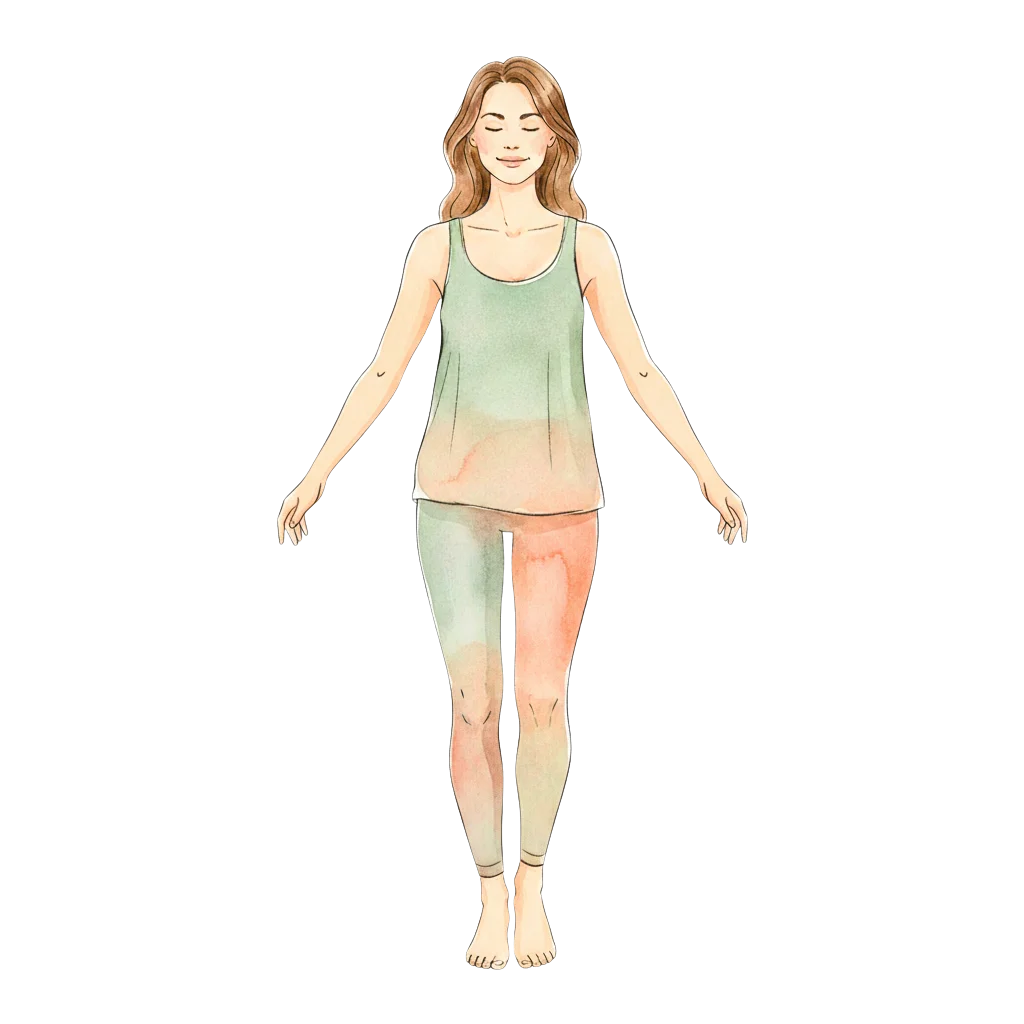
Start your protocolHow Vulvar skin issues affects your body
Tap body zones to discover connected symptoms and related conditions.
Join 86+ women discussing vulvar skin issues
Real experiences shared across Reddit, TikTok, and health forums
Okay, first, don't poke it with a needle! Usually pimples near the genitals are in such a warm and moist environment that they quickly come to a head on their own. Secondly, it could be a boil, not a...
I know popping a pimple is tempting, but we all have staph on our skin, and in a warm moist environment, a deep seated lesion is susceptible to greater infection-a staph infection- when we try and...
I had one of these after I had my baby. Like the others said, I was told by a doctor to soak in a warm epsom salt bath and I was also given antibiotics. The doctor said it could be a result of minor...
Reading others' stories is the first step. Join to share yours.
Community
A safe space for women navigating vulvar skin issues
Frequently asked questions
Common questions about Vulvar skin issues
How we research and fact-check
Every article on Wellls is researched using peer-reviewed medical literature, clinical guidelines, and real patient experiences from 4 online discussions.
Sources: We reference 48 PubMed-indexed studies, ACOG/NAMS clinical guidelines, and validated screening tools.
Review: Content is written by our editorial team, enriched from a medical knowledge base of 15,000+ sources. Evidence standards and clinical methodology guided by our Medical Advisory Board: Dr. Alexandra Rybakova and Dr. Alexander Rybakov, Lifestyle Medicine Physicians with 35+ years combined clinical practice.
This content is for informational purposes only and does not constitute medical advice. Our editorial standards · Medical advisory board
References
48 sources reviewed for this vulvar skin issues guide
- 1.Common Benign Chronic Vulvar Disorders
- 2.Vaginal and vulvar microbiomes and lichen sclerosus in post-menopausal women
- 3.Presenting Symptoms and Diagnosis of Vulvar LS in Premenopausal Women
- 4.Vaginal and Vulvar Microbiomes of Post-menopausal Women with LS
- 5.Microbiome alterations in perimenopausal vulvar lichen sclerosus
- 6.Genitourinary Syndrome of Menopause (Menopause Society 2025)
- 7.Longitudinal Multiinstitutional Study of Vulvar LS
- 8.S3 Guideline on Anogenital Lichen Sclerosus
- 9.Skin Changes During Perimenopause and Menopause
- 10.Vaginal atrophy - Diagnosis and Treatment (Mayo Clinic)
History of updates
Current version (March 11, 2026) — Content reviewed and updated based on latest research
First published (March 9, 2026)
Explore related problems
Women who experience vulvar skin issues often also deal with these
Your personalized plan is ready
If you have been carrying vulvar symptoms in silence, afraid to say the words, treating yourself with the wrong products, avoiding examination because the shame is too much, there is another way forward. Our Dr. Wellls has been trained on every vulvar condition guideline, every treatment protocol, and speaks about this with the clinical precision and human warmth you deserve. This conversation can be private. And it starts whenever you are ready.
2,400+ women explored their vulvar health plan this month
Free assessment · Takes 2 minutes · No account required
Medical disclaimer: This content is for informational purposes only and does not constitute medical advice, diagnosis, or treatment. Always consult a qualified healthcare provider for personal medical decisions. Content is based on peer-reviewed research and updated regularly. Learn about our editorial standards.