Butt Kicks: How-to, Benefits & Variations
Butt kicks: jog in place flicking heels to glutes, arms pumping opposite legs. Works hamstrings, quads (dynamic stretch), calves. Low-impact cardio and warm-up. Stay light on toes.
Butt Kicks: How-to, Benefits & Variations
Every woman I watch do butt kicks makes the same error within the first five seconds. Tiny little heel flicks that barely leave the ground. The heels never come close to the glutes. And then they wonder why the movement feels like nothing.
I pulled the footage on this one. Twenty-three butt kick segments across 13 workouts. Two trainers. Sophie Jones programs them in Rise and Shine morning sessions, Core Sweat circuits, and Total Body Conditioning. Aylar Fetrati uses them strictly as warm-up drills in her Advanced HIIT series. The split is telling. Sophie treats butt kicks as a cardio conditioning tool. Aylar treats them as a hamstring primer. Both approaches work because butt kicks do both things simultaneously.
The butt kicks exercise is deceptive. It looks simple. Jog in place, kick your heels up. But when you actually flick your heel all the way back to your glute, you are actively contracting the hamstring through full range, dynamically stretching the quadriceps, loading the calves with every push-off, and driving your heart rate up. One move. Four things happening at once. That is why it appears in both beginner morning routines and advanced HIIT finishers.
Total Body Conditioning: Workout 5
Sophie Jones
How to Do Butt Kicks
Stand tall with your feet hip-width apart and your weight slightly forward on the balls of your feet. Sophie Jones starts every butt kick set the same way: shoulders back, upper body relaxed. The posture has to be set before you move. If you start hunched, you stay hunched.
Begin jogging lightly in place. Stay on your toes. Sophie: nice and light on the toes, don't be heavy into the floor. This is the foundation. Not a heavy stomp. Not flat-footed plodding. Light, quick foot contacts that let your calves do the shock absorption.
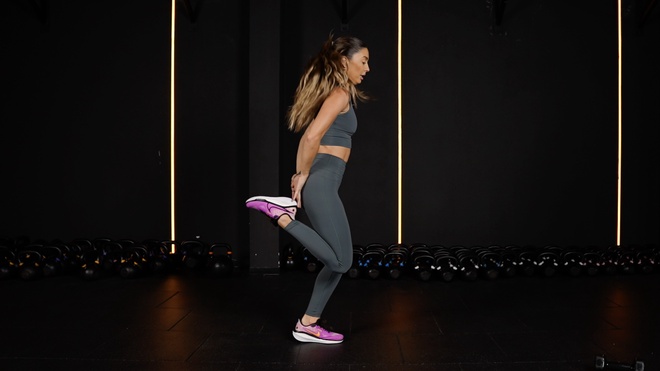
As each foot lifts, actively flick your heel backward and upward toward your glute. Sophie's defining cue: flick your heels all the way back until they tap your glutes for full range of motion. This is where most people cheat. A half-hearted heel lift to mid-calf is not a butt kick. Your heel should make contact with your backside. If it does not, slow down until it does.
Pump your arms in sync with your legs. Opposite arm to opposite leg, like a natural running stride. Sophie: pump your arms in sync with your legs to help drive the movement. The arm swing is not decorative. It generates counter-rotation that keeps your torso stable and increases metabolic demand.
Keep your core engaged and your torso upright throughout. Sophie: engage your core throughout the movement to stabilize your torso. The moment your trunk starts swaying side to side or pitching forward, you have lost control. Your core should be quietly working the entire time to keep everything still above the waist.
Breathe deeply and rhythmically. Sophie cues this constantly: focus on deep, steady breaths to ensure you are getting enough oxygen. Holding your breath during butt kicks causes your heart rate to spike unnecessarily and tanks your endurance within 20 seconds.
Muscles Worked
Primary
Hamstrings (biceps femoris, semitendinosus, semimembranosus)
The hamstrings do the distinctive work in butt kicks. Every heel flick is an active knee flexion against the weight of your lower leg. When your heel actually reaches your glute, the hamstring has contracted through nearly its full range of motion. Over a 30-second set at moderate pace, that is 25-30 concentric contractions per leg. Most people walk around with hamstrings that are both tight and weak. Butt kicks address the weakness side of that equation by demanding repeated full-range contractions.
Quadriceps (rectus femoris, vastus group)
While the hamstrings contract to flick the heel back, the quadriceps are being dynamically stretched with every rep. This makes butt kicks one of the most effective dynamic quad stretches available. The quads also fire concentrically as the leg swings forward for the next step. This alternating stretch-contract cycle is why butt kicks are a staple warm-up drill. A 2022 systematic review found dynamic stretching in warm-ups improved subsequent physical performance.
Gastrocnemius and soleus (calves)
Your calves power every push-off and absorb every landing. Sophie cues it relentlessly: nice and light on the toes. Staying on the balls of your feet makes the calves the primary spring and the primary shock absorber. In a 30-second set, your calves fire 50-60 times. They are doing more work than most people realize.
Cardiovascular system
Butt kicks are cardio disguised as a leg drill. The simultaneous demand on hamstrings, quads, calves, and arms drives heart rate into an aerobic training zone within 20-30 seconds. Sophie programs them in weight loss circuits specifically because they elevate heart rate without heavy impact. A 2023 systematic review found aerobic exercise improved cardiovascular and mental health in postmenopausal women.
Secondary
Core (transversus abdominis, obliques)
Sophie cues core engagement in every butt kick segment: engage your core throughout the movement. The core stabilizes the torso against the rotational forces created by alternating limb movement. Without it, your trunk sways with every kick. The faster you go, the harder the core works.
Glutes and hip flexors
The glutes assist with hip extension as each foot returns to the ground. The hip flexors assist with the forward swing of each step. Neither is the primary mover, but both contribute to the total-body nature of the exercise.
Why this matters in perimenopause
Butt kicks target the hamstrings and quadriceps in a way that addresses two common perimenopause patterns. First, hamstring weakness. As activity levels often decline during perimenopause, hamstrings lose both strength and elasticity. Butt kicks force full-range concentric contraction 50-60 times per minute. Second, quad tightness. Prolonged sitting shortens the rectus femoris, contributing to anterior pelvic tilt and lower back strain. The dynamic stretching component of butt kicks opens the quads through motion, not static holds. A 2022 meta-analysis found warm-up strategies including dynamic movement reduced injury risk. Keeping hamstrings strong and quads mobile is foundational movement maintenance.
Coach's Tips
"Flick your heels all the way back until they tap your glutes for full range of motion." This is Sophie's number-one cue and the single biggest quality differentiator. I watched 23 segments. In most of them, she says some version of this within the first 10 seconds. Half-range heel flicks are not butt kicks. They are a light jog. The hamstring only works through full range when the heel actually reaches the backside. If you cannot feel your heel touch, slow your tempo until you can.
Sophie Jones
"Keep your shoulders back and your upper body relaxed while staying upright." Sophie separates the upper body from the lower body. The legs work hard. The shoulders stay down. The jaw stays relaxed. Tension above the waist wastes energy and restricts breathing. I see women clench their fists, raise their shoulders to their ears, and wonder why they gas out after 15 seconds. Let your upper body be quiet.
Sophie Jones
"Pump your arms in sync with your legs to help drive the movement." Natural running arm swing. Opposite arm to opposite leg. Sophie cues this because the arm drive increases metabolic demand and stabilizes the torso through counter-rotation. Dropping your arms to your sides reduces calorie burn and makes the movement feel awkward. Arms drive the rhythm. Let them work.
Sophie Jones
"Nice and light on the toes, don't be heavy into the floor." Sophie repeats this in nearly every segment. It shows up 5 separate times in the cue data. Heavy foot strikes transfer impact through the knee and hip joint. Light contacts let your calves absorb the landing naturally. If you can hear your feet slapping, you are landing too hard. Think of the floor as hot.
Sophie Jones
"Stay light on your toes and avoid landing heavily on the floor." This is a safety cue masquerading as a form cue. Heavy landing forces on a hard surface without shoes can cause metatarsal stress over time. Sophie: hold yourself upright, don't be heavy into the floor. On hard surfaces, wear cushioned shoes. On a mat, bare feet are fine. The key is staying up on the balls of your feet so the calf acts as a natural spring.
Sophie Jones
"Focus on deep, steady breaths to ensure you are getting enough oxygen." Sophie cues breathing more than any other element except heel height. Breath-holding during dynamic cardio causes blood pressure spikes and premature fatigue. Breathe in through the nose for 2-3 steps. Out through the mouth for 2-3 steps. Find a rhythm that matches your foot tempo.
Sophie Jones
"If you feel stiff or fatigued, transition into a march on the spot." Sophie offers this in 3 separate segments. The march is the universal downgrade: same movement direction, same hamstring engagement pattern, zero speed demand. Useful when hip flexors or hamstrings are too tight for full-speed kicks, or when fatigue compromises form. March until you recover, then resume kicks.
Sophie Jones
"If you're ready to go, just take it straight up on those toes" and "increase the tempo and pump your arms faster to maximize the cardiovascular challenge." For the opposite end, Aylar Fetrati programs butt kicks as warm-up drills with progressive speed. Start slow for 10 seconds, build tempo for 10 seconds, hit maximum speed for 10 seconds. Sophie: push off the floor with intention to increase the intensity of the cardio burst. The upgrade path is simple: go faster.
Sophie Jones and Aylar Fetrati
Why This Matters for You
Butt kicks look like a simple warm-up drill. For women in perimenopause, they address three things that matter more than the exercise appears to deserve.
First, hamstring health. Declining estrogen affects connective tissue elasticity throughout the body. The hamstrings get stiffer. They also get weaker from prolonged sitting. Most women try to stretch their way out of this. Stretching a weak muscle helps with range, but it does not build the strength to use that range safely. Butt kicks demand active hamstring contraction through full range, 50-60 times per minute. That is conditioning, not stretching.
Second, cardiovascular maintenance. When estrogen declines, its cardioprotective effect goes with it. A 2023 systematic review found aerobic exercise improved both cardiovascular and mental health in postmenopausal women. Butt kicks push heart rate into an aerobic training zone within 20-30 seconds. That cardiovascular stimulus matters. And it comes with less joint impact than running or box jumps.
Third, the quad mobility piece. Hours at a desk. Hours in a car. The rectus femoris shortens. Anterior pelvic tilt increases. Lower back strain follows. Butt kicks dynamically stretch the quads through movement rather than static holds, which a 2022 meta-analysis found to be more effective for improving subsequent physical performance.
One drill. Hamstring strength. Cardiovascular load. Quad mobility. No equipment. No gym. Two minutes is enough to make a difference.
Variations & Modifications
Marching Butt Kicks (Low-Impact)
lowWalk in place, deliberately flicking each heel up toward your glute with every step. No jogging. No bounce. Sophie offers this in 3 separate segments: if you feel stiff or fatigued, transition into a march on the spot. Same hamstring engagement, same range of motion, zero impact. The default modification for anyone with joint sensitivity, pelvic floor considerations, or early-morning stiffness.
Butt Kicks with Arm Drive
mediumStandard butt kicks with exaggerated arm pumping to increase metabolic demand. Sophie: pump your arms in sync with your legs to help drive the movement. Driving the arms harder from the shoulders (not elbows) adds upper body recruitment, increases calorie burn, and forces the core to work harder against the increased rotational forces. This is the progression from basic butt kicks before adding speed.
Fast Tempo Butt Kicks
medium-highButt kicks at maximum foot speed while maintaining full heel-to-glute range. Sophie: push off the floor with intention to increase the intensity of the cardio burst. This is where most people cheat. Speed without range is meaningless. The challenge is maintaining heel contact with the glute even as tempo increases. Aylar programs these in 30-second bursts with 15 seconds rest.
Butt Kicks Rounds (Progressive)
medium-highThree rounds of butt kicks with progressive intensity, as Sophie programs in Core Sweat sessions. Round 1 at 60% effort. Round 2 at 80%. Round 3 at maximum output. The rest between rounds is an active recovery (walking in place). This format builds cardiovascular endurance without the monotony of a single long set. Don't you dare stop, Sophie cues during round 3.
Warm-Up Butt Kicks (Controlled Tempo)
low-mediumAylar Fetrati programs butt kicks specifically as warm-up drills in her HIIT sessions. Controlled tempo, emphasis on full range rather than speed. The goal is hamstring activation and quad mobilization before heavier work. Thirty seconds at a moderate pace, focusing on making every heel reach the glute. This version prioritizes the dynamic stretching benefit over the cardiovascular one.
Benefits
Dynamic quad stretch without stopping
Static quad stretching requires you to stand on one leg, grab your ankle, and hold still. Butt kicks give you the same quadriceps lengthening through movement. Every heel flick dynamically stretches the rectus femoris through its full range. Fifty to sixty reps per minute, both legs. No balance challenge, no holding still, no counting seconds. A 2022 systematic review found that warm-up strategies including dynamic stretching reduced injury risk. Butt kicks deliver that dynamic stretching benefit while simultaneously warming up the cardiovascular system.
Hamstring conditioning through full range
When the heel reaches the glute, the hamstring has contracted through nearly its complete range of motion. Most daily activities never ask the hamstring to do this. Walking uses about 40% of hamstring range. Sitting uses even less. The butt kicks exercise forces repeated full-range knee flexion under speed, which strengthens the hamstring through positions it rarely visits. This is especially relevant for women who sit 6-8 hours a day with hamstrings that are simultaneously short and weak.
Heart rate spike with minimal impact
Butt kicks elevate heart rate into aerobic training zones within 20-30 seconds, but the impact is substantially lower than running, box jumps, or even high knees. Each foot contact is a light tap, not a heavy landing. Sophie cues it: nice and light on the toes. For women who need cardiovascular conditioning but want to manage ground reaction forces through their joints, butt kicks sit in a productive middle ground between walking and plyometrics.
Requires nothing but floor space
No shoes required (though recommended on hard floors). No mat. No weights. No timer. Two square feet of floor. Sophie builds her Rise and Shine morning series around movements exactly like this: fifteen minutes, everything is body weight, all you need is yourself. Butt kicks fit into hotel rooms, office breaks, kitchen floors, and any other space where you can stand and move your legs.
Transfers directly to running mechanics
The heel-to-glute motion in butt kicks mirrors the recovery phase of the running gait cycle. Every runner's stride has a moment where the heel swings up behind the body. Butt kicks train that exact pattern. Faster heel recovery means faster running cadence and less energy wasted on foot drag. Even if you do not run, the movement pattern improves walking efficiency and stair-climbing mechanics.
Common Mistakes to Avoid
Heels never reaching the glutes
This is the error Sophie corrects most often. Make sure we're tapping the butt, she cues. You can see how high mine are getting here. If your heel only reaches mid-calf, you are doing a light jog with a slight backswing. Slow down. Dramatically. One kick every two seconds if necessary. Build the range before you build the speed. The hamstring only works through full range when the heel actually touches your backside.
Landing heavy and flat-footed
Sophie says it five times across the cue data: nice and light on the toes. Heavy landing converts a low-impact exercise into a joint-loading one. Stay up on the balls of your feet. Your calves are springs. Use them. If you can hear your feet hitting the floor from across the room, the landing is too hard. On hard surfaces, cushioned shoes help absorb what your calves miss.
Upper body tension and forward lean
Sophie: keep your shoulders back and your upper body relaxed while staying upright. Clenching your jaw, raising your shoulders, and leaning forward all waste energy and restrict breathing. The upper body should be quiet. Arms move. Shoulders stay down. Face stays relaxed. If you catch yourself leaning forward, it usually means fatigue has set in. Drop to the march variation instead of fighting through with compromised posture.
Forgetting to breathe rhythmically
Sophie specifically cues breathing on this one: focus on deep, steady breaths to ensure you are getting enough oxygen. Breath-holding during fast footwork causes premature fatigue and unnecessary blood pressure spikes. Match your breathing to your foot tempo. Two or three steps inhale, two or three steps exhale. The rhythm keeps you going. The oxygen keeps you from seeing stars.
Workouts Featuring This Exercise
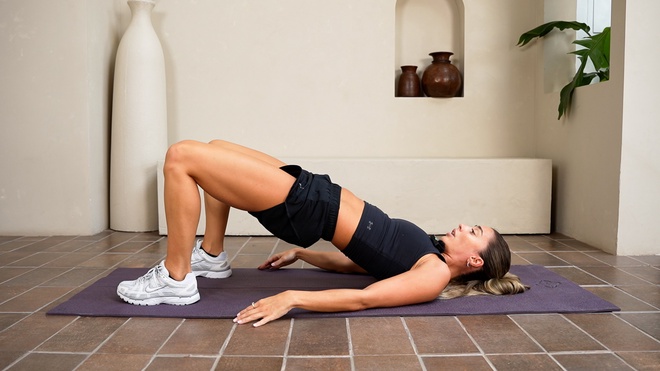
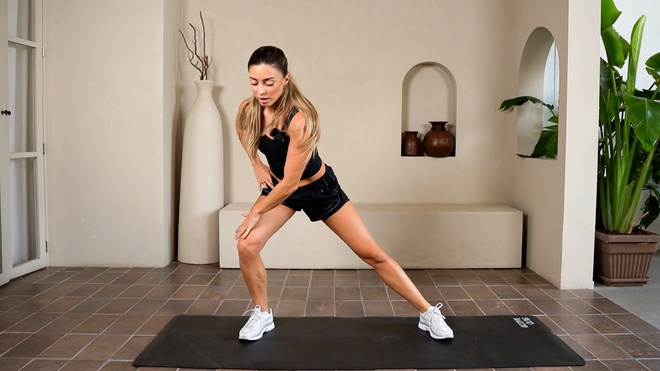
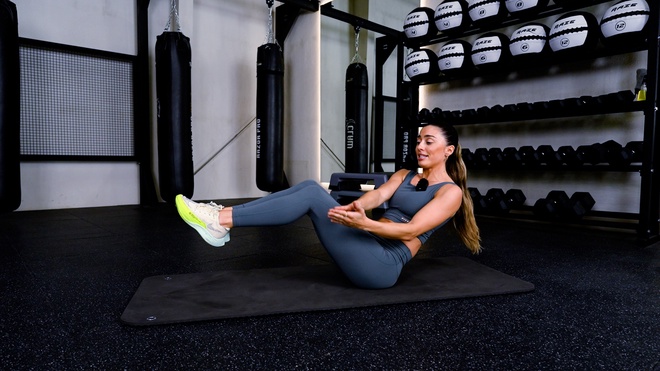
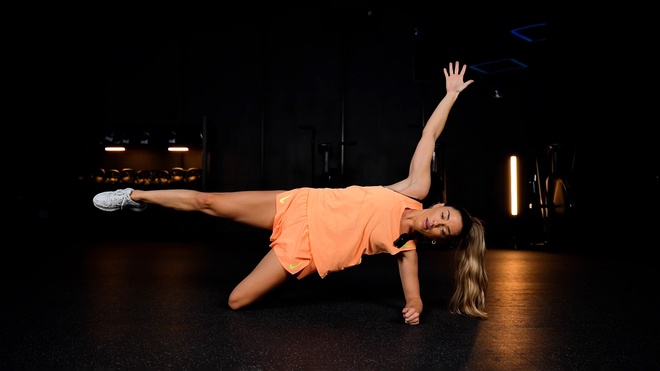
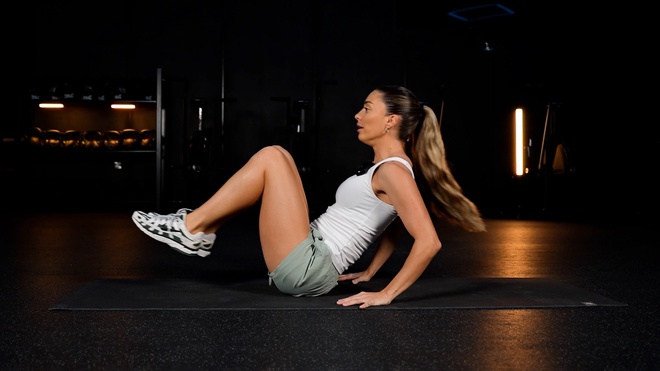
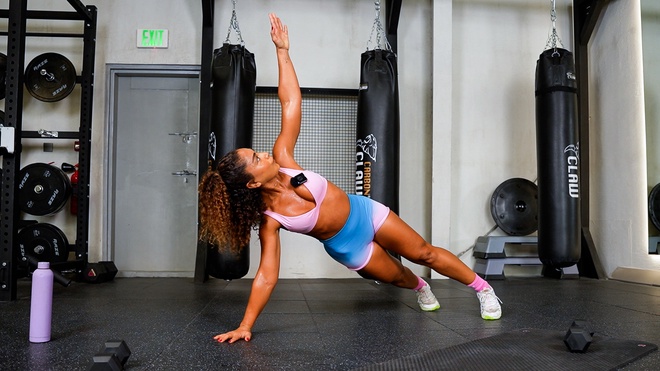
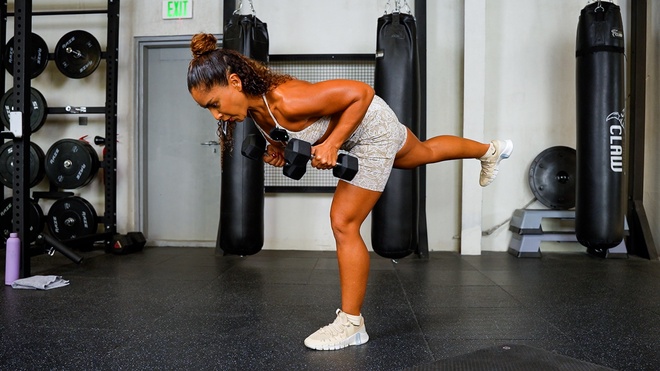
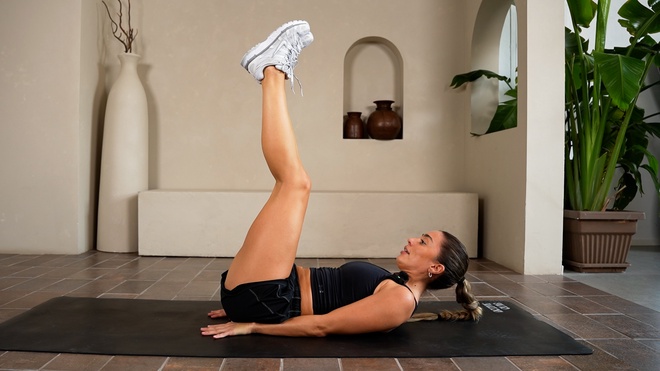
Join women building cardiovascular fitness and hamstring strength with 2 certified trainers across 13 workouts
Frequently Asked Questions
Related Exercises
High Knees
Sophie literally offers high knees as an alternative to butt kicks in the same breath: you can either do butt kicks or we can drive them knees forward. High knees target hip flexors. Butt kicks target hamstrings. Alternate between them for complete anterior and posterior warm-up coverage.
Jumping Jacks
The other zero-equipment standing cardio staple. Jumping jacks emphasize shoulder abduction and lateral leg movement. Butt kicks emphasize sagittal plane hamstring work. Pair them for full-body warm-up.
Mountain Climbers
Horizontal cardio drill on the floor. Higher intensity than butt kicks. Mountain climbers load the hip flexors and core through plank position. Use butt kicks as the standing warm-up before mountain climbers on the floor.
Jump Squats
Higher-impact plyometric progression. Once butt kicks feel too easy for cardiovascular stimulus, jump squats add explosive hip and knee extension. Substantially more ground reaction force.
Fast Feet
Another standing quick-foot drill that shares the light-on-toes cue. Fast feet emphasize ankle speed and calf endurance. Butt kicks add the hamstring component. Similar cardiovascular demand.
This exercise helps with
Get butt kicks in a guided workout
Access 10 workouts featuring this exercise, plus personalized plans from Dr. Wellls.
Join women building cardiovascular fitness and hamstring strength with 2 certified trainers across 13 workouts
Your membership funds independent women's health research