Fast Feet: How-to, Benefits & Variations
Fast feet: stand in partial squat, rapidly tap feet on floor with tiny steps, stay on toes. Works calves, quads, core, cardiovascular system. Zero equipment. Builds ankle stability and reaction time.
Fast Feet: How-to, Benefits & Variations
Your feet already know how to do this. Crossing a hot car park barefoot. Stepping over scattered toys in the dark. That frantic side-step when someone nearly clips you with a shopping trolley. The speed is already wired in.
The fast feet exercise takes that reflexive quickness and turns it into deliberate training. Stand in a partial squat. Tap your feet on the floor as rapidly as you can. Stay on your toes. That is the whole drill.
I pulled the data on this one. Twelve occurrences across six workouts in our library. Sophie Jones programs it in four of those: Rise and Shine, Total Body Conditioning, Athlete Mode, and Core Sweat. She uses it as a warm-up, as a cardio burst between strength sets, and as a finisher. Aylar Fetrati adds it to her advanced HIIT in an in-and-out pattern. Linda Chambers pairs it with long jumps in her hybrid yoga class. The fast feet drill appears in beginner sessions and intermediate sessions. In weight loss programs and in muscle tone circuits.
That range tells you something. This is a coordination exercise disguised as cardio. And the metabolic demand is real: heart rate spikes within 10-15 seconds because you are activating both legs simultaneously at maximum turnover speed.
Rise and Shine: Workout 7
Sophie Jones
How to Do Fast Feet
Stand with feet hip-width apart, knees soft, weight on the balls of your feet. Sophie Jones starts every set the same way: get down slightly into a partial squat with your hips dropped. Not a deep squat. Just enough bend to load your quads and free your ankles to move quickly.
Begin tapping your feet rapidly on the floor with small, quick steps. Sophie: nice, quick feet, very light on the toes. The steps are tiny. Millimetres, not centimetres. Think of it as vibrating in place rather than running. You are not bringing your knees up. Sophie is explicit: we're not bringing the knees up high, we're just keeping it nice and tight, nice and fast.
Stay on the balls of your feet throughout. This is the single most repeated cue across all six workouts. Sophie: you don't wanna be flat feet, up onto the toes. Heel contact kills the speed and sends shock through your knees. Aylar Fetrati: it's going to be as fast as you can, in and out. Your calves are the engine.
Pump your arms rhythmically to drive the movement. Sophie cues arm involvement in every round: I want you to get your arms involved in all of these as well. The arm swing adds upper body metabolic cost, stabilises your torso, and helps you maintain foot speed when your legs fatigue.
Engage your core and squeeze your glutes throughout. Sophie: core engaged, squeezing my glutes, squeezing my core. Your torso needs to stay stable while your feet move at maximum speed beneath you. Without that brace, you wobble. The glute squeeze keeps your hips level.
Maintain steady breathing. Holding your breath is the fastest way to gas out. The temptation is to hold as you accelerate. Resist it. Breathe in rhythm with the movement. If you lose your rhythm, slow down momentarily, find your footing, then pick the pace back up.
Muscles Worked
Primary
Gastrocnemius and soleus (calves)
Your calves do the bulk of the work during fast feet. Every rapid tap demands a small plantarflexion contraction to spring your foot back off the ground. At maximum speed, that is 3-4 calf contractions per second per leg. No other bodyweight exercise loads the calves with this kind of volume in such a short window. Sophie cues it: nice and light on the toes, transferring that weight side to side. The calves are simultaneously your accelerators and your shock absorbers.
Quadriceps
The partial squat position loads your quads isometrically for the entire duration of the drill. Sophie: drop your hips slightly lower into a partial squat to better engage the legs. Your quads hold that bent-knee position while your feet move underneath. It is a sustained contraction under vibration, which is metabolically expensive. The quad burn comes on fast because there is no rest between reps.
Cardiovascular system
Fast feet spike heart rate faster than almost any other standing exercise. The simultaneous demand on both legs at maximum turnover creates a metabolic cost that outpaces steady-state cardio within seconds. A 2024 study found HIIT improved body composition, cardiovascular markers, and vasomotor symptoms in menopausal women. The fast feet exercise delivers that high-intensity cardiovascular stimulus in a 1-by-1 foot space.
Secondary
Core (transversus abdominis, obliques)
Sophie cues core engagement in nearly every fast feet segment: core engaged, hold that core, find that rhythm. Your core stabilises your torso against the rapid bilateral leg movement. Without it, your upper body would rock and sway with each foot tap, wasting energy and reducing foot speed.
Glutes
The gluteus maximus maintains the partial squat position alongside the quads. Sophie: nice strong hips, nice strong glutes, squeezing my glutes. The gluteus medius stabilises your pelvis laterally during the side-to-side weight transfers. The in-in-out-out variation targets the glute medius specifically as you step wide and narrow.
Ankles (tibialis anterior, peroneals)
Ankle stability is constantly challenged during fast feet. The rapid directional changes demand real-time adjustments from the muscles surrounding the ankle joint. This makes fast feet a functional proprioception drill, training the neuromuscular system to stabilise the ankle under speed.
Why this matters in perimenopause
Fast feet target the neuromuscular system in a way most cardio exercises do not. The rapid foot turnover trains reaction speed, ankle proprioception, and calf power, three capacities that decline with hormonal shifts. A study on proprioception and ageing found exercise interventions improved joint position sense. Another on neuromuscular training showed measurable gains in motor control. Fast feet load the calves through hundreds of micro-contractions per set, building the fast-twitch fibre endurance that keeps you steady on uneven ground and responsive when you need to change direction quickly.
Coach's Tips
"We're not bringing the knees up high. We're just keeping it nice and tight, nice and fast." Sophie Jones draws this distinction early in Athlete Mode. Fast feet are not high knees. The movement is in your ankles and calves, not your hip flexors. If your knees are driving upward, you have switched exercises. Keep the steps as small as possible. Think vibration, not running.
Sophie Jones
"Taking the feet just wider than hip-width." Sophie sets the stance wider than most people expect. Wider feet give you a more stable base, which lets you move faster without losing balance. In Rise and Shine, she repeats this cue three times across three rounds. The width matters.
Sophie Jones
"You don't wanna be flat feet. Up onto the toes." This appears in every single fast feet segment Sophie teaches. Flat feet kill the exercise. When your heels are on the ground, your calves cannot fire quickly enough to produce the rapid tapping motion. The balls of your feet are your launch pads. If you find yourself flattening out, it means your calves are fatiguing. Slow down, stay on your toes, then rebuild speed.
Sophie Jones
"Get your arms involved in all of these as well." Sophie cues this in Athlete Mode. Arms are not passengers. Pump them forward and back in opposition to generate upper body work and maintain trunk stability. The arm drive also helps you sustain foot speed when your legs start burning.
Sophie Jones
"If you lose your rhythm, slow down to find your footing and then immediately pick the pace back up." Losing rhythm at high speed is where ankle tweaks happen. The modification is built into the exercise itself: decelerate, stabilise, re-accelerate. Sophie never tells people to push through lost rhythm. She tells them to reset. That two-second pause prevents rolled ankles.
Sophie Jones
"If you can't go fast, that's fine. Take it slower, and then get used to that movement." Sophie offers this in Total Body Conditioning. The beginner version of fast feet is simply slow feet. Same stance, same toe position, same arm drive, half the speed. Build the coordination first. The speed follows naturally once the motor pattern locks in.
Sophie Jones
"If you wanna bring it up a little bit, you're gonna take it in, in, out, out." This is the progression Sophie uses in Athlete Mode. The in-in-out-out pattern adds a lateral agility component. Your feet step together, then apart, in rapid succession. It demands more from the hip abductors and adductors and doubles the coordination challenge.
Sophie Jones
"Focus your mind on the speed of your toes to push through leg fatigue." When the quad burn sets in around the 20-second mark, the instinct is to straighten your legs and slow down. Sophie's cue redirects attention to the feet instead of the fatigue. It works. Mental focus on the toes keeps the movement pattern intact even when your quads are screaming.
Sophie Jones
Why This Matters for You
Fast feet train three systems that quietly deteriorate as hormones shift: reaction speed, ankle proprioception, and cardiovascular efficiency.
Reaction speed slows when estrogen declines. The neural pathways that govern rapid motor responses lose some of their signalling speed. You notice it in small ways: fumbling a catch, misjudging a step, that split-second delay before you correct a stumble. The fast feet exercise trains your motor cortex to fire rapidly and precisely, maintaining the neural sharpness that keeps your movements confident.
Ankle proprioception, the ability to sense where your foot is in space, also diminishes. A study on proprioception and ageing found exercise interventions improved joint position sense. Fast feet challenge ankle stability at speed, hundreds of rapid weight transfers per set, training the mechanoreceptors in your ankle ligaments to stay responsive.
Then there is cardiovascular conditioning. A 2024 study found HIIT improved body composition, cardiovascular health, and vasomotor symptoms in menopausal women. As estrogen's cardioprotective effect fades, maintaining cardiovascular fitness becomes more critical. Fast feet push heart rate into high-intensity zones within seconds. No treadmill. No bike. Just floor space and 30 seconds.
A meta-analysis on impact exercise found mixed-loading programmes best countered postmenopausal bone loss. Fast feet are lower impact than box jumps but higher than walking. The rapid, repetitive calf loading provides a mild osteogenic stimulus through the lower leg and ankle complex.
Three systems. One drill. Half a minute.
Variations & Modifications
Slow Feet (Beginner Tempo)
low-mediumSame stance, same toe position, half the speed. Sophie Jones offers this in Total Body Conditioning: if you can't go fast, that's fine, take it slower. The beginner fast feet drill builds the motor pattern without the cardiovascular overload. Focus on staying on your toes and keeping your core engaged. Once the coordination feels automatic, gradually increase tempo.
Fast Feet In-In-Out-Out
highStep both feet together, then apart in rapid succession. Sophie Jones programs this as the third round in Athlete Mode: in, in, out, out. Going out, out, in, in. The lateral movement challenges hip abductors and adductors that standard fast feet miss. It is an agility drill layered on top of a cardio drill. The coordination demand roughly doubles because you are now moving in two planes.
Fast Feet to Long Jump
highFive seconds of fast feet, then explode forward into a broad jump. Linda Chambers programs this in Hybrid Yoga: fast feet, out and in, and then you give me one long jump all the way down. Get down nice and low. The jump adds a plyometric power component. The transition from rapid small movements to one explosive large movement trains the neuromuscular system to switch between speed and power.
In and Outs (Fast Feet)
highAylar Fetrati's version from Full Body HIIT: as fast as you can, in and out. This is wider and more aggressive than Sophie's in-in-out-out. The feet spread to a wide stance and snap back to narrow in continuous rapid alternation. The wider stance increases the lateral distance each foot travels, which loads the inner and outer thigh muscles harder. Get your heart rate up, Aylar cues. It will.
Benefits
Cardiovascular spike in under 15 seconds
Fast feet elevate heart rate faster than almost any other standing bodyweight exercise. The bilateral rapid-fire leg movement creates a metabolic demand that outpaces jogging, cycling, or even standard bodyweight squats. A 2024 study on HIIT for menopausal women found improvements in body composition, cardiovascular health, and vasomotor symptoms. Fast feet deliver that high-intensity stimulus in a 1-by-1 foot space with zero equipment and zero impact on the joints.
Ankle stability and proprioception under speed
Every fast feet rep demands real-time ankle adjustments at maximum turnover. Your peroneals and tibialis anterior fire continuously to stabilise the joint as you shift weight side to side. A study on proprioception and exercise found that training interventions improved joint position sense. Carrying two bags of groceries across a wet car park. Stepping off a curb you misjudged. Navigating a rocky hiking trail. Ankle proprioception is the invisible skill that keeps you upright in all of those.
Calf endurance through micro-loading
At full speed, the fast feet exercise demands 3-4 calf contractions per second per leg. A 30-second set produces roughly 180-240 individual calf contractions. That volume of rapid loading builds muscular endurance in the gastrocnemius and soleus that traditional calf raises cannot replicate. The calves are your primary shock absorbers and propulsion muscles in daily movement, and they are among the first muscles to lose mass during perimenopause.
Neuromuscular reaction speed
Fast feet train the nervous system to fire rapidly and accurately. This is not just fitness. It is neurological conditioning. The quick feet drill forces your motor cortex to send rapid, precise signals to both legs simultaneously. Reaction time slows as hormones shift. Training that reaction speed deliberately, through drills that demand maximum foot turnover, helps maintain the neural pathways that keep your movements sharp.
Fits into any workout as a 30-second burst
Sophie Jones uses fast feet in four different workouts for four different purposes: warm-up (Rise and Shine), cardio burst (Total Body Conditioning), high-intensity interval (Athlete Mode), and metabolic finisher (Core Sweat). It does not require its own slot in your routine. Thirty seconds between strength exercises. Sixty seconds to close out a session. The quick feet exercise plugs into gaps other exercises cannot fill.
Common Mistakes to Avoid
Bringing the knees up high instead of keeping steps small
Sophie Jones is clear: we're not bringing the knees up high, just keeping it nice and tight, nice and fast. If your knees are rising, you have turned fast feet into high knees. Different exercise. Different muscle recruitment. The fast feet drill is about ankle speed and calf activation, not hip flexion. Keep the movement below the ankle joint. Little taps, Sophie cues. Little movements.
Landing flat-footed or dropping heels
This is the correction Sophie makes in every single segment: you don't wanna be flat feet, up onto the toes. Heel contact changes the biomechanics entirely. Your calves disengage, your knees absorb more force, and your foot speed drops because the heel-to-toe transition takes too long. Stay on the balls of your feet for the entire set. If your calves burn out and your heels start dropping, that is your signal to rest.
Standing too tall with legs straight
The partial squat position is non-negotiable. Sophie: drop your hips slightly lower into a partial squat to better engage the legs. Straight legs mean your quads are not loaded, your glutes are not engaged, and your centre of gravity is too high. The slight bend pre-loads your legs for the rapid movement and lowers your base for stability. If your thighs are not burning within 15 seconds, you are probably too upright.
Holding your breath during maximum speed
The instinct is to clench everything, including your diaphragm, when you push for speed. This tanks your endurance within 10-15 seconds. Breathe steadily throughout. If you cannot maintain breathing at full speed, you are going too fast for your current fitness level. Drop the tempo until you can breathe and move simultaneously. Speed without oxygen is a dead end.
Workouts Featuring This Exercise
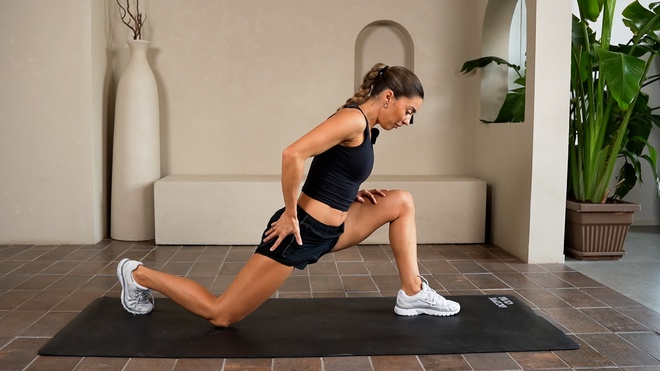
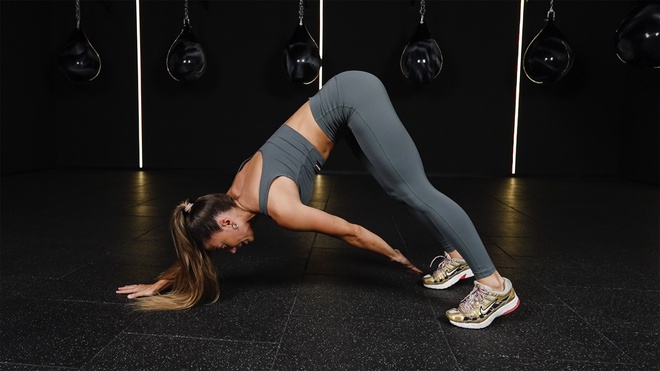
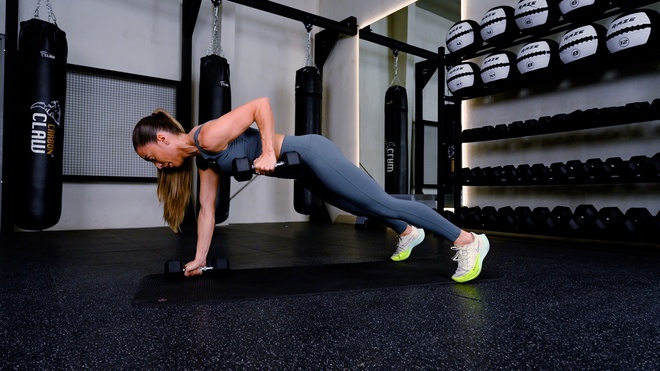
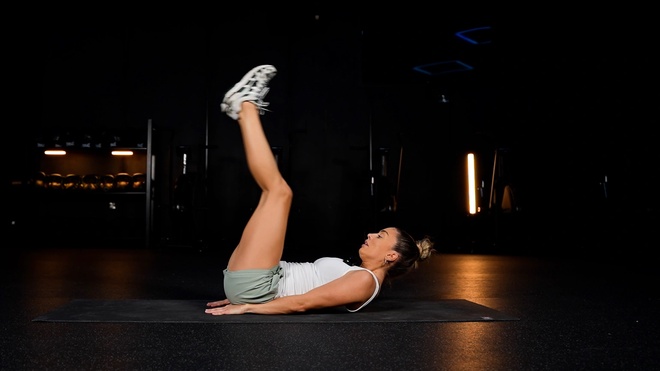
Join women building cardiovascular fitness and ankle stability with 3 certified trainers across 6 workouts
Frequently Asked Questions
Related Exercises
High Knees
The vertical counterpart to fast feet. High knees emphasise hip flexor drive and knee height. Fast feet emphasise ankle speed and calf endurance. Together, they cover lower body cardio from two different angles.
Jumping Jacks
Another zero-equipment full-body cardio staple. Jumping jacks use a wider, more rhythmic movement pattern. Alternate them with fast feet for a cardio circuit that never gets monotonous.
Mountain Climbers
Horizontal rapid leg movement in plank position. Mountain climbers load the core more heavily. Fast feet load the calves more heavily. Both spike heart rate in under 15 seconds.
Butt Kicks
Similar rapid leg movement but with a hamstring emphasis. Butt kicks flick heels toward the glutes. Fast feet tap toes on the floor. Pairing them in alternating intervals hits calves, quads, and hamstrings without rest.
Lateral Shuffle
Adds horizontal travel to the quick feet pattern. If fast feet are foot speed in place, lateral shuffles are foot speed across the floor. Linda Chambers combines both concepts in her hybrid yoga class.
This exercise helps with
Get fast feet in a guided workout
Access 6 workouts featuring this exercise, plus personalized plans from Dr. Wellls.
Join women building cardiovascular fitness and ankle stability with 3 certified trainers across 6 workouts
Your membership funds independent women's health research