Plank Walk: How-to, Benefits & Variations
A plank walk is lateral stepping in a high plank position. Step hands and feet sideways while keeping back flat and core braced. Builds anti-rotation core strength and shoulder stability.
Plank Walk: How-to, Benefits & Variations
Get into a high plank. Now step your right hand to the right. Follow with your right foot. Then your left hand. Then your left foot. You just did a plank walk.
Most people think a plank walk is walking your hands out from standing, which is actually a plank walkout or inchworm plank. The plank walk is lateral movement in a plank position. Hands and feet stepping sideways while your core fights every instinct to rotate and your shoulders work to keep you from collapsing. Sophie Jones programs it in her Athlete Mode series and she has one cue that tells you everything about the movement: "Control is the key element." Not speed. Not distance. Control.
I have tracked 7 plank walk occurrences across our workout library. Sophie Jones teaches it across 6 segments in two Athlete Mode sessions with a resistance band variant that turns the difficulty up significantly. Natalia Gunnlaugs uses it as a HIIT warm-up paired with a calf stretch. The walking plank exercise looks deceptively simple on camera. Then you try holding a flat back while moving sideways and your obliques start screaming by step three.
Athlete Mode: Workout 8
Sophie Jones
How to Do Plank Walk
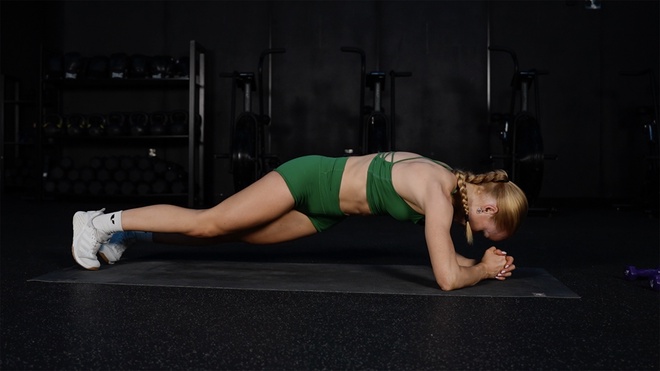
Start in a high plank position with your hands stacked directly underneath your shoulders. Sophie Jones cues: wrists directly underneath your shoulders. Body in one straight line from head to heels. Fingers spread, weight pressed through the entire palm, not dumped into the heel of the hand. This is your starting position for every plank walk repetition.
Brace your core before you move anything. Sophie: engage your core tightly. Imagine someone is about to poke you in the stomach. That reflexive brace is what you hold for the entire set. Without this, your lower back will sag or your hips will pike upward the moment you start stepping.
Step your right hand out to the right, about six inches. Immediately follow with your right foot stepping out the same distance. Sophie cues the rhythm: out, in, out, in. Small steps. Not lunging sideways. Six inches. Maybe eight. The wider you reach, the more your weight shifts off-centre, and your shoulders take the hit instead of your core.
Bring your left hand in to close the gap, then your left foot. You have walked one step to the right. Now repeat. Walk 3-4 steps to the right, then reverse direction and walk back to the left. Sophie programs both directions in every round.
Keep your back flat and your hips level with your shoulders the entire time. Sophie corrects this constantly: making sure we're not pushing a bum in the air. And again: nice and flat on the back, core tight. If your hips start rising, the plank walk exercise turns into a downward-dog shuffle and your core stops doing its job. Flat back. Low hips. Every step.
Breathe steadily throughout the lateral movement. Natalia Gunnlaugs cues: focus on steady, rhythmic breathing throughout the lateral movement. The urge to hold your breath intensifies with each step because your core is working hard. Fight it. Exhale as you step, inhale as you settle. Breath-holding spikes blood pressure and kills your endurance.
Muscles Worked
Primary
Core (transversus abdominis, obliques, rectus abdominis)
The plank walk demands continuous anti-extension (preventing lower back sag) and anti-lateral flexion (preventing hip drop to one side). Your obliques do the heaviest lifting because lateral movement creates rotational forces your core must cancel out with every single step. An EMG study of plank progressions found that adding limb movement to a plank position increased core muscle activation significantly compared to a static hold. The plank walk takes this further by moving all four limbs. Your transversus abdominis acts as a corset, bracing the spine against the shifting load. Your rectus abdominis prevents the pelvis from tilting. All three layers working simultaneously.
Shoulders (deltoids, serratus anterior, rotator cuff)
Your shoulders bear a large portion of your body weight while repositioning under asymmetric loading. Every time one hand lifts to step, the opposite shoulder supports more than half your weight for a beat. The serratus anterior works to keep your shoulder blades flat against your ribcage. Sophie Jones cues: push actively away from the floor through your palms. That push engages the serratus and keeps your shoulders from winging. A systematic review of scapular stabilisation exercises found closed-chain loading patterns like this effective for shoulder function.
Arms (triceps, forearms, wrists)
Your triceps hold you in the extended-arm position for the full set duration. Your forearms and wrists absorb shifting weight with every lateral step. Sophie teaches the banded variant specifically to increase this upper-body demand. Sophie: push away from the floor so you're strong. Onto the toes. Wrist conditioning is a bonus that matters for anyone who types at a desk all day.
Secondary
Chest (pectoralis major and minor)
The pecs stabilise your shoulder joint during lateral weight transfer. The banded plank hand walk variant loads the chest more aggressively because the band resists the lateral stepping motion. Sophie Jones programs this in Athlete Mode 6 with a resistance band around the wrists for exactly this reason.
Calves and hamstrings
The warm-up variant used by Natalia Gunnlaugs adds a downward dog pedal between plank walks, loading the calves and hamstrings. Even in the standard version, your calves maintain ankle stability while your feet step laterally.
Why this matters in perimenopause
The plank walk targets the combination that matters most during perimenopause: core stability under movement and shoulder resilience under load. Oestrogen decline weakens the connective tissue supporting the lumbar spine, making core stability training essential rather than optional. A pilot study on Pilates-based core stability training in perimenopausal women found significant improvements in core stability, sleep quality, and menopausal symptom management. The plank walk is more demanding than a static plank because the lateral movement adds rotational challenge, and it is more demanding than a plank walkout because your limbs stay loaded the entire time. Shoulder integrity also declines during perimenopause as collagen quality changes. Closed-chain shoulder work, where your hands stay on the ground, is consistently shown to be safer than overhead pressing for building shoulder stability.
Coach's Tips
"Wrists should be directly underneath your shoulders, your hips level with your shoulders." Sophie Jones repeats this setup in her third round of plank walks. The alignment is non-negotiable. When your hands drift forward, the load shifts into the rotator cuff. When they drift behind, your wrists take the hit. Stack wrists under shoulders. Check before every set.
Sophie Jones
"Maintain a flat back and keep your hips level with your shoulders; avoid pikeing your glutes toward the ceiling." This is the merged teaching cue from Sophie's sessions. Making sure we're not pushing a bum in the air appears in three separate clips. The pike is the most common error because it feels easier. It is easier because your core stops working. Hips level. Back flat.
Sophie Jones
"I go out, in, out, in. Repeat that." Sophie's rhythm cue for the banded plank hand walks. The lateral stepping pattern should be rhythmic, not lurching. Out-in-out-in. Each step the same distance. Each pause the same duration. When the rhythm breaks, your form breaks a half-second later. Use the cadence as a form check.
Sophie Jones
"Push away from the floor so you're strong. Onto the toes." This cue from the banded variant applies to every plank walk. Active pushing through the palms engages the serratus anterior, which keeps the shoulder blades from winging. Passive hanging on the joints is how shoulders get injured under sustained load.
Sophie Jones
"If you feel too much pressure in your shoulders, check that your weight is shifted forward and your hips aren't too high." Shoulder pressure during a plank walk usually means one of two things: your hips have drifted upward (shifting weight onto the shoulders) or your hands have crept forward of your shoulders. Reset both. If the pressure persists, drop to the knees-down modification.
Sophie Jones
"Those that are not comfortable, you can drop to the knees." Sophie offers this in both Athlete Mode sessions. Dropping to the knees removes roughly 40% of the upper-body load while keeping the lateral movement pattern and core anti-rotation demand. Start here if a full plank walk breaks your form within 10 seconds. Build up to full plank as your shoulders and core strengthen.
Sophie Jones
"If this is too easy and you have a heavier band there, then you can use the heavier band." Sophie's banded progression for plank hand walks. A resistance band around the wrists forces your chest and shoulders to work against the band's resistance with every lateral step. The band turns a bodyweight core exercise into a genuine upper-body strength challenge.
Sophie Jones
"Focus on steady, rhythmic breathing throughout the lateral movement." Natalia Gunnlaugs cues this during her HIIT Blast warm-up. The plank walk is demanding enough that your instinct is to hold your breath. But breath-holding tanks your endurance and spikes blood pressure. Exhale as you step. Inhale as you settle. Keep the rhythm.
Natalia Gunnlaugs
Why This Matters for You
The plank walk hits core stability and shoulder resilience simultaneously, and both decline during perimenopause.
Oestrogen supports the connective tissue around the lumbar spine. As levels fluctuate and drop, that support weakens. Lower back pain becomes more common. Core stability training becomes essential, not optional. A systematic review of core stability exercises for non-specific low back pain found they were effective for both pain reduction and functional improvement. But here is what most core exercise recommendations miss: the spine does not only flex and extend. It also resists lateral and rotational forces. Every time you carry a bag on one shoulder. Every time you reach across your body to grab something off a table. Every time you brace against being bumped in a crowd. The plank walk trains precisely these forces.
A pilot study examining Pilates-based core stability training in perimenopausal women found significant improvements in core stability, sleep quality, and menopausal symptom scores. The plank walk shares the same stabilisation principles: sustained bracing under controlled movement, progressive overload through position rather than weight, and attention to breathing mechanics.
Shoulder health matters too. Rotator cuff integrity declines during perimenopause as collagen quality in tendons changes with shifting hormone levels. Closed-chain shoulder exercises, where your hands stay on the ground, are safer for building resilience than overhead pressing. The plank walk loads both shoulders under shifting body weight without ever going above the head.
And there is the coordination piece. Walking four limbs laterally in sequence demands motor planning that a static plank does not. Proprioception and coordination decline during hormonal transitions. Exercises that challenge the neuromuscular system, not just the muscles, help maintain the movement quality that keeps you confident hiking on uneven trails, catching your balance on a wet floor, or carrying two bags of groceries through a car park.
Variations & Modifications
Knee Plank Walk
low-mediumSame lateral stepping pattern, but from a kneeling plank position. Sophie Jones offers this as the standard modification: those that are not comfortable, you can drop to the knees. Removes the full-body weight-bearing demand on shoulders and wrists while preserving the anti-rotation core challenge. If full plank walks fatigue your form within 10 seconds, start here.
Banded Plank Hand Walks
highA resistance band loops around both wrists while you perform lateral plank walks. Sophie Jones programs this in Athlete Mode 6 across three progressive rounds. The band resists every outward hand step, loading chest, shoulders, and serratus anterior beyond what bodyweight alone can provide. Sophie: push away from the floor so you're strong. If this is too easy and you have a heavier band there, then you can use the heavier band. This variant appeared 3 times in our library.
Plank Walk and Calf Stretch Combo
lowNatalia Gunnlaugs uses this as a HIIT warm-up: transition from a plank walk into a downward dog position and pedal the heels to stretch the calves and hamstrings. The combination addresses both core activation and posterior chain mobility in a single flow. Natalia cues: come into a plank, push your hips up, and just walk our heels down. Shift the weight forward into a plank. Press back up, heels down. A warm-up that doubles as a plank walkout with a functional stretch.
Plank Walkout (Inchworm)
mediumStart standing, fold forward, walk your hands out to a plank position, then walk them back and stand up. People often confuse this with the plank walk, but the movement direction is different: the inchworm plank travels forward and back from the hands while the plank walk travels side to side from the whole body. The walkout version loads the hamstrings during the fold and the shoulders during the walk-out. Good as a warm-up progression before lateral plank walks.
Benefits
Lateral core strength that nothing else builds
Most core exercises move you forward and back. Crunches, planks, dead bugs, mountain climbers. The plank walk is one of the only bodyweight exercises that trains your core against lateral forces. Every sideways step creates a rotational pull your obliques must cancel. A systematic review of core stability exercises for low back pain confirmed that multi-directional loading patterns produce better functional outcomes than single-plane work. The plank walk adds the lateral plane that is missing from most routines.
Shoulder conditioning without overhead risk
Closed-chain shoulder work, where your hands are fixed on the floor, is consistently safer than overhead pressing for people with shoulder vulnerability. The plank walk exercise loads both shoulders under body weight while adding asymmetric weight transfer with every step. Your serratus anterior, rotator cuff, and deltoids all work. And because your hands never go above your head, the impingement risk stays low.
A moving plank that keeps the brain working
Static planks stop challenging your brain after about 30 seconds. Your body finds a groove and holds it. The plank walk demands continuous motor planning because you are repositioning four limbs in sequence. Right hand, right foot, left hand, left foot. Reverse. Neuromotor complexity keeps the exercise challenging long after a regular plank feels easy. This matters during perimenopause when coordination and proprioception decline alongside hormonal changes.
Wrist resilience for desk workers
Every lateral step loads your wrists under shifting body weight. That low-level, repetitive loading strengthens the structures that typing and mouse work slowly degrades. Sophie cues wrist alignment specifically: wrists directly underneath your shoulders. Proper alignment distributes force across the wrist evenly rather than compressing the carpal tunnel. Two minutes of plank walks three times per week is meaningful wrist conditioning.
Common Mistakes to Avoid
Hips piking toward the ceiling
Sophie Jones corrects this in three separate clips: making sure we're not pushing a bum in the air. Don't put your bum in the air, remember. The pike happens when your core fatigues and your body looks for an easier position. When hips rise above shoulders, the core disengages and the shoulders absorb the full load. The fix: mentally check hip height after every two steps. If they have crept up, press them back down and re-engage your abs. If they keep rising, drop to the knees-down modification.
Steps that are too wide
Wide lateral steps shift your centre of gravity outside your base of support, causing your torso to sway and your shoulders to bear asymmetric load. Sophie cues small movements: out, in, out, in. Six inches per step. Not a foot. Not two feet. Tiny lateral steps with total control. The exercise works because of the sustained core demand, not because you are covering distance.
Hands not under shoulders at the start
Sophie: wrists should be directly underneath your shoulders. When hands drift forward, you shift from a stable shoulder-packed position into a compromised one where the rotator cuff bears weight it is not designed for. When hands are behind the shoulders, your wrists hyperextend. Check alignment before every set. Look straight down. You should see your hands directly below your shoulder joints.
Holding breath during the lateral steps
Natalia Gunnlaugs cues: focus on steady, rhythmic breathing throughout the lateral movement. The plank walk is hard enough that your instinct is to brace and stop breathing. Breath-holding spikes blood pressure, kills endurance, and you gas out in under 15 seconds. Exhale as you step. Inhale as you settle. Match your breath to your stepping rhythm.
Workouts Featuring This Exercise
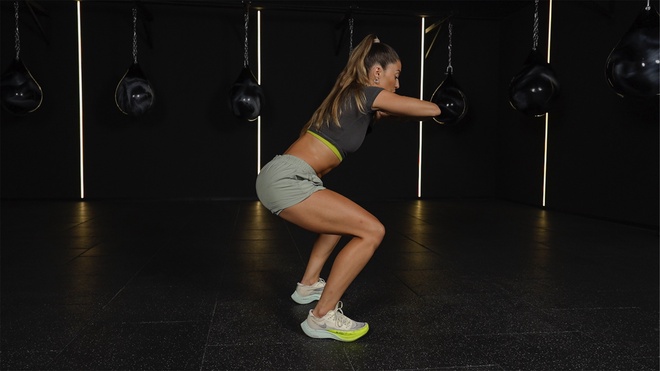
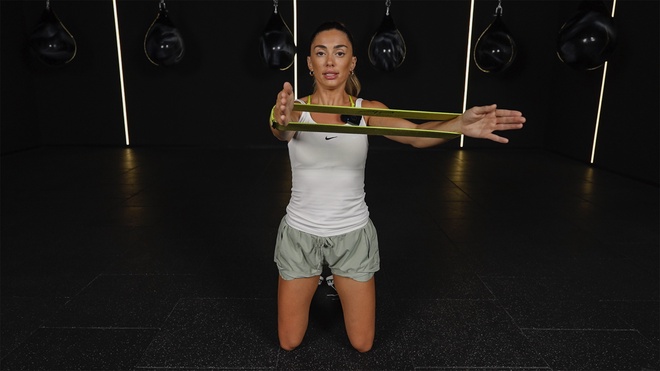
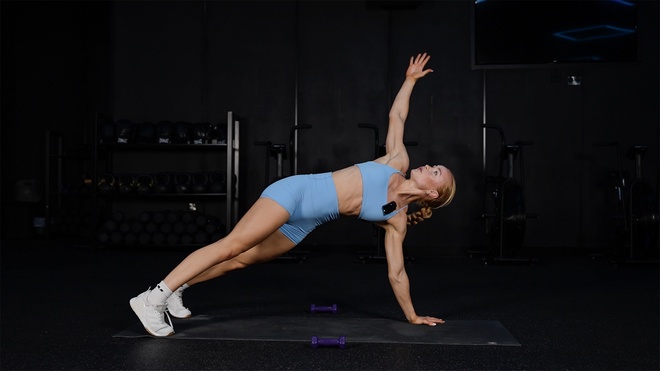
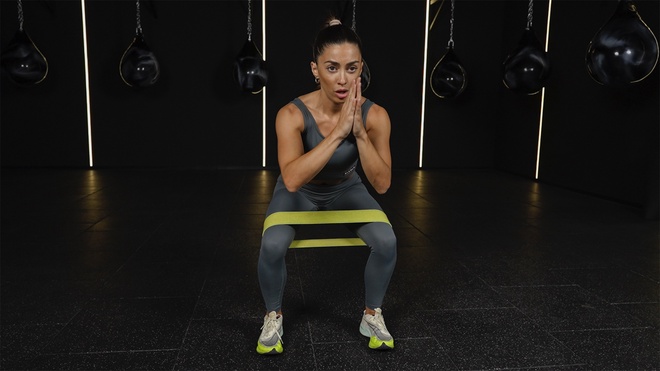
Frequently Asked Questions
Related Exercises
Plank
Static anti-extension hold that forms the foundation. If you cannot hold a plank for 20 seconds, you are not ready for the plank walk. If planks have become easy, plank walk is the direct upgrade.
Plank Shoulder Taps
Same anti-rotation demand from a plank position but through lifting one hand to the opposite shoulder instead of stepping laterally. Different movement pattern, same core challenge.
Bear Crawl
Another quadruped movement that loads core and shoulders under body weight. Bear crawl moves forward and back with knees hovering. Plank walk moves laterally with legs extended. Together they cover all directions.
Mountain Climbers
Cardio-dominant plank movement that drives knees forward. Less lateral challenge, more hip flexor and cardiovascular demand. Good pairing with plank walks for a complete plank-based circuit.
Renegade Row
Anti-rotation core work from a plank position with a pulling movement added. If plank walks build lateral stability, renegade rows build rotational stability.
This exercise helps with
Get plank walk in a guided workout
Access 10 workouts featuring this exercise, plus personalized plans from Dr. Wellls.
Your membership funds independent women's health research