Seated Side Bend: How-to, Benefits & Variations
Seated side bends stretch the obliques and intercostals. Sit cross-legged, reach one arm over and lean. Opens the side ribcage.
Seated Side Bend: How-to, Benefits & Variations
Stretching is not what you think it is. It is not passive. It is not rest. The seated side bend is a targeted movement that addresses specific deficits in tissue elasticity, joint range of motion, and neural tension.
Mish Naidoo programs it in Wellls workouts for women who need results, not just motion. There is a difference.
Flexibility: Restore And Reset 10
Mish Naidoo
How to Do Seated Side Bends
Sit cross-legged on the floor or on a block. Sit tall, crown of head reaching toward the ceiling.
Place your right hand on the floor beside your right hip. Raise your left arm overhead.
Bend to the right, reaching your left arm over your head. Keep both sitting bones grounded.
Hold for 20-30 seconds. Breathe into the left side of your ribcage.
Return to center and switch sides. Keep the bend pure lateral. No twisting or forward lean.
Muscles Worked
Primary
Primary muscles
Main muscles targeted by the seated side bend.
Secondary
Stabilizer muscles
Support primary movers and maintain joint alignment.
Why this matters in perimenopause
Women lose lean muscle mass from their 30s, accelerating during perimenopause as estrogen drops. Regular flexibility work counteracts this by maintaining tissue elasticity and joint range of motion.
Coach's Tips
"Left hand comes to the mat. Lift your right arm up and over." That is Mish Naidoo's cue. This detail makes the difference between an effective rep and a wasted one.
Mish Naidoo
"Get as long as you can through the side of the body." That is Mish Naidoo's cue. This detail makes the difference between an effective rep and a wasted one.
Mish Naidoo
If anything feels sharp rather than challenging, stop immediately. Back off the depth and reassess your alignment. Discomfort is fine. Pain is a message.
Use a yoga block or towel to reduce depth. Build range over weeks, not minutes.
Why This Matters for You
During perimenopause, declining estrogen affects connective tissue elasticity, joint lubrication, and muscle pliability. Tendons and ligaments that once recovered overnight now stay stiff for days. The seated side bend counteracts this by maintaining tissue hydration and range of motion through regular, gentle loading.
Flexibility work also addresses sleep and stress disruptions common in perimenopause. A systematic review found that stretching routines reduced perceived stress and improved sleep quality in women over 40. Sustained stretching activates the parasympathetic nervous system, lowering cortisol and promoting the relaxation response.
Variations & Modifications
Seated Side Bend (Right)
lowVariation of the seated side bend that modifies the standard movement pattern for different training emphasis.
Seated Side Bend (Left)
lowVariation of the seated side bend that modifies the standard movement pattern for different training emphasis.
Seated Side Bends & Chest Stretch
lowVariation of the seated side bend that modifies the standard movement pattern for different training emphasis.
Seated Side Bend with Rotation (Other Side)
lowVariation of the seated side bend that modifies the standard movement pattern for different training emphasis.
Benefits
Restores range of motion that desk life steals
The seated side bend targets muscles that shorten from hours of sitting. Structurally shortened. The kind of tightness that changes how you walk.
Reduces injury risk
Tight muscles create compensation patterns. Stretching breaks that cycle before something else becomes an injury.
Supports joint health during hormonal changes
Declining estrogen affects connective tissue elasticity. Regular stretching maintains pliability that hormonal changes would otherwise stiffen.
Takes minutes, not an hour
Targeted stretching for 5-10 minutes daily produces measurable range of motion improvements within 4 weeks.
Common Mistakes to Avoid
Bouncing to increase range
Ballistic stretching triggers the stretch reflex. Hold steady for 30+ seconds instead.
Stretching cold muscles
Walk for 5 minutes first. Warm tissue is elastic. Cold tissue is brittle.
Rounding the spine to reach further
Hinge from the hips with a flat back. Rounding stretches your spine, not the target muscle.
Not breathing through the stretch
Deep exhales signal muscles to relax. Breathe into the tight spots.
Workouts Featuring This Exercise
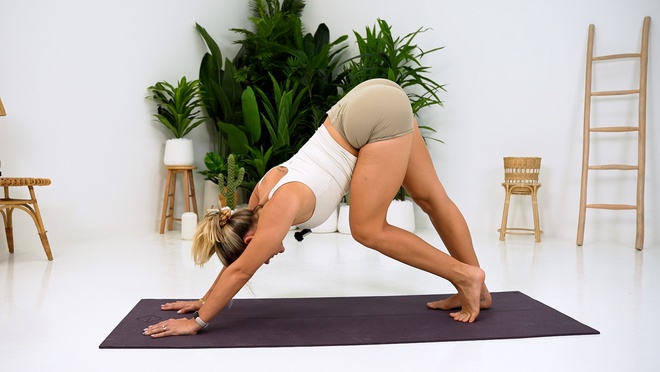
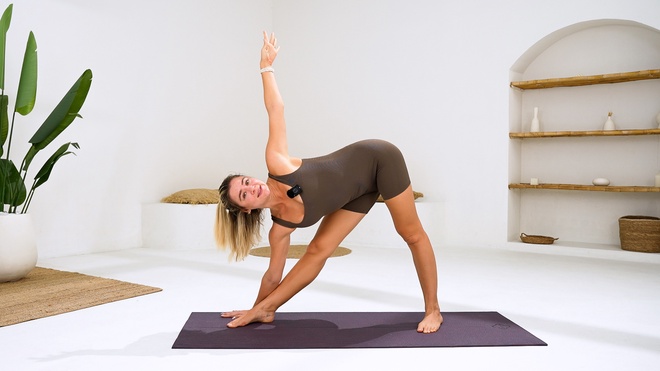
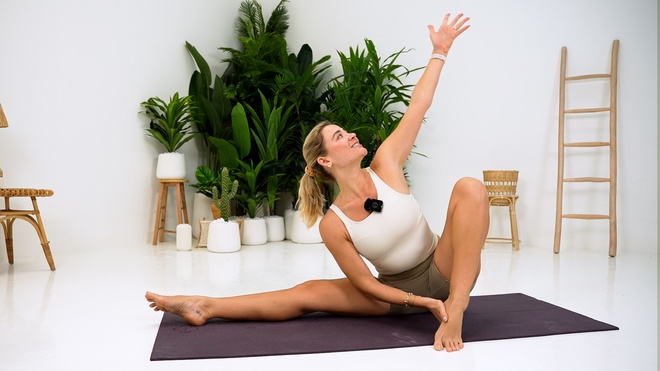
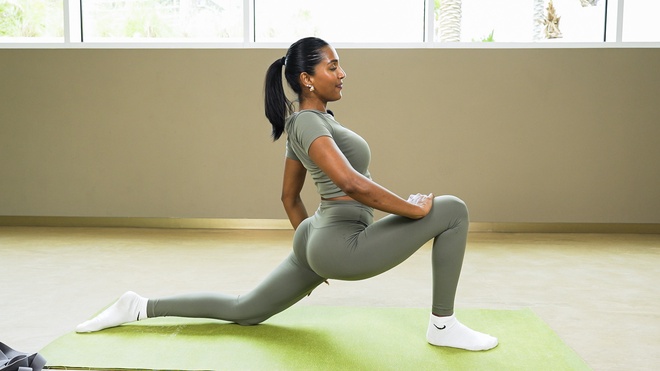
Join women building flexibility and joint health with certified trainers
Frequently Asked Questions
Related Exercises
Crunches
Complements the seated side bend by targeting related muscle groups and movement patterns.
Lateral Raise
Complements the seated side bend by targeting related muscle groups and movement patterns.
Romanian Deadlift
Complements the seated side bend by targeting related muscle groups and movement patterns.
Bulgarian Split Squat
Complements the seated side bend by targeting related muscle groups and movement patterns.
Glute Bridge
Complements the seated side bend by targeting related muscle groups and movement patterns.
This exercise helps with
Get seated side bends in a guided workout
Access 4 workouts featuring this exercise, plus personalized plans from Dr. Wellls.
Join women building flexibility and joint health with certified trainers
Your membership funds independent women's health research