Seated Spinal Twist: How-to, Benefits & Variations
The seated spinal twist improves thoracic mobility and relieves back tension. Sit, twist torso, breathe deeply. Aids digestion and posture.
Seated Spinal Twist: How-to, Benefits & Variations
Women lose 3-5% of lean muscle mass per decade after 30. By perimenopause, the drop accelerates because estrogen directly influences muscle protein synthesis. The seated spinal twist is one of the most effective exercises for fighting this decline.
Petra Kapiciakova programs this movement because it targets the specific muscles and patterns that atrophy fastest. And the best part? You don't need a gym to do it.
Yoga: Yoga Before Bedtime 2
Petra Kapiciakova
How to Do Seated Spinal Twist
Sit on the floor with both legs extended in front of you. Sit tall, lifting through the crown of your head.
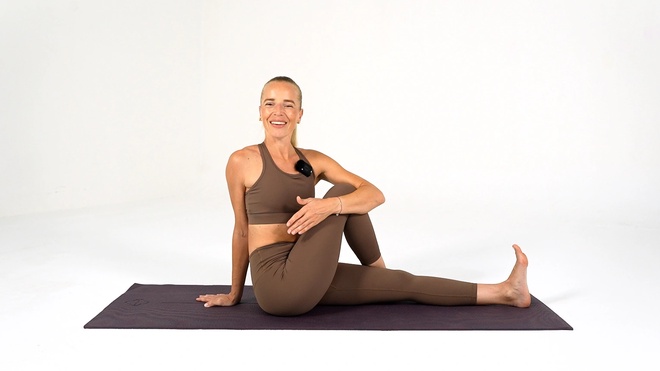
Bend your right knee and place your right foot on the outside of your left thigh. Keep your left leg extended or bend it slightly.
Place your right hand behind you on the floor for support. Bring your left elbow to the outside of your right knee.
On an inhale, lengthen your spine. On the exhale, twist deeper to the right, using your elbow against your knee as leverage.
Hold for 30-45 seconds, breathing naturally. Each exhale is an opportunity to rotate slightly further. Release slowly and repeat on the other side.
Muscles Worked
Primary
Primary muscles
The main muscles targeted by the seated spinal twist, responsible for producing the movement force.
Secondary
Stabilizer muscles
Support the primary movers and maintain proper joint alignment throughout the movement.
Why this matters in perimenopause
Women lose lean muscle mass progressively from their 30s, and the decline accelerates during perimenopause as estrogen levels drop. Regular yoga practice directly counteracts this decline by combining isometric strength work with flexibility and nervous system regulation.
Coach's Tips
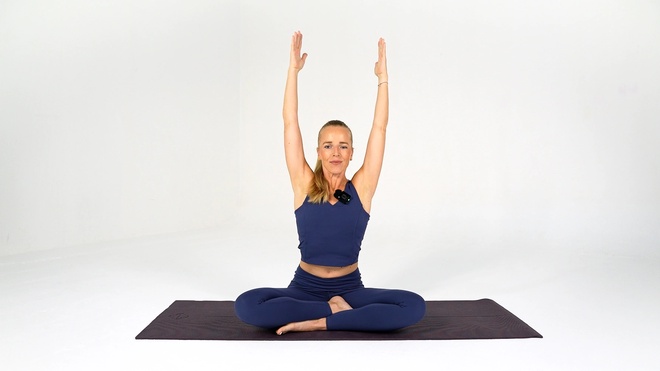
"Lift your arms over the head... lengthen your spine." That's Petra Kapiciakova's cue. This detail makes the difference between an effective rep and a wasted one.
Petra Kapiciakova
"Twist to the right side, right hand behind your back... left hand on your thigh." That's Petra Kapiciakova's cue. This detail makes the difference between an effective rep and a wasted one.
Petra Kapiciakova
"Just go only as low as feels right, and you still keep your glutes on the mat." Safety is not optional. Petra Kapiciakova emphasizes this in every set.
Petra Kapiciakova
Match your breath to the movement. Steady breathing activates the parasympathetic nervous system, which helps muscles relax and respond.
Why This Matters for You
Yoga during perimenopause addresses the whole symptom cluster, not just one piece. The breathing regulates cortisol. The holds build isometric strength and bone loading. The stretches maintain the connective tissue elasticity that estrogen decline compromises.
A systematic review of yoga interventions for menopausal symptoms found improvements in sleep quality, anxiety, and vasomotor symptoms (hot flashes). The seated spinal twist specifically targets areas where perimenopausal women report the most tension and restriction. It is both therapeutic and preventive, which is exactly the combination this life stage demands.
Variations & Modifications
Seated Spinal Twist (Other Side)
lowVariation of the seated spinal twist that modifies the standard movement pattern for different training emphasis.
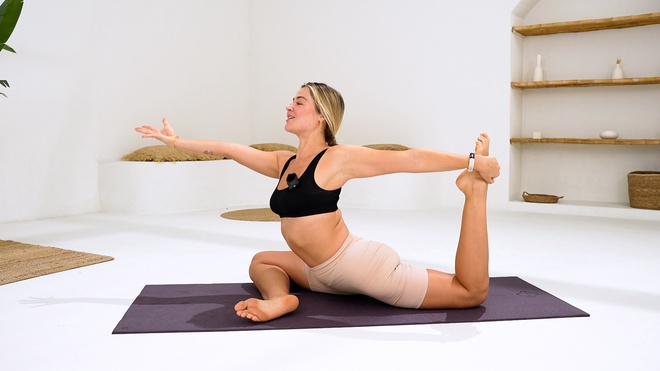
Seated Twist with Side Reach (Right)
lowVariation of the seated spinal twist that modifies the standard movement pattern for different training emphasis.
Seated Twist with Side Reach (Left)
lowVariation of the seated spinal twist that modifies the standard movement pattern for different training emphasis.
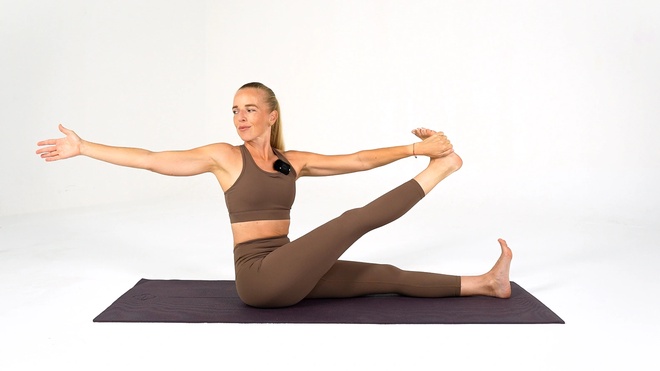
Seated Twist with Leg Extension (Right Side)
lowVariation of the seated spinal twist that modifies the standard movement pattern for different training emphasis.
Benefits
Releases tension your body stores unconsciously
The seated spinal twist opens areas where stress accumulates without your permission. Shoulders, hips, spine. These are not just muscles. They are containers for every deadline, argument, and sleepless night.
Builds strength through stillness
Holding a yoga pose under bodyweight load builds isometric strength that protects joints and improves balance. The research supports it: yoga practitioners show significantly better balance and stability than non-practitioners.
Calms the nervous system
Yoga activates the parasympathetic nervous system, the branch responsible for rest and recovery. During perimenopause, when cortisol runs high and sleep runs short, this matters more than another hard workout.
Improves body awareness
Proprioception declines with age and hormonal changes. Yoga trains your ability to sense where your body is in space, which prevents injuries during both exercise and daily life.
Common Mistakes to Avoid
Forcing depth before the body is ready
Meet your body where it is today. Depth comes with consistent practice, not with force. Forcing creates injury, not flexibility.
Holding the breath
Breath is not optional in yoga. If you cannot breathe steadily in a pose, you have gone too deep. Back off until breathing is easy.
Ignoring alignment for appearance
A correctly aligned pose at 50% depth beats a misaligned pose at full depth every time. Use blocks, straps, or modified positions.
Rushing transitions
The transitions between poses are where injuries happen. Move slowly and deliberately into and out of every position.
Workouts Featuring This Exercise
Join women building health and resilience with certified trainers
Frequently Asked Questions
Related Exercises
Crunches
Complements the seated spinal twist by targeting related muscle groups and movement patterns.
Bicycle Crunches
Complements the seated spinal twist by targeting related muscle groups and movement patterns.
Leg Raise
Complements the seated spinal twist by targeting related muscle groups and movement patterns.
Dead Bug
Complements the seated spinal twist by targeting related muscle groups and movement patterns.
Hollow Body Hold
Complements the seated spinal twist by targeting related muscle groups and movement patterns.
This exercise helps with
Get seated spinal twist in a guided workout
Access 4 workouts featuring this exercise, plus personalized plans from Dr. Wellls.
Join women building health and resilience with certified trainers
Your membership funds independent women's health research