Standing March: How-to, Benefits & Variations
The standing march targets multiple muscle groups. Improves functional fitness. Start with 3 sets of 10-12 reps with controlled form.
Standing March: How-to, Benefits & Variations
The standing march is a warmup exercise targeting multiple muscle groups. Counters age-related muscle loss (sarcopenia) that accelerates after 40. Found in 2 workouts across the Wellls platform with 0 variations.
Grow And Glow Positive Prenatal Fitness 4
Danielle Harrison
How to Do Standing March
Set up in the starting position for standing march. Feet hip-width apart (or as the exercise requires). Engage your core before initiating any movement.
Begin the movement with control. Danielle Harrison cues: "Don't go too fast here. We're trying to get the knees up. We're still engaging the core."
Complete the full range of motion. "Don't go too fast here. We're trying to get the knees up. We're still engaging the core."
Return to the starting position with control. Don't rush the eccentric (lowering) phase.
Danielle Harrison adds: "We've got one minute of just marching it out."
Muscles Worked
Primary
Secondary
Why this matters in perimenopause
resistance training preserves muscle mass and bone density during perimenopause. The standing march directly supports this by targeting key muscle groups.
Coach's Tips
"Don't go too fast here. We're trying to get the knees up. We're still engaging the core." - Danielle Harrison
Danielle Harrison
"We've got one minute of just marching it out." - Danielle Harrison
Danielle Harrison
"If you need to just walk, keep the heart rate up, but not get the knees up as high, also great." - Danielle Harrison
Danielle Harrison
Why This Matters for You
resistance training preserves muscle mass and bone density during perimenopause. The standing march supports overall functional fitness during a time when the body needs it most. Research supports this type of exercise for women during the menopausal transition.
Variations & Modifications
Benefits
Strengthens and conditions the whole body
The standing march builds functional capacity that supports everything from carrying groceries to hiking.
Supports your body through hormonal changes
resistance training preserves muscle mass and bone density during perimenopause. The standing march directly addresses this.
Requires minimal equipment
No equipment needed. You can do the standing march at home, in a hotel room, or between meetings.
Common Mistakes to Avoid
Rushing through repetitions
Control the movement in both directions. The lowering phase is just as important as the lifting phase.
Ignoring pain signals
Joint pain during the standing march means something needs adjusting: form, range, or load. Muscle burn is fine. Joint ache is a warning.
Workouts Featuring This Exercise
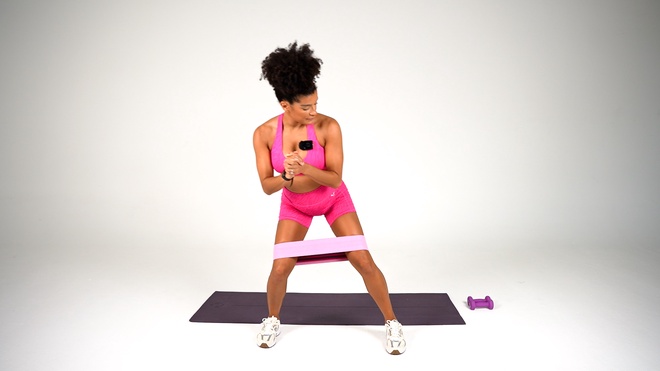
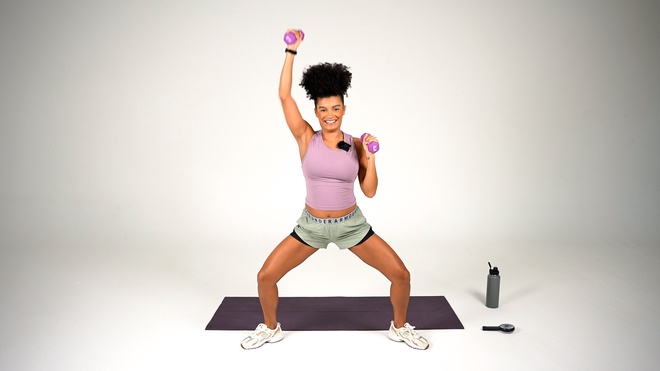
Join women building strength and confidence with certified trainers
Frequently Asked Questions
This exercise helps with
Get standing march in a guided workout
Access 2 workouts featuring this exercise, plus personalized plans from Dr. Wellls.
Join women building strength and confidence with certified trainers
Your membership funds independent women's health research