ADHD symptoms in women worsen in the 30s-40s as declining estrogen reduces dopamine, unmasking lifelong ADHD that compensatory strategies hid.
Am I Developing ADHD or Is This Hormonal?
ADHD diagnoses in adult women have more than doubled in the past decade; 15.5 million US adults had an ADHD diagnosis by late 2023, with approximately half diagnosed in adulthood
“Cook dinner, read while dinner is simmering, decide if I need to wash clothes or not, watch a show while eating dinner, play video games, shower, read, bed lol.”


Dr. A. Rybakova, Dr. A. Rybakov · Lifestyle Medicine
For informational purposes only. Not a substitute for professional medical advice.
Most clinicians will tell you ADHD is a childhood condition. They are wrong. For millions of women, the diagnosis arrives in their thirties or forties, not because the ADHD is new, but because the scaffolding that held it together just collapsed.
Key takeaways
- ADHD symptoms in women worsen in the 30s-40s as declining estrogen reduces dopamine, unmasking lifelong ADHD that compensatory strategies hid.
- Estrogen modulates dopamine synthesis, receptor density, and degradation in prefrontal cortex
- Perimenopause estrogen decline creates 'double deficit' in women with existing dopaminergic dysregulation
- Compensatory masking behaviors camouflage ADHD symptoms for decades until hormonal or life-demand thresholds are exceeded
The Biology of ADHD-Like Symptoms in Women
ADHD symptoms in women over 30 are being diagnosed at unprecedented rates, and the reason is not that women suddenly developed a new neurological condition. The reason is that estrogen was compensating for dopamine irregularities for decades, and now estrogen is declining.
Let me say something that will make some psychiatrists uncomfortable: the criteria we use to diagnose ADHD were designed around the behavior of eight-year-old boys. The Diagnostic and Statistical Manual, edition after edition, centered hyperactivity and impulsivity as cardinal features. And because girls with ADHD tend toward the inattentive subtype, because they daydream rather than disrupt, because they develop elaborate compensatory strategies rather than failing spectacularly in ways that alarm teachers, millions of women reached adulthood without ever hearing the three letters that would have explained their entire lives.
This is not a soft claim. A 2024 analysis from Skoglund and colleagues confirmed that girls receive their ADHD diagnosis an average of five years later than boys. By the time the diagnosis arrives, these women have already internalized a narrative: that they are lazy, scattered, not trying hard enough, fundamentally broken in some way that discipline should fix but never does. The delay is not just a scheduling problem. It causes measurable psychological harm. Late-diagnosed women have significantly higher rates of depression, anxiety, eating disorders, and suicidality than women diagnosed in childhood. Every year of missed diagnosis compounds the damage.
So when I say that ADHD-like symptoms in women deserve more clinical attention, I am not talking about a trending TikTok topic. I am talking about a diagnostic failure that has harmed an entire generation of women, and that hormonal changes in midlife are now exposing in ways that can no longer be ignored.
The data from the National Center for Health Statistics confirms what clinicians specializing in adult ADHD have been saying for years: 15.5 million US adults had received an ADHD diagnosis by late 2023, with roughly half diagnosed in adulthood. Prescription rates for stimulant medication in women aged 20 to 39 have risen to 6.8 per 100, higher than any other demographic group. This is not a fad. This is not social media self-diagnosis. This is the medical system catching up with a reality that women have been living inside for decades.
I want to be specific about this: ADHD symptoms in women look different from the hyperactive boy stereotype that dominated diagnostic criteria for fifty years. Women internalize. They mask. They build elaborate compensatory systems that hold everything together until perimenopause strips away the biochemical scaffolding. Then it all comes apart, and the medical system either misses the diagnosis entirely or assigns one without asking whether hormonal change is the primary driver.
Why did nobody catch this when I was younger?
Because you were good at hiding it. That is the honest answer, and it contains a kind of cruelty that deserves to be named.
Women with ADHD develop what researchers call masking behaviors, and they do it early. By elementary school, a girl with ADHD has already noticed that her male classmates who fidget and blurt get attention (negative attention, but attention). She has learned that her version of struggle, the daydreaming, the lost homework, the social missteps, earns not concern but irritation. So she adapts. She makes lists. She stays up late to finish what she could not focus on during the day. She develops a perfectionism so intense it looks like conscientiousness, when in reality it is terror.
The 2020 expert consensus statement by Young et al. documented this in brutal clinical detail: girls and women with ADHD engage in compensatory behaviors that effectively camouflage their symptoms from everyone, including themselves. A girl who hyperfocuses on studying the night before an exam and scrapes a B does not look like she has an attention disorder. She looks like she is trying. Which she is. Harder than anyone around her realizes.
I spoke with a clinical psychologist in Melbourne who specializes in adult ADHD assessment. She told me that her most common patient presentation is a woman in her late thirties or early forties who comes in for anxiety or burnout. 'She has been compensating at an Olympic level for twenty-five years,' the psychologist said. 'She does not know she has been compensating, because it has always been this hard, so she assumes that is normal. She thinks everyone is working this hard. They are not.'
The masking works until it does not. And the point at which it stops working, for most women, aligns with one of two events: either the demands of life exceed the compensatory capacity (motherhood, career advancement, caregiving), or the biochemical support system begins to falter (perimenopause). Often, both happen at approximately the same time. The reality is that ADHD symptoms in women present primarily as inattentive, not hyperactive, and the diagnostic framework has only recently begun to account for that difference.
What is estrogen actually doing to my brain?
This is the question I wish every woman's doctor would answer, and almost none do. The mechanism is specific, measurable, and well-documented in the neuroscience literature, even if it has barely reached clinical practice.
Estrogen is not merely a reproductive hormone. In the brain, estradiol (the primary form of estrogen) acts on dopaminergic neurons in the striatum and prefrontal cortex. It increases dopamine synthesis. It boosts receptor density. It inhibits monoamine oxidase, the enzyme that breaks dopamine down. In practical terms: when your estrogen is high, your dopamine system works more efficiently. Your prefrontal cortex, the region responsible for attention, planning, impulse control, and working memory, has more of the neurotransmitter it needs to function.
In an ADHD brain, dopamine signaling is already compromised. The prefrontal cortex is already running a deficit. Estrogen has been quietly subsidizing that deficit for decades, and neither you nor your doctor knew it. (This is not a metaphor. Preclinical studies demonstrate that estradiol directly stimulates dopamine production and reduces reuptake at the synapse. The biochemistry is real and quantifiable.)
A 2025 systematic review by Osianlis et al. in the Journal of Attention Disorders confirmed what many women have experienced anecdotally: ADHD symptoms fluctuate with the menstrual cycle, worsening during low-estrogen phases. The premenstrual week, when estrogen plummets, is when women with ADHD report their worst focus, their most intense emotional reactivity, their greatest difficulty with organization. Perimenopause is that premenstrual week stretched across months and then years, with estrogen swinging wildly before its final decline.
A small pilot study found that increasing the dosage of stimulant ADHD medication during low-estrogen phases compensated for the hormonal impact. Nine women. Tiny sample. But the principle it demonstrated, that estrogen and stimulant medication are both acting on the same dopaminergic pathway, helps explain why so many women feel like their medication 'stops working' at certain times of the month or during perimenopause. The medication has not changed. The hormonal environment it operates in has. This is why ADHD symptoms in women often worsen dramatically during hormonal transitions: puberty, postpartum, and perimenopause are all periods when estrogen fluctuation disrupts the dopamine system these women depend on.
Key mechanisms
Deep scientific content for Adhd-like symptoms is coming in Wave 3.
Our team is reviewing research papers and clinical guidelines.


Talk to Dr. Wellls — free consultation
4 free messages — no account required
Dr. Wellls AI
Quick start — tap or speak:
Powered by Lifestyle Medicine evidence. Not a substitute for medical advice.
You're Not Alone
women are talking about adhd-like symptoms right now
Thousands of women have been through the same thing. Here's what they say.
“My not-yet-diagnosed ADHD became completely unmanageable. Turns out, I'd been working really, really hard for decades to successfully mask executive dysfunction without realizing it. The mask disappeared with perimenopause. I had no idea what was happening to...”
“After 5 years of racing thoughts and growing inability to function or do my job and living in constant panic of being discovered found I was undiagnosed neurospicy brought to light by collapsing estrogen. I was suicidal and thought I was losing my mind and...”
“Honestly my mind was blown when I found out about these after my late diagnosis”
+ 3 more stories from real women
Is it ADHD, hormones, or both?
Get your personalized cognitive profile in 5 minutes. Discover whether your pattern is lifelong, hormonal, or a double deficit.
1,547 women got their profile this month
Free · 5 min · 100% private
This is not a clinical assessment. For medical concerns, consult a healthcare provider.
Take a moment for yourself
These evidence-based techniques can help manage adhd-like symptoms symptoms right now.
Curated Exercise Sets
4 personalized routines with 16 exercises from professional trainers


The many faces of adhd-like symptoms
3 distinct patterns we've identified from real women's experiences
You were always 'a lot.' Always juggling, always compensating, always one spreadsheet or one alarm away from keeping it all together. And then, somewhere in your mid-thirties or early forties, the strategies stopped working. The to-do lists got longer. The brain got foggier. The thing you used to power through with sheer willpower? It started powering through you instead. This is the unmasking, and it happens to women at precisely the moment life demands the most of them.
From our data
An ADDitude survey of nearly 5,000 women with ADHD found that 63% of respondents aged 45 and older said perimenopause and menopause were the periods when ADHD had the greatest overall impact on their lives. Not childhood. Not college. The hormonal transition.
Connected problems
What women with adhd-like symptoms also experience
Your personalized protocol
A lifestyle medicine approach to adhd-like symptoms, built on 6 evidence-based pillars
Sleep Architecture Reset
Fix your sleep timing before anything else. ADHD brains are disproportionately affected by sleep inconsistency because sleep deprivation impairs the prefrontal cortex, the exact system already compromised. Set a non-negotiable wake time. No screens 45 minutes before bed. If racing thoughts prevent sleep, use a worry dump journal: write everything down, close the notebook, and tell your brain it is handled.
Movement as Dopamine Medicine
Aerobic exercise increases dopamine and norepinephrine in the brain. This is not a wellness platitude; it is pharmacology without a prescription. Start with 20 minutes of brisk walking or cycling, 5 days a week. Morning movement is particularly effective because it front-loads dopamine for the hours when executive function demands are highest. If motivation to start is the barrier (classic ADHD), pair it with something pleasurable: a podcast, music, or a walking partner.
Protein-Forward Nutrition Strategy
Dopamine is synthesized from the amino acid tyrosine, found in protein-rich foods. Ensure protein at...
External Brain Systems
Stop relying on working memory for anything important. Externalize everything: use a single digital ...
Mindfulness for Prefrontal Strengthening
Mindfulness meditation, even brief daily practice (10 minutes), shows evidence for strengthening pre...
Community and Disclosure Strategy
ADHD isolation is real. Finding community, whether in-person support groups, online communities, or ...
Join thousands of women who finally understand why they have been struggling and what to do about it.
Start your protocolHow Adhd-like symptoms affects your body
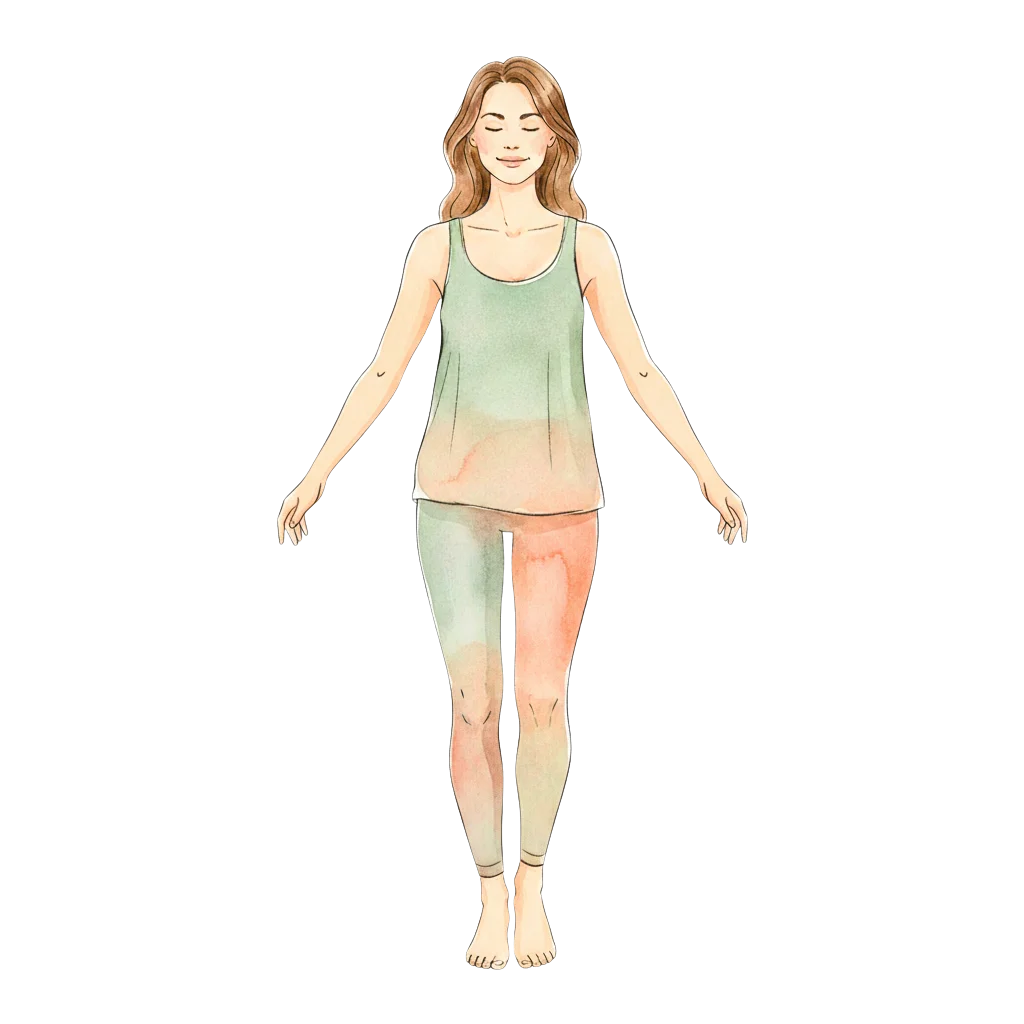
Tap body zones to discover connected symptoms and related conditions.
Join 86+ women discussing adhd-like symptoms
Real experiences shared across Reddit, TikTok, and health forums
Failing at Normal: An ADHD Success Story | Jessica McCabe | TEDxBratislava
Translator: Leonardo Silva Reviewer: Mile Živković Hello, brains! I say that to you because, if you think about it, it wasn't really you that decided to come here today. It was your brain. And...
ADHD in Women
Hello Brains. In case you hadn't noticed I am a woman with ADHD. Which means I have the same mental health condition as a man with ADHD -- But it does affect me differently. [Intro music] Before I...
Honestly my mind was blown when I found out about these after my late diagnosis 😵💫😂 #adhdcheck #neu
Honestly my mind was blown when I found out about these after my late diagnosis 😵💫😂 #adhdcheck #neurospicy #adhdinwomen #latedoagnosedadhd #adhdprobs
Reading others' stories is the first step. Join to share yours.
Community
A safe space for women navigating adhd-like symptoms
Frequently asked questions
Common questions about Adhd-like symptoms
How we research and fact-check
Every article on Wellls is researched using peer-reviewed medical literature, clinical guidelines, and real patient experiences from 130 online discussions.
Sources: We reference 48 PubMed-indexed studies, ACOG/NAMS clinical guidelines, and validated screening tools.
Review: Content is written by our editorial team, enriched from a medical knowledge base of 15,000+ sources. Evidence standards and clinical methodology guided by our Medical Advisory Board: Dr. Alexandra Rybakova and Dr. Alexander Rybakov, Lifestyle Medicine Physicians with 35+ years combined clinical practice.
This content is for informational purposes only and does not constitute medical advice. Our editorial standards · Medical advisory board
References
48 sources reviewed for this adhd-like symptoms guide
- 1.
- 2.
- 3.Smari et al. Perimenopausal symptoms in women with and without ADHD: population-based cohort [PubMed]
- 4.Wynchank et al. Practical tools for female-specific ADHD: impact of hormonal fluctuations in clinical practice [PubMed]
- 5.Camara et al. Relationship between sex hormones, reproductive stages and ADHD: systematic review [PubMed]
- 6.Epperson et al. Impact of atomoxetine on subjective attention and memory difficulties in perimenopausal women [PubMed]
- 7.Epperson et al. New onset executive function difficulties at menopause: a possible role for lisdexamfetamine [PubMed]
- 8.Callahan et al. Age-related cognitive complaints and emotional difficulties associated with ADHD: gender differences [PubMed]
- 9.
- 10.
History of updates
Current version (March 11, 2026) — Content reviewed and updated based on latest research
First published (March 1, 2026)
Explore related problems
Women who experience adhd-like symptoms often also deal with these
Your personalized plan is ready
You have spent your entire life wondering what is wrong with you. We can show you what is actually happening in your brain, the specific hormonal and neurological mechanisms, and exactly what to do about it. Not generic advice. A protocol built for the ADHD brain in midlife.
Join thousands of women who finally understand why they have been struggling and what to do about it.
Free assessment · Takes 2 minutes · No account required
Medical disclaimer: This content is for informational purposes only and does not constitute medical advice, diagnosis, or treatment. Always consult a qualified healthcare provider for personal medical decisions. Content is based on peer-reviewed research and updated regularly. Learn about our editorial standards.