Adrenal fatigue is not a recognized diagnosis, but symptoms reflect real HPA axis dysregulation from chronic stress (Cadegiani & Kater 2016).
Your Adrenals Aren't 'Fatigued.' The Truth Is More Complicated and More Validating.
80% of people experience adrenal stress at some point
“Most doctors don’t talk about adrenal fatigue but it’s legit. And once I got my body out if fight or flight using herbs that had a calming effect on the body, I felt like a different person.”

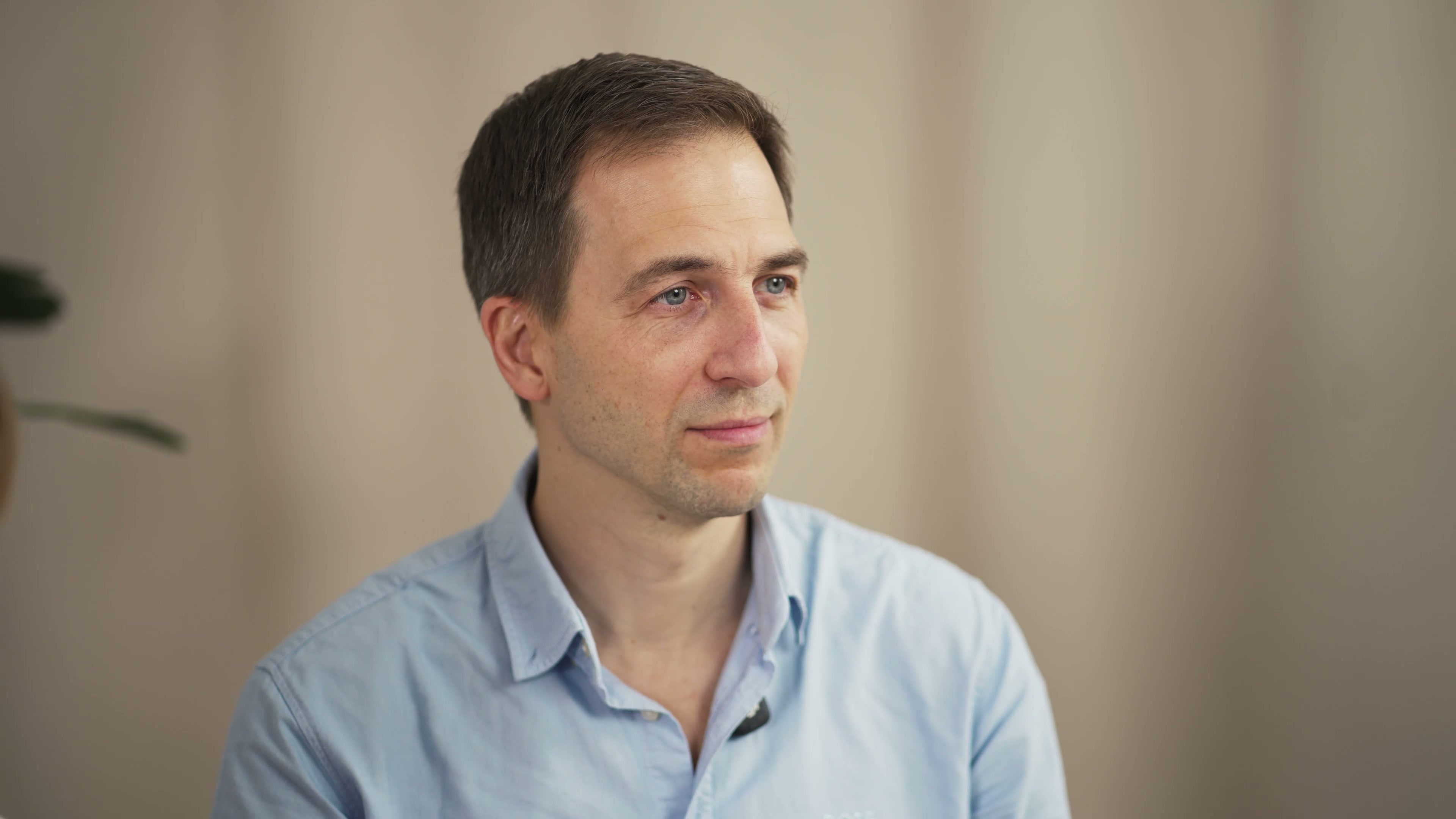
Dr. A. Rybakova, Dr. A. Rybakov · Lifestyle Medicine
For informational purposes only. Not a substitute for professional medical advice.
You've been told it doesn't exist. That's the first thing you need to know. The Endocrine Society says 'adrenal fatigue' is not a real diagnosis, and technically, they're right. Your adrenal glands are not tired. They are not broken. They are not failing. And if that sentence just made you furious, because you haven't felt like yourself in two years and your body clearly does not work the way it used to and you're sitting here Googling at 11 PM because no doctor has given you a satisfying answer, then I need you to keep reading. Because your symptoms are real. The mechanism is real. The science is just more complicated than the label, and in some ways, more validating.
Key takeaways
- Adrenal fatigue is not a recognized diagnosis, but symptoms reflect real HPA axis dysregulation from chronic stress (Cadegiani & Kater 2016).
You've been told it doesn't exist. That's the first thing you need to know.
The Endocrine Society, the world's oldest and largest organization of endocrinologists, has a page on their website that says, in precise clinical language, that no scientific proof exists to support adrenal fatigue as a true medical condition. The Mayo Clinic agrees. WebMD agrees. Harvard Health wrote a piece questioning whether it is real. And technically, they are all correct. There is no ICD-10 code for adrenal fatigue. There is no approved diagnostic test. There is no peer-reviewed study that has demonstrated that the adrenal glands themselves become exhausted from chronic stress in otherwise healthy people.
So why are 156,000 women watching TikTok videos about it? Why did 5 women in our community database describe this exact pattern: the bone-deep tiredness that sleep doesn't fix, the 3 PM crash that no amount of coffee touches, the wired-but-exhausted feeling at midnight, the slow erosion of the person they used to be? Why is 'adrenal fatigue' one of the most searched health terms among women over 35?
Because the symptoms are real. The experience is real. The mechanism behind the symptoms is real. The label is wrong.
This is one of those places in medicine where the gap between what patients feel and what doctors can name is wide enough to drive a truck through. Women are experiencing a documented pattern of HPA axis dysregulation, cortisol rhythm disruption, allostatic load accumulation, and neuroinflammation. These are measurable. Published. Peer-reviewed. But because the popular term for this experience, 'adrenal fatigue,' implies a mechanism that doesn't hold up (your adrenals getting tired like a muscle), the entire clinical picture gets dismissed. The baby goes out with the bathwater, and you go home with lab results that say 'normal' and a body that says otherwise.
I'm going to walk you through what is actually happening. Not the naturopathic version. Not the conventional medicine version. The science, messy and incomplete as it is. Because you deserve better than 'it doesn't exist' and you also deserve better than 'take these seventeen supplements and your adrenals will heal.' The truth is harder, more specific, and ultimately more useful than either side's talking points.
The cortisol curve that lost its shape
Here is what is actually happening in your body, and it is more specific than any TikTok about adrenal fatigue will tell you. Cortisol follows a rhythm. Not a flat line, not a random scatter. A curve. It should peak about thirty to forty-five minutes after you open your eyes. That spike is called the cortisol awakening response, and it is one of the most reliable biological rhythms humans have. It is what makes the difference between dragging yourself out of bed like you are walking through wet concrete and actually feeling ready to face the day. By evening, cortisol should drop to its lowest point, making room for melatonin and the whole cascade of repair hormones that do their work while you sleep.
When chronic stress persists, something measurable happens to that curve. Kenneth Wright's team at the University of Colorado ran a controlled laboratory study where they induced circadian misalignment in healthy adults for twenty-five days. Their 24-hour cortisol dropped significantly. But that is the counterintuitive part. It did not stay high from stress. It collapsed. The morning peak got shorter. The evening trough got higher. The curve flattened. And alongside that flattening, inflammatory markers, CRP and TNF-alpha and IL-10, all went up. Your body was not just tired. It was inflamed.
I want you to sit with that for a second, because this is exactly the experience women describe when they say 'adrenal fatigue.' They are not imagining it. They are describing a cortisol curve that has lost its dynamic range. Tianyi Huang's study of 233 postmenopausal women in the Nurses' Health Study II confirmed this: poor sleep quality, longer sleep latency, and shorter sleep duration were all associated with a reduced cortisol awakening rise and a flattened evening decline. The women who slept poorly had measurably different cortisol rhythms. Not subtly different. Statistically significantly different.
The clinical term for this is HPA axis dysregulation. Not adrenal fatigue. Not adrenal insufficiency. Not Addison's disease. A distinct pattern where the hypothalamus, pituitary, and adrenal glands have collectively recalibrated their signaling to chronic stress. A 2025 paper in The American Journal of Medicine by Melinda Ring at Northwestern called it exactly that, titling it 'An Integrative Approach to HPA Axis Dysfunction: From Recognition to Recovery,' and arguing that clinicians need a framework to identify and treat this pattern even though it falls outside traditional endocrine diagnoses.
Why the 'fatigue' label gets it wrong (and why that matters for your treatment)
Let me tell you why this distinction matters for you personally, not just scientifically. If your problem were truly adrenal fatigue, meaning your adrenal glands were too exhausted to produce adequate cortisol, the treatment would be straightforward: replace the cortisol. Hydrocortisone. Prednisone. Done. That is how actual adrenal insufficiency works. Addison's disease. Diagnosed with an ACTH stimulation test. Treated with replacement hormones. Life-saving medication.
But that is not what is happening in the vast majority of women who identify with the term 'adrenal fatigue.' Their adrenals are working. Their cortisol levels, when tested by conventional blood draw at 8 AM, often come back within the reference range. And then their doctor says, 'Your labs are normal,' and they want to throw the lab report across the room because they know, in their body, that something is deeply wrong.
Cadegiani and Kater's 2016 systematic review in BMC Endocrine Disorders examined 58 studies and found exactly this pattern. The 33 studies conducted on healthy individuals and the 25 on symptomatic patients used different cortisol measures: direct awakening cortisol, cortisol awakening response, salivary cortisol rhythm, 24-hour urinary cortisol. And the results conflicted. Some showed low cortisol. Some showed normal cortisol. Some showed high cortisol. The review concluded that 'adrenal fatigue' as defined by naturopathic medicine, meaning the adrenals simply cannot keep up, does not hold up under scrutiny.
But here is what the same researchers did next, and this is the part most articles about this study leave out. Cadegiani went on to publish work on what he called 'adrenal hyporesponsiveness,' meaning the HPA axis still functions but responds inadequately to acute stressors. The cortisol is not absent. It is present but sluggish. The system has lost its reactivity. A meta-analysis by Zorn and colleagues in Psychoneuroendocrinology found that women with current major depression or anxiety showed a blunted cortisol stress response, meaning their bodies had essentially turned down the volume on acute stress signaling after years of chronic activation.
Bruce McEwen, the neuroscientist who coined the term 'allostatic load,' described this as the cumulative wear-and-tear from repeated activation of the stress response. Not a single organ failing. An entire interconnected system shifting to a new, dysfunctional baseline. The biomarkers include cortisol, DHEA, epinephrine, CRP, glycated hemoglobin, blood pressure, waist-hip ratio. Women facing what Rodriguez et al. (2019) called the 'double burden' of career and caregiving showed accelerated biological aging across all these markers.
So the name is wrong. The experience is not.
Deep scientific content for Adrenal fatigue is coming in Wave 3.
Our team is reviewing research papers and clinical guidelines.


Talk to Dr. Wellls — free consultation
4 free messages — no account required
Dr. Wellls AI
Quick start — tap or speak:
Powered by Lifestyle Medicine evidence. Not a substitute for medical advice.
You're Not Alone
women are talking about adrenal fatigue right now
Thousands of women have been through the same thing. Here's what they say.
“Do you get these symptoms? Do you find anything that helps? #lowcortisol #addisonsdisease #adrenalfatigue #symptoms #chronicillnessawareness”
“Most doctors don't talk about adrenal fatigue but it's legit. And once I got my body out of fight or flight using herbs that had a calming effect on the body, I felt like a different person.”
“Two years of feeling like my body was giving up on me, I am so grateful I found holistic medicine. I truly never thought I would get my life back.”
+ 3 more stories from real women
Understanding Your Stress-Fatigue Pattern
A quick assessment to map your specific stress-fatigue pattern. Whether you call it adrenal fatigue or HPA axis dysfunction, your symptoms are real. This quiz identifies what is actually driving them.
2,598 women got their profile this month
Free · 5 min · 100% private
This is not a clinical assessment. For medical concerns, consult a healthcare provider.
Take a moment for yourself
These evidence-based techniques can help manage adrenal fatigue symptoms right now.
Curated Exercise Sets
4 personalized routines with 16 exercises from professional trainers
Adrenal Fatigue — Energy Crash Rescue

Petra Kapiciakova
Professional Trainer

The many faces of adrenal fatigue
3 distinct patterns we've identified from real women's experiences
The healthy cortisol curve (high morning, low evening) flattens under chronic stress. You wake exhausted, feel wired at midnight. The highs get lower, the lows get higher. Your body loses its ability to differentiate day from night, rest from threat.
Connected problems
What women with adrenal fatigue also experience
Your personalized protocol
A lifestyle medicine approach to adrenal fatigue, built on 6 evidence-based pillars
Circadian rhythm restoration
Fixed bed and wake time within 30-minute window, even weekends. Morning sunlight within 30 minutes of waking. No screens 60 minutes before bed. This is not optional. It is the foundation everything else builds on. The HPA axis runs on circadian signals, and until those signals are consistent, supplements and other interventions will have limited effect.
Comprehensive lab panel
Request four-point salivary cortisol (8 AM, noon, 4 PM, midnight), plus ferritin, TSH with free T3/T4, TPO antibodies, vitamin D, B12, fasting insulin, and DHEA-S. This panel distinguishes HPA dysregulation from thyroid disease, anemia, metabolic syndrome, and autoimmune conditions. Bring this list to your doctor. If they refuse, find a different doctor.
Adaptogen trial with tracking
If sleep foundation is solid and labs rule out thyroid or severe deficiency, trial ashwagandha 300mg...
Nervous system regulation practice
Choose one: yoga 3x/week (evidence: mind-body meta-analysis showed SMD -1.13 for anxiety), meditatio...
Structural stress reduction
Using your stress inventory from week 1, identify the top 3 structural stressors and design specific...
Nutritional foundation optimization
Based on lab results: supplement specific deficiencies (iron if ferritin below 50, vitamin D if belo...
1,247 women explored their HPA axis recovery plan this month
Start your protocolHow Adrenal fatigue affects your body
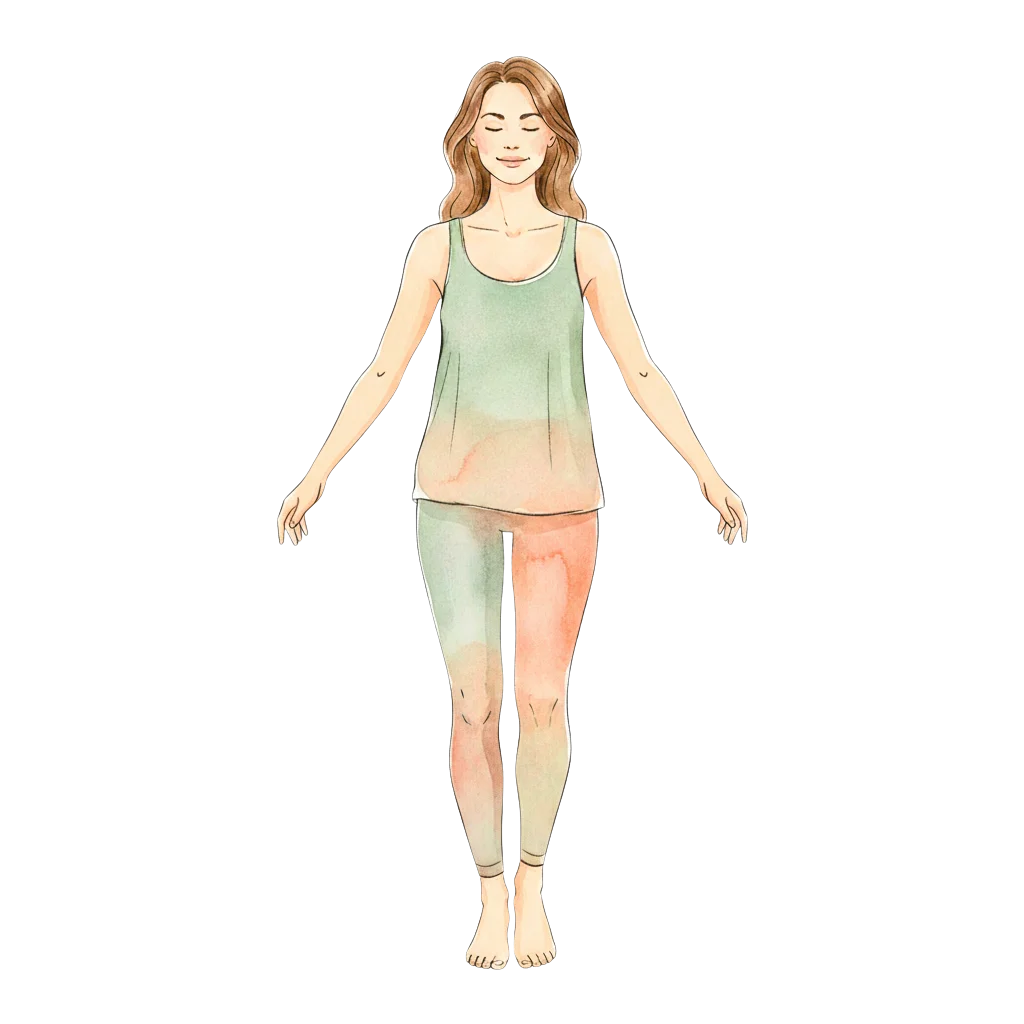
Tap body zones to discover connected symptoms and related conditions.
Join 77+ women discussing adrenal fatigue
Real experiences shared across Reddit, TikTok, and health forums
Do you get these symptoms? Do you find anything that helps? #lowcortisol #addisonsdisease #adrenalf
Do you get these symptoms? Do you find anything that helps? #lowcortisol #addisonsdisease #adrenalfatigue #symptoms #chronicillnessawareness #fainting #cortisolimbalance #hormoneimbalance
Adrenal fatigue is real! Learn what causes it. #cortisol #hormones #adrenalfatigue #hormoneimbalance
Adrenal fatigue is real! Learn what causes it. #cortisol #hormones #adrenalfatigue #hormoneimbalance #holistichealth #MomsofTikTok #momover40 #LearnOnTikTok #health #pcos #learntok
Most doctors don’t talk about adrenal fatigue but it’s legit. And once I got my body out if fight or
Most doctors don’t talk about adrenal fatigue but it’s legit. And once I got my body out if fight or flight using herbs that had a calming effect on the body, I felt like a different person. #imback...
Reading others' stories is the first step. Join to share yours.
Community
A safe space for women navigating adrenal fatigue
Frequently asked questions
Common questions about Adrenal fatigue
How we research and fact-check
Every article on Wellls is researched using peer-reviewed medical literature, clinical guidelines, and real patient experiences from 5 online discussions.
Sources: We reference 48 PubMed-indexed studies, ACOG/NAMS clinical guidelines, and validated screening tools.
Review: Content is written by our editorial team, enriched from a medical knowledge base of 15,000+ sources. Evidence standards and clinical methodology guided by our Medical Advisory Board: Dr. Alexandra Rybakova and Dr. Alexander Rybakov, Lifestyle Medicine Physicians with 35+ years combined clinical practice.
This content is for informational purposes only and does not constitute medical advice. Our editorial standards · Medical advisory board
References
48 sources reviewed for this adrenal fatigue guide
- 1.Jelle V Zorn et al. Cortisol stress reactivity across psychiatric disorders: A systematic review and meta-analysis. [PubMed]
- 2.Liisa Hantsoo et al. The role of the hypothalamic-pituitary-adrenal axis in depression across the female reproductive lifecycle. [PubMed]
- 3.Erik J. Rodriquez et al. Allostatic Load: Importance, Markers, and Score Determination in Minority and Disparity Populations [Article]
- 4.Kenneth P Wright et al. Influence of sleep deprivation and circadian misalignment on cortisol, inflammatory markers, and cytokine balance. [PubMed]
- 5.Tianyi Huang et al. Habitual sleep quality and diurnal rhythms of salivary cortisol and dehydroepiandrosterone in postmenopausal women. [PubMed]
- 6.David M Almeida et al. The effects of a workplace intervention on employees' cortisol awakening response. [PubMed]
- 7.
- 8.
- 9.Patricia L Gerbarg & Richard P Brown Pause menopause with Rhodiola rosea, a natural selective estrogen receptor modulator. [PubMed]
- 10.
History of updates
Current version (March 11, 2026) — Content reviewed and updated based on latest research
First published (March 9, 2026)
Explore related problems
Women who experience adrenal fatigue often also deal with these
Your personalized plan is ready
You have been told your labs are normal while your body is falling apart. The women who finally got answers did one thing differently: they stopped accepting 'normal' as an answer and started asking for the right tests. Our recovery protocol walks you through exactly which tests to request, which supplements have RCT support, and how to rebuild your cortisol rhythm week by week, based on the same HPA axis science your endocrinologist should be using but probably is not.
1,247 women explored their HPA axis recovery plan this month
Free assessment · Takes 2 minutes · No account required
Medical disclaimer: This content is for informational purposes only and does not constitute medical advice, diagnosis, or treatment. Always consult a qualified healthcare provider for personal medical decisions. Content is based on peer-reviewed research and updated regularly. Learn about our editorial standards.