Facial hair in women results from the androgen-to-estrogen ratio shift during perimenopause. About 49% of women develop it post-menopause.
Why Am I Growing a Beard at Forty-Three?
Hirsutism affects 5-10% of all women; facial hair growth affects approximately 49-50% of postmenopausal women
“I feel like the more I pluck, the more it grows.”

Dr. A. Rybakova, Dr. A. Rybakov · Lifestyle Medicine
For informational purposes only. Not a substitute for professional medical advice.
I was sitting in my dentist's chair under those fluorescent lights when the hygienist paused mid-scrape and said, gently, 'Do you want me to work around that?' She meant the dark hair on my chin. Three of them. Coarse as wire. I had checked the mirror that morning. Somehow missed them. I spent the rest of the cleaning with my hand cupped over my jaw, pretending to rest my head. Drove home with my whole face burning. Not from the dental work. From the shame of being seen. That was four years ago. I was forty-one. I have since learned that roughly half of all women past menopause grow visible facial hair, that the mechanism is hormonal and completely predictable, and that the shame I felt is the cruelest part of a condition nobody warned me about.
Key takeaways
- Facial hair in women results from the androgen-to-estrogen ratio shift during perimenopause.
- About 49% of women develop it post-menopause.
- estrogen_decline_SHBG_reduction_free_testosterone_increase
- 5_alpha_reductase_DHT_conversion_androgen_receptor_activation
The Biology of Facial Hair Growth in Women
Facial hair growth in women is a hormonal symptom driven by the androgen-to-estrogen ratio shift during perimenopause. As estrogen declines, sex hormone-binding globulin (SHBG) decreases, freeing more testosterone for conversion to dihydrotestosterone (DHT) via 5-alpha reductase in hair follicles. DHT binds to androgen receptors in facial follicles, transforming fine vellus hair into coarse terminal hair. Approximately 49% of postmenopausal women report new facial hair growth, and clinical hirsutism affects an estimated 10% of women globally. This is not a cosmetic quirk. It is a measurable, predictable hormonal event that indicates the same androgen shift underlying PCOS, insulin resistance, and metabolic syndrome.
I want to sit with that 49% figure because it reveals the absurdity of the stigma. Nearly half of all postmenopausal women experience this symptom, and yet most women manage it in silence, as if they are the only one. The Ferriman-Gallwey scoring system, used clinically to quantify hirsutism, considers a score above 8 as clinical hirsutism. But a 2020 survey of 1,000 women found that 65% of women with scores below the clinical threshold still reported significant distress about unwanted facial hair. The clinical definition and the lived experience do not align.
Facial hair growth typically begins on the upper lip and chin and may extend to the sideburns and jawline over time. The onset is gradual, often starting in the late 30s and accelerating through the 40s. Many women notice the first terminal hairs 3-5 years before other perimenopausal symptoms appear. The hair follicle is an early responder to shifting androgen ratios, making facial hair growth one of the earliest visible signals of the menopausal transition.
The Estrogen-SHBG-DHT Cascade
Estrogen stimulates hepatic production of sex hormone-binding globulin, which binds circulating testosterone and renders it biologically inactive. During perimenopause, declining estrogen reduces SHBG levels, increasing the bioavailable free testosterone fraction. This free testosterone is converted to DHT by 5-alpha reductase type 1 and type 2 in skin tissue, particularly in follicles on the chin, upper lip, and jawline. DHT is approximately ten times more potent than testosterone at the androgen receptor. Progesterone, which drops earlier and faster than estrogen due to anovulatory cycles, normally inhibits 5-alpha reductase activity, so its loss removes an additional brake on DHT production. The result is a dual deprotection: less binding in the blood, more conversion in the tissue.
The cascade operates at three levels simultaneously, and understanding all three is necessary because treatments target different levels. At the liver level, declining estrogen reduces SHBG production. SHBG normally binds 65-80% of circulating testosterone, keeping it inactive. When SHBG drops by 30-40% during perimenopause, the pool of bioavailable testosterone increases correspondingly, even when total testosterone stays the same. This is why standard testosterone blood tests often miss the problem: total testosterone looks normal while free testosterone is elevated.
At the skin level, 5-alpha reductase converts free testosterone to DHT locally within the hair follicle. Dr. Valerie Randall at the University of Bradford, who spent her career studying androgen effects on hair follicles, identified that facial skin contains Type 1 5-alpha reductase at concentrations 3-5 times higher than scalp skin. This local amplification means that even modestly elevated free testosterone gets converted into high-potency DHT at the follicle.
At the receptor level, DHT binds the androgen receptor with five times greater affinity than testosterone and dissociates more slowly. Once bound, it alters gene expression in the dermal papilla, switching the follicle from producing fine vellus hair to thick terminal hair. This transformation takes 1-3 hair cycles (6-18 months) to become visible, which is why facial hair growth seems to appear suddenly but has actually been building for months.
PCOS and Insulin Resistance as Androgen Amplifiers
Polycystic ovary syndrome, present in 80-90% of premenopausal women with hirsutism, does not resolve at menopause. A 2023 meta-analysis of 23 studies found that postmenopausal women with PCOS history retained significantly elevated testosterone and DHEA-S with lower SHBG than controls. Insulin resistance, a core feature of PCOS, amplifies the problem: elevated insulin directly stimulates ovarian and adrenal androgen production while further suppressing SHBG. An estimated 70% of women with PCOS are never formally diagnosed during their reproductive years, meaning they enter perimenopause without understanding the metabolic driver behind their facial hair growth.
That 70% undiagnosed figure is staggering and has real consequences for women in their 40s and 50s. A woman who struggled with irregular periods and unexplained weight gain in her 20s, who was put on oral contraceptives that masked her symptoms for 15 years, comes off those contraceptives in perimenopause and suddenly grows facial hair. She thinks it is menopause. It is actually unmasked PCOS that was never properly diagnosed, compounded by the menopausal androgen shift.
The metabolic implications extend beyond the face. Postmenopausal women with PCOS history have higher rates of type 2 diabetes (odds ratio 2.8), cardiovascular disease (odds ratio 1.7), and metabolic syndrome (odds ratio 2.2) compared to postmenopausal women without PCOS. Facial hair growth in these women is not just a cosmetic concern. It is a metabolic signal that warrants thorough screening. Dr. Helena Teede at Monash University, who chaired the 2023 international PCOS guideline committee, emphasized that PCOS is a lifelong metabolic condition and that management should continue through menopause, not stop at the end of reproductive years.
Key mechanisms
Deep scientific content for Facial hair growth is coming in Wave 3.
Our team is reviewing research papers and clinical guidelines.

Talk to Dr. Wellls — free consultation
4 free messages — no account required
Dr. Wellls AI
Quick start — tap or speak:
Powered by Lifestyle Medicine evidence. Not a substitute for medical advice.
You're Not Alone
women are talking about facial hair growth right now
Thousands of women have been through the same thing. Here's what they say.
“Am I the only one who doesn't see/notice until there's a full patch??? Sometimes I forget and last week I was at a customer site... got home and noticed about 12-14 hairs that were at least half a cm. And mine are thick and black!!! I have like five pairs of...”
“I did electrolysis every 3 weeks for a year and I still have them!!!! There is nothing that enrages me more!!!!!”
“I've got all the chin and upper lip hair also but the one that kills me is the single wispy one that grows on my freaking forehead. I'll *never* see it in the mirror. Then, boom! I feel a tickle on my forehead. Swipe at it, then *tickle tickle*. Wtf. Go look...”
+ 3 more stories from real women
Understanding Your Facial Hair Growth
A brief assessment to understand what is driving your facial hair, whether hormonal or metabolic factors are involved, and what options actually work.
1,302 women got their profile this month
Free · 5 min · 100% private
This is not a clinical assessment. For medical concerns, consult a healthcare provider.
Take a moment for yourself
These evidence-based techniques can help manage facial hair growth symptoms right now.
Curated Exercise Sets
4 personalized routines with 16 exercises from professional trainers
Facial Hair Growth — Quick Cortisol Reset

Petra Kapiciakova
Professional Trainer
Facial Hair Growth — Morning Hormonal Support
Petra Kapiciakova
Professional Trainer
The many faces of facial hair growth
4 distinct patterns we've identified from real women's experiences
Your testosterone did not spike. That is the part everyone gets wrong. Your estrogen dropped, and the testosterone that was always there lost its counterweight. The result is facial hair that seems to appear from nowhere, but the biology was waiting for decades.
From our data
This number haunted me when I found it: a cross-sectional study from the British Journal of Dermatology reported that 49% of postmenopausal women noticed new facial hair growth. Not a rare side effect. Not an unlucky few. Half. And yet I have never once seen a menopause pamphlet that mentions it.
Connected problems
What women with facial hair growth also experience
Your personalized protocol
A lifestyle medicine approach to facial hair growth, built on 6 evidence-based pillars
Get Proper Hormonal Testing
Book an appointment with your GP or endocrinologist. Bring your printed lab list. If your GP resists testing, say: 'I want to rule out PCOS, adrenal hyperplasia, and insulin resistance.' If they still refuse, request a referral to endocrinology. You have the right to know what is driving this.
Begin Anti-Androgen Treatment if Indicated
Based on lab results, discuss spironolactone (50-200mg daily) with your doctor. It blocks androgen receptors and is the most widely prescribed anti-androgen for hirsutism. If PCOS or insulin resistance is confirmed, metformin may be added. If you are postmenopausal, spironolactone has a favorable safety profile. Allow 3-6 months to see results.
Start Professional Hair Removal
Research electrolysis or laser hair removal providers in your area. For light skin with dark hair: a...
Anti-Inflammatory Nutrition Protocol
Shift toward a Mediterranean-style eating pattern that reduces insulin resistance: high fiber, healt...
Evaluate and Adjust
Retest testosterone, DHEA-S, and fasting insulin at the 3-month mark. Compare to baseline. If spiron...
4,200 women explored their facial hair plan this month
Start your protocolHow Facial hair growth affects your body
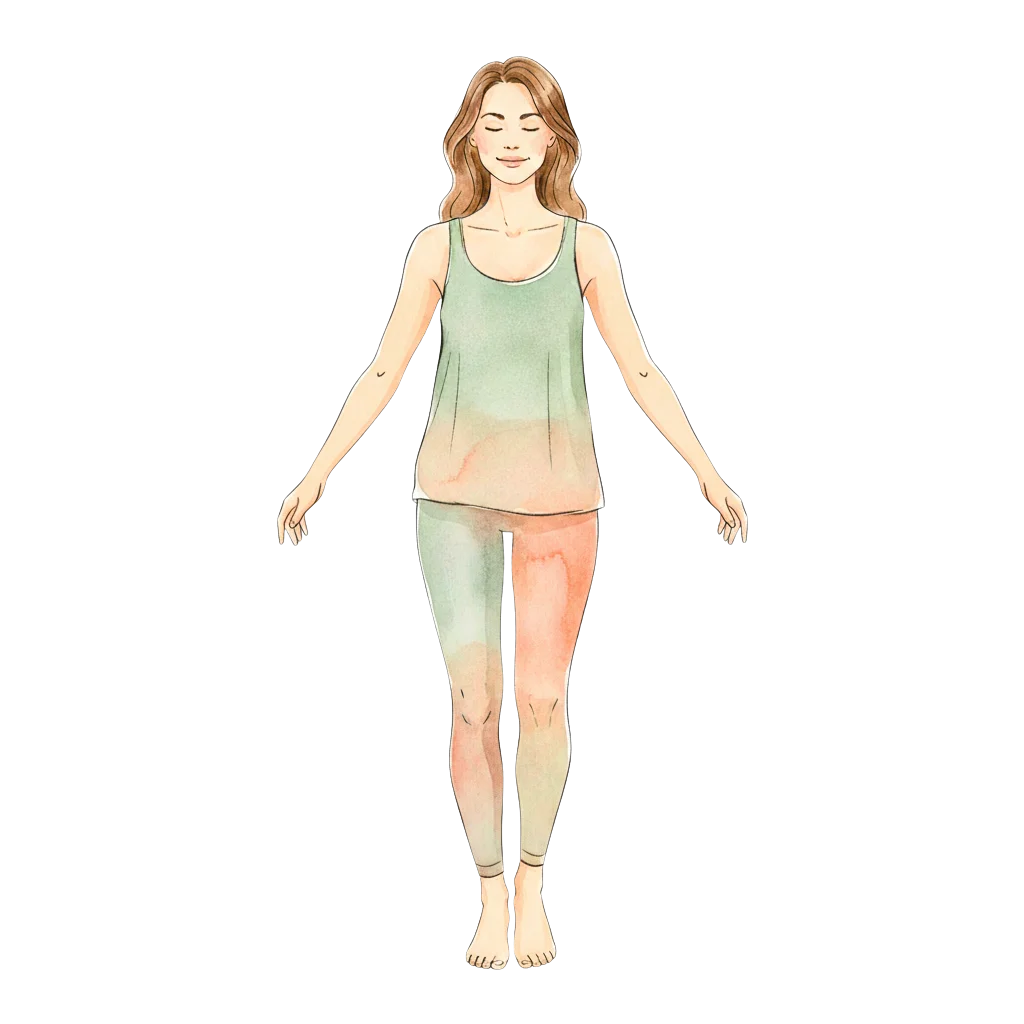
Tap body zones to discover connected symptoms and related conditions.
Join 86+ women discussing facial hair growth
Real experiences shared across Reddit, TikTok, and health forums
If you’re experiencing facial hair or excess hair growth with PCOS, you are not alone. This is a com
If you’re experiencing facial hair or excess hair growth with PCOS, you are not alone. This is a common PCOS symptom that can be related to high androgens and insulin resistance. But the good news is...
Facial hair is one of the most emotionally draining PCOS symptoms, and it’s barely talked about prop
Facial hair is one of the most emotionally draining PCOS symptoms, and it’s barely talked about properly. Not in a “yeah that’s annoying” way. But in the way it actually affects you. Checking your...
I feel like the more I pluck, the more it grows.
Reading others' stories is the first step. Join to share yours.
Community
A safe space for women navigating facial hair growth
Frequently asked questions
Common questions about Facial hair growth
How we research and fact-check
Every article on Wellls is researched using peer-reviewed medical literature, clinical guidelines, and real patient experiences from 50 online discussions.
Sources: We reference 49 PubMed-indexed studies, ACOG/NAMS clinical guidelines, and validated screening tools.
Review: Content is written by our editorial team, enriched from a medical knowledge base of 15,000+ sources. Evidence standards and clinical methodology guided by our Medical Advisory Board: Dr. Alexandra Rybakova and Dr. Alexander Rybakov, Lifestyle Medicine Physicians with 35+ years combined clinical practice.
This content is for informational purposes only and does not constitute medical advice. Our editorial standards · Medical advisory board
References
49 sources reviewed for this facial hair growth guide
- 1.
- 2.
- 3.
- 4.
- 5.
- 6.
- 7.
- 8.
- 9.
- 10.
History of updates
Current version (March 11, 2026) — Content reviewed and updated based on latest research
First published (March 1, 2026)
Explore related problems
Women who experience facial hair growth often also deal with these
Your personalized plan is ready
Facial hair is a hormonal signal. Understanding the specific hormonal cascade behind yours, not someone else's, is the difference between a lifetime of tweezers and actually treating the root cause. Your Wellls plan connects the dots between your lab results, your symptoms, and the evidence-based interventions most likely to work for your body.
4,200 women explored their facial hair plan this month
Free assessment · Takes 2 minutes · No account required
Medical disclaimer: This content is for informational purposes only and does not constitute medical advice, diagnosis, or treatment. Always consult a qualified healthcare provider for personal medical decisions. Content is based on peer-reviewed research and updated regularly. Learn about our editorial standards.