Mobility — Workout 3
Exercise Breakdown
11 exercises in Workout 3
Warm-up5 exercises4m 26s
“Exhale, inhale as you go up, and exhale as you go down.”
“With the torso, open and contract.”
“Elevate the shoulder fully and then depress down.”
“Without using the neck, so get the shoulder towards the ear.”
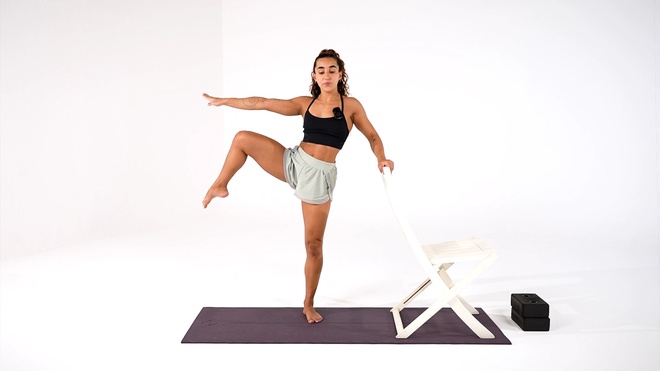
“Keep your butt squeezed in so that you don't compensate.”
Flexibility6 exercises12m 52s
“Your neck is the last thing that goes down.”
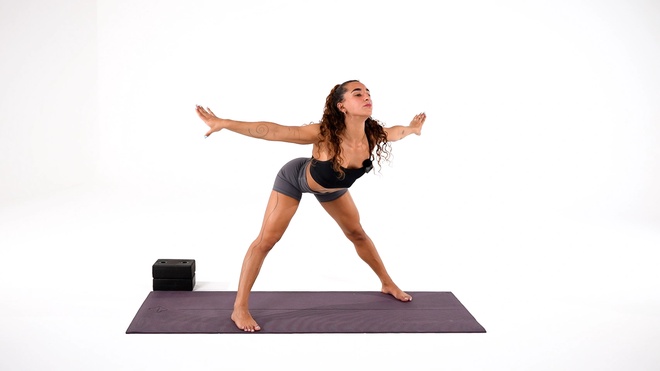
“You're gonna feel it a bit on the oblique.”
“The spine, the hip is not moving at all.”
“Pull the elastic band away from each other.”
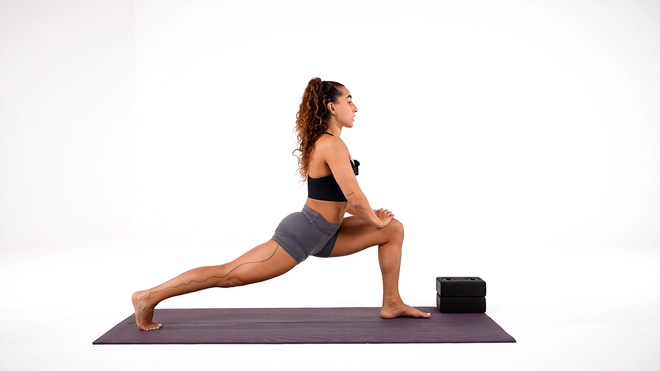
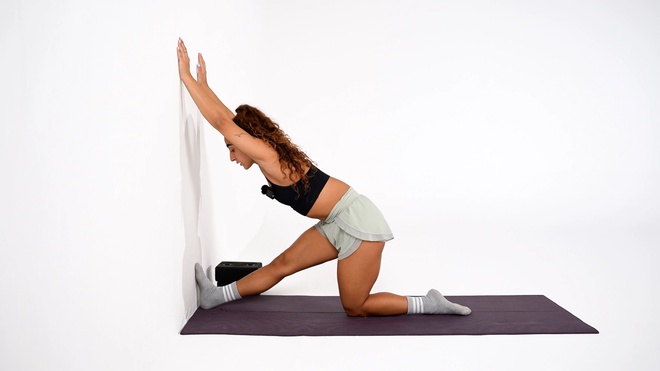
“Hip aligned with the knee, both hands on the wall.”
“Place the edge of your shoulder blade on top of the block.”
Muscles Targeted
Primary
Secondary
Equipment & Modifications
Equipment Needed
- band
- block
- mat
Don't Have Equipment?
You can substitute with:
Available Modifications
- Micro-bend your knees
- Two blocks (easy)
- One block (medium)
- No blocks (hard)
- Wider grip (easier)
- Closer grip (harder)
- Use a towel or T-shirt if no band
- Adjust hand height on wall (lower is harder)
- Elevate blocks higher for more flexibility
Coaching Highlights from Yasmin Masri
“Without using the neck, so get the shoulder towards the ear.”
Form
“If you feel a lot of tension on the neck, this means you need to use the block.”
Safety
“Get the blood flow running all over your body.”
Motivation
“Yasmin teaches with joy and authenticity. Her sessions are challenging but never punishing, and she celebrates small victories throughout.”
Form
“She celebrates your third rep with the same enthusiasm as your first.”
Form
Health Benefits
Women who want to move freely again. If chronic pain, vaginal dryness sound familiar, the joint mobility work here directly supports your recovery. The shoulders, neck, spine emphasis addresses the most common restriction patterns in women. Beginner level with modifications — depth comes with time, not force.
chronic pain
90% relevantpain gate modulation; endorphin release; joint mobility improvement; muscle tension release
vaginal dryness
90% relevantIncreased blood flow to pelvic region; Improved pelvic floor muscle tone and relaxation; Reduced stress and sympathetic nervous system activation; Enhanced body awareness and interoception; Support for hormonal balance through stress reduction
painful sex
90% relevantPelvic floor relaxation and release; Increased hip mobility and flexibility; Reduced muscle tension and guarding; Enhanced body awareness and interoception; Parasympathetic nervous system activation
joint pain
90% relevantImproved joint lubrication and nutrient delivery; Enhanced range of motion and mobility; Strengthening of supporting musculature around joints; Reduced inflammation and pain perception; Improved proprioception and body awareness
frozen shoulder
90% relevantRestoring glenohumeral joint capsule mobility; Reducing pain and inflammation through gentle movement; Improving scapulohumeral rhythm; Preventing muscle atrophy and weakness in surrounding musculature; Enhancing body awareness and controlled movement patterns
Relevant For
Frequently Asked Questions
What muscles does this flexibility workout target?
This session works through shoulders, neck, spine as primary focus areas, with upper_back, arms, wrists getting secondary attention. For shoulder mobility exercises, what matters is the combination of active and passive range of motion work. Yasmin Masri sequences these 11 movements to progressively open tissue — starting gentle and building depth. A systematic review in Sports Medicine found this progressive approach yields better long-term flexibility gains than aggressive static stretching alone.
Do I need any equipment for this workout?
You'll need: band, block, mat. Don't have these? A thick towel on carpet works fine as a mat substitute — I've coached women who started with nothing but a clear floor space and still got results. The equipment here supports comfort and alignment — it doesn't make or break the workout. This aligns with principles of flexibility workout that make sessions like this effective.
Is this workout suitable for beginners?
Yes. Yasmin Masri built this for people who are starting or restarting their movement practice. Every exercise has a clear entry point, and she demonstrates modifications throughout. Here's what I tell women who are nervous about starting: the first session is about learning the movements, not about intensity. Your body needs to build motor patterns before it can build capacity. Give yourself three sessions before you judge whether this works for you. This aligns with principles of back flexibility exercises that make sessions like this effective.
How long is this flexibility session?
About 20 minutes, including warm-up and cool-down. Yasmin Masri packs 11 exercises into that window — I want to be honest: 20 minutes doesn't sound like much. But research from the British Journal of Sports Medicine shows that even 15-20 minutes of structured exercise produces measurable improvements in cardiovascular health and mood when done consistently. It's not about marathon sessions. It's about showing up regularly.
Are there modifications available?
Yes, and this matters more than people realize. Yasmin Masri demonstrates modifications including: Micro-bend your knees; Two blocks (easy); One block (medium). I've worked with women recovering from knee replacements, managing chronic pain, dealing with diastasis recti. Modifications aren't 'cheating'. they're how you make the exercise YOUR exercise. The American Physical Therapy Association emphasizes that individualized modification is key to long-term exercise adherence. Skip the ego, take the modification.
What's the difference between shoulder mobility exercises and general stretching?
I get this question constantly, and the answer actually matters. General stretching typically targets muscle length in a single plane. Shoulder mobility exercises works through multiple planes of motion — flexion, extension, rotation, lateral movement — to improve how your joints actually function in daily life. This session uses active range of motion challenges alongside passive holds. Yasmin Masri's sequencing moves through shoulders, neck, spine in patterns that mirror real-world movement. A shoulders and arms workout approach addresses not just muscle flexibility but joint capsule mobility, fascial glide, and neuromuscular coordination. That's why you'll feel improvements in how you move, not just how far you can reach.
How often should I do this flexibility workout?
3-4 times per week is the sweet spot for flexibility work. Your tissues need time to adapt and remodel — daily intense flexibility training can actually be counterproductive if you're not giving connective tissue time to recover. Alternate this session with complementary sessions from the same course. Rest days aren't lazy days — they're adaptation days. The research is clear: progressive overload applies to flexibility just as it does to strength.
Is this workout suitable for women over 35 or in perimenopause?
Flexibility work matters more for women over 35 than most people realize. Collagen production declines starting around age 30, and accelerates during perimenopause as estrogen — which stimulates collagen synthesis — drops. That's why joints feel stiffer, recovery takes longer, and range of motion quietly shrinks. This session counteracts those changes through progressive tissue loading. Yasmin Masri's approach targets the fascial system alongside muscle flexibility, which research in Frontiers in Physiology (2019) identifies as a critical but often overlooked factor in age-related mobility loss. Consistency here literally changes your tissue architecture.
How does this session address shoulder workouts with dumbbells?
Shoulder workouts with dumbbells requires a combination of joint mobility and muscular control through range. This session addresses both. Yasmin Masri includes active flexibility challenges — where you're building strength at end ranges — alongside passive holds for tissue adaptation. That dual approach is what the literature calls 'functional flexibility': not just how far you can go, but how strong and controlled you are at those ranges. A 2020 review in the International Journal of Sports Physical Therapy found that active flexibility training produced better functional outcomes than passive stretching alone.
Related Workouts & Topics
More from Mobility
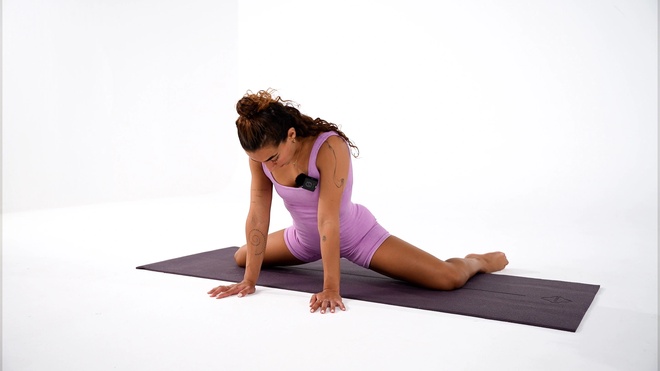
More with Yasmin Masri
Browse Exercise Collections
Helpful For These Concerns
About the Trainer
Yasmin Masri
Flexibility Trainer
From: Mobility