Plank Hold: How-to, Benefits & Variations
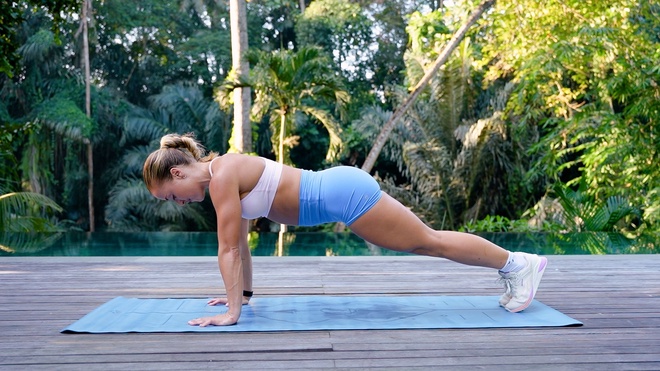
Plank hold builds foundational core stability by holding a rigid line from head to heels. Squeeze glutes, brace abs, breathe. Start with 20-second holds and add 5 seconds weekly.
Plank Hold: How-to, Benefits & Variations
The plank hold is boring. I know. No movement, no counting, just you and gravity having a staring contest. But here is the thing: the ability to hold your body in a rigid line under load is the foundation of every other core exercise. If your plank falls apart after 20 seconds, your dead bugs, mountain climbers, and push-ups are all compensating. Fix the plank, fix everything downstream.
Fix Your Posture 2
Sophie Jones
How to Do Plank Hold
Set up in the starting position for plank hold. Feet hip-width apart (or as the exercise requires). Engage your core before initiating any movement.
Begin the movement with control. Sophie Jones cues: "As soon as we push back like this, our core engagement will come out of it. So we wanna come nice and flat."
Complete the full range of motion. "Make sure that core is engaged. You're not dropping. You're not bringing your butt up too high."
Return to the starting position with control. Make sure shoulders directly underneath your wrists.
Jessica Casalegno adds: "Inhale, shift body weight forward into plank... Exhale, lift your hips all the way up."
Muscles Worked
Primary
Secondary
Why this matters in perimenopause
resistance training preserves muscle mass and bone density during perimenopause. The plank hold directly supports this by targeting key muscle groups.
Coach's Tips
"As soon as we push back like this, our core engagement will come out of it. So we wanna come nice and flat." - Sophie Jones
Sophie Jones
"Make sure that core is engaged. You're not dropping. You're not bringing your butt up too high." - Aylar Fetrati
Aylar Fetrati
"Inhale, shift body weight forward into plank... Exhale, lift your hips all the way up." - Jessica Casalegno
Jessica Casalegno
"Make sure shoulders directly underneath your wrists." - Sophie Jones
Sophie Jones
"Those of you that wanna make it more difficult, you're gonna go elbows, those on hands if you need to make it a little bit softer." - Sophie Jones
Sophie Jones
Why This Matters for You
resistance training preserves muscle mass and bone density during perimenopause. The plank hold loads bones and builds lean muscle during a time when the body needs it most. Research supports resistance training for women during the menopausal transition.
Variations & Modifications
High Plank Hold
mediumElbow Plank Hold
mediumExtended Plank Hold
mediumElevated Plank Knee Taps
highElevated Plank to Down Dog
mediumPlank Hold to Downward Dog
mediumBenefits
Builds strength
The plank hold targets a key muscle group, making it efficient for building functional strength that transfers to daily activities.
Supports your body through hormonal changes
resistance training preserves muscle mass and bone density during perimenopause. The plank hold directly addresses this.
Requires minimal equipment
No equipment needed. You can do the plank hold at home, in a hotel room, or between meetings.
Common Mistakes to Avoid
Using momentum instead of muscle
Slow down. If you can't complete the plank hold with a two-second pause at the hardest point, the weight is too heavy or you're moving too fast.
Holding your breath
Exhale during the effort phase, inhale during the return. Holding your breath spikes blood pressure and reduces core stability.
Common form breakdown
Sophie Jones warns: "Make sure shoulders directly underneath your wrists."
Workouts Featuring This Exercise
Join women building strength and confidence with certified trainers
Frequently Asked Questions
Related Exercises
This exercise helps with
Get plank hold in a guided workout
Access 5 workouts featuring this exercise, plus personalized plans from Dr. Wellls.
Join women building strength and confidence with certified trainers
Your membership funds independent women's health research