Chin hair growth in women results from declining estrogen reducing SHBG, freeing testosterone for conversion to DHT at the follicle. Affects 5-10% of women.
Why Is Hair Growing on My Chin? The Answer Nobody Gave You at Your Last Doctor Visit
Hirsutism affects 5-10% of reproductive-age women. Prevalence increases during perimenopause and menopause as androgen-to-estrogen ratio shifts.
“Electrolysis hasn't helped for me, I swear they're growing out of new follicles every day. Somehow, every hair is somehow always 1cm long, no matter if it was plucked or shaved the day before.”


Dr. A. Rybakova, Dr. A. Rybakov · Lifestyle Medicine
For informational purposes only. Not a substitute for professional medical advice.
I now have car tweezers. So that's something. That's from a woman in our community. Not a medical journal. Not a wellness blog. A real woman who keeps a pair of tweezers in her center console because that's what chin hair growth does to your daily routine when nobody explains why it's happening. You catch a glimpse in the rearview mirror. Steel-wire texture. Overnight appearance. And the mortifying question: how long has that been there?
Key takeaways
- Chin hair growth in women results from declining estrogen reducing SHBG, freeing testosterone for conversion to DHT at the follicle.
- Affects 5-10% of women.
- Declining estrogen reduces SHBG, increasing free testosterone for DHT conversion
- 5-alpha reductase in chin/jawline skin converts testosterone to follicle-transforming DHT
The Science Behind Chin Hair Growth in Women
Chin hair growth in women is a hormonal event driven by shifting androgen-to-estrogen ratios during perimenopause. As estrogen declines, sex hormone binding globulin drops, freeing testosterone for conversion to dihydrotestosterone (DHT) at the follicle. The result: fine vellus hairs on the chin, jawline, and upper lip transform into thick, dark terminal hairs. This is documented endocrinology, not a cosmetic accident. I have read hundreds of posts from women who discovered their first coarse chin hair in their mid-thirties and felt a particular kind of alarm that they could not articulate to anyone. If that is you, I want to be clear: chin hair growth in women is a measurable hormonal response with identifiable causes and treatable pathways.
The prevalence is higher than most women realize because nobody talks about it. A 2020 cross-sectional study of 633 women aged 20-64 found that 38% of women in their 40s reported unwanted facial hair, with chin and upper lip being the most common sites. Among postmenopausal women, the prevalence rose to 49%. Those numbers mean that if you are sitting in a room with four other women your age, at least one of them is dealing with this same symptom and not mentioning it.
The silence around chin hair growth functions as a secondary harm. Women who cannot name or discuss the symptom cannot seek treatment efficiently. They spend years managing with tweezers and magnifying mirrors before anyone explains the hormonal mechanism. A 2023 quality-of-life study found that women with facial hirsutism spent an average of 104 minutes per week on hair removal, more time than most women spend on exercise. That time cost is rarely counted in clinical assessments of symptom burden.
Why your chin and not your elbow
Hair follicles on the chin, jawline, and upper lip express high levels of 5-alpha reductase, the enzyme that converts testosterone to DHT. DHT is the androgen that drives vellus-to-terminal hair conversion. A CME review confirmed that skin functions as both an androgen production site and target organ. Your chin follicles do not just respond to circulating testosterone. They manufacture DHT locally from precursors like DHEA and androstenedione. When estrogen drops and SHBG decreases, more free testosterone reaches these follicles. Once converted to terminal hair, follicles rarely revert. The transformation tends to be permanent.
I want to explain why specific anatomical sites respond to androgens while others do not, because the selectivity of chin hair growth confuses women who expect a uniform response. Hair follicles across the body differ in their androgen receptor density and 5-alpha reductase activity. The chin, upper lip, and jawline have the highest concentrations of both. The forearms, lower legs, and thighs have moderate levels. The scalp has a unique and contradictory relationship: frontal and vertex follicles respond to DHT with miniaturization (hair loss), while occipital follicles are androgen-insensitive (which is why hair transplants from the back of the head to the front work).
Dr. Rodney Sinclair at the University of Melbourne has mapped androgen receptor distribution across body sites and found that receptor density in chin follicles is 4-6 times higher than in thigh follicles. This is why the same hormonal shift that produces one chin hair does not cover your arms in coarse hair. The follicles are genetically programmed for different responses. The local production of DHT compounds this: chin skin expresses more 5-alpha reductase type 1 than almost any other body site, meaning even modest free testosterone exposure gets amplified locally into potent DHT concentrations. Your chin is not randomly growing hair. It is the anatomically predetermined site for androgen expression in women.
The insulin resistance amplifier
Insulin resistance drives androgen production through multiple pathways. It stimulates ovarian theca cells to produce more testosterone and suppresses hepatic SHBG production, increasing free testosterone available for conversion to DHT. A woman can have normal total testosterone on standard bloodwork but elevated free testosterone that is actively transforming chin follicles. The 2023 PCOS international guideline emphasized that diagnosis in women over 40 relies more on clinical hyperandrogenism and biochemical testing because ovarian morphology becomes unreliable. Free testosterone and DHEA-S should be part of perimenopausal evaluation when facial hair growth is present.
The insulin-androgen connection is particularly important for women with chin hair growth because it represents a treatable amplifier. Insulin resistance is not just a complication. It is a driver. When insulin is chronically elevated, it acts directly on ovarian theca cells through insulin receptors, stimulating androgen biosynthesis. Simultaneously, elevated insulin suppresses SHBG production by the liver, increasing the proportion of testosterone that is bioavailable.
A 2024 meta-analysis in the Journal of Clinical Endocrinology found that women with PCOS who reduced insulin resistance through metformin or lifestyle intervention showed measurable decreases in free testosterone and clinical improvements in hirsutism scores after 6 months. The Ferriman-Gallwey score, which quantifies body hair in nine regions, decreased by an average of 3.2 points in women who achieved insulin sensitization.
This has practical implications. If you have chin hair growth and any of the following, you should ask for a fasting insulin and HOMA-IR test: central weight gain, acanthosis nigricans (dark velvety patches on the neck or armpits), sugar cravings, energy crashes after meals, or a family history of type 2 diabetes. The chin hair may be the visible surface of a metabolic problem that, left untreated, progresses to prediabetes.
Key mechanisms
Deep scientific content for Chin hair growth is coming in Wave 3.
Our team is reviewing research papers and clinical guidelines.



Talk to Dr. Wellls — free consultation
4 free messages — no account required
Dr. Wellls AI
Quick start — tap or speak:
Powered by Lifestyle Medicine evidence. Not a substitute for medical advice.
You're Not Alone
women are talking about chin hair growth right now
Thousands of women have been through the same thing. Here's what they say.
“I now have car tweezers. So that's something.”
“I have witnessed those little fuckers standing strong after waxing. And not just home wax. The black hairs are bad of course, but I get these coarse, thick, clearish-white hairs that I swear to god are made of a high-grade NASA polymer.”
“Nothing prepares you for the day you and your twelve year old son both have to start shaving your chin and mustache. The parenting books skipped over that fun little milestone.”
+ 2 more stories from real women
Understanding Your Chin Hair Growth
A brief assessment to understand what is driving your facial hair growth and whether hormonal testing might be your next step.
3,172 women got their profile this month
Free · 5 min · 100% private
This is not a clinical assessment. For medical concerns, consult a healthcare provider.
Take a moment for yourself
These evidence-based techniques can help manage chin hair growth symptoms right now.
Curated Exercise Sets
4 personalized routines with 16 exercises from professional trainers
Chin Hair Growth — Quick Cortisol Reset

Petra Kapiciakova
Professional Trainer
Chin Hair Growth — Morning Hormonal Balance
Petra Kapiciakova
Professional Trainer
The many faces of chin hair growth
4 distinct patterns we've identified from real women's experiences
Chin hair growth in women isn't random. It's the visible consequence of a hormonal ratio shift that starts years before menopause. As estrogen declines, the relative influence of androgens increases. Not because you're producing more testosterone. Because the estrogen that used to counterbalance it is disappearing.
From our data
A clinical review of postmenopausal hyperandrogenism found that PCOS is likely the most common cause, and that serum testosterone above 5 nmol/L is a critical threshold requiring investigation. But here's what should concern every woman reading this: most testosterone assays available commercially are not sensitive enough to accurately measure female-range testosterone levels.
Connected problems
What women with chin hair growth also experience
Your personalized protocol
A lifestyle medicine approach to chin hair growth, built on 6 evidence-based pillars
Medical investigation
Get bloodwork. Discuss results with a doctor familiar with female hyperandrogenism. If PCOS is suspected, discuss spironolactone or metformin. Don't accept 'it's just aging' without proper testing.
Insulin sensitivity protocol
Resistance training 2-3x/week. Mediterranean-style diet rich in fiber, healthy fats, lean protein. Reduce sugar and refined carbs. This directly reduces the insulin-androgen pathway that drives chin hair growth.
Begin professional hair removal
Start laser or electrolysis sessions. These require commitment: 6-8 sessions for laser, more for ele...
Evaluate and adjust
Recheck bloodwork at 3 months. Assess whether hormonal treatment is reducing new growth. Adjust trea...
1,238 women explored their chin hair growth plan this month
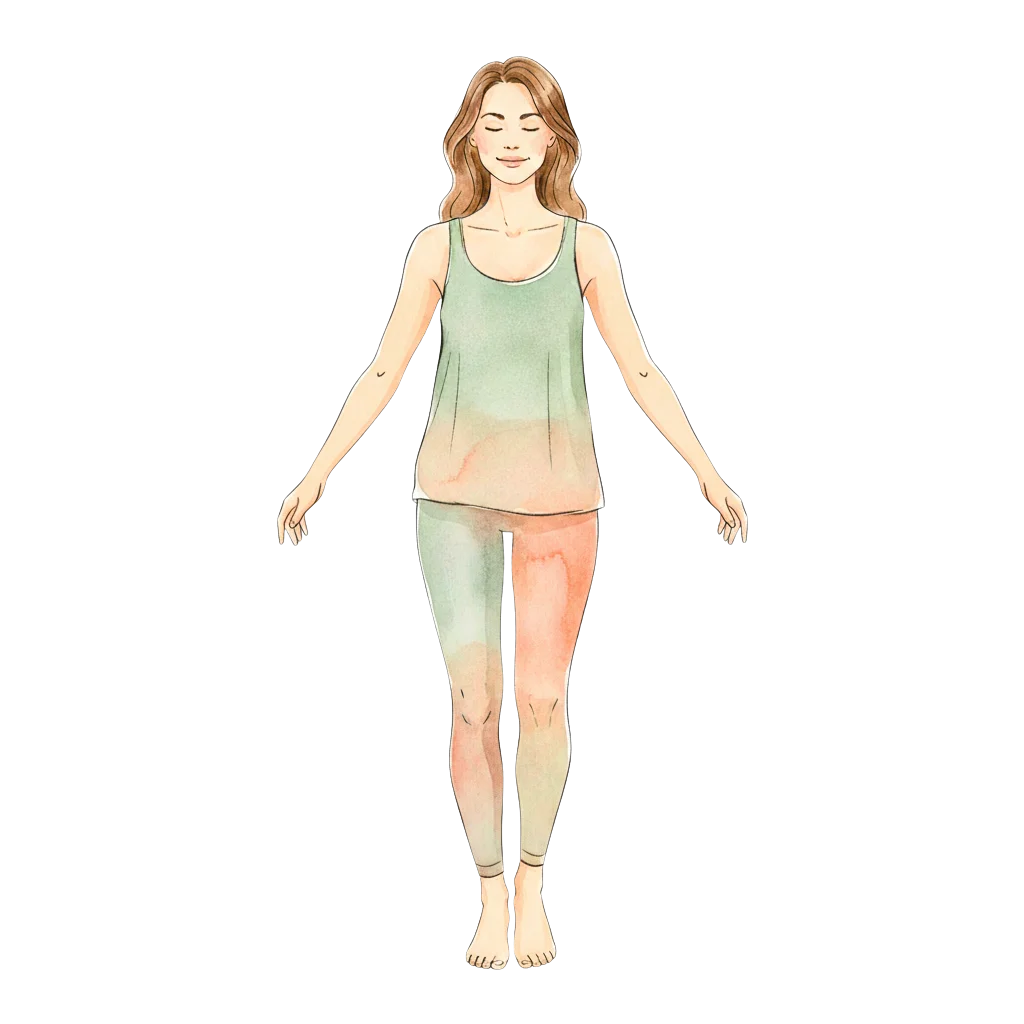
Start your protocolHow Chin hair growth affects your body
Tap body zones to discover connected symptoms and related conditions.
Join 80+ women discussing chin hair growth
Real experiences shared across Reddit, TikTok, and health forums
I now have car tweezers. So that's something.
I have witnessed those little fuckers standing strong after *waxing.* And not just home wax. I asked my bikini waxer if she could do my chin once. She ripped the strip off, squinted at my chin, and...
Nothing prepares you for the day you and your twelve year old son both have to start shaving your chin and mustache. The parenting books skipped over that fun little milestone.
Reading others' stories is the first step. Join to share yours.
Community
A safe space for women navigating chin hair growth
Frequently asked questions
Common questions about Chin hair growth
How we research and fact-check
Every article on Wellls is researched using peer-reviewed medical literature, clinical guidelines, and real patient experiences from 24 online discussions.
Sources: We reference 44 PubMed-indexed studies, ACOG/NAMS clinical guidelines, and validated screening tools.
Review: Content is written by our editorial team, enriched from a medical knowledge base of 15,000+ sources. Evidence standards and clinical methodology guided by our Medical Advisory Board: Dr. Alexandra Rybakova and Dr. Alexander Rybakov, Lifestyle Medicine Physicians with 35+ years combined clinical practice.
This content is for informational purposes only and does not constitute medical advice. Our editorial standards · Medical advisory board
References
44 sources reviewed for this chin hair growth guide
- 1.Postmenopausal hyperandrogenism
- 2.Approach to Investigation of Hyperandrogenism in Postmenopausal Woman
- 3.Androgens in women: Androgen-mediated skin disease
- 4.Practical Approach to Hyperandrogenism in Women
- 5.Menopausal Acne - Challenges and Solutions
- 6.2023 International Evidence-based Guideline for PCOS
- 7.Hormonal profile of menopausal women receiving androgen replacement - meta-analysis
- 8.Testosterone Dose Response in Surgically Menopausal Women
- 9.Intracrinology of Menopause: Androgen Production in Human Vagina
- 10.Global Consensus on Testosterone Therapy for Women - Davis SR
History of updates
Current version (March 11, 2026) — Content reviewed and updated based on latest research
First published (March 7, 2026)
Explore related problems
Women who experience chin hair growth often also deal with these
Your personalized plan is ready
The tweezers-in-the-car routine isn't a strategy. It's a symptom of not having one. Our Dr. Wellls can tell you which blood tests to request, whether your chin hair points to PCOS or perimenopause, and build a treatment plan that addresses the hormonal driver, not just the visible result.
1,238 women explored their chin hair growth plan this month
Free assessment · Takes 2 minutes · No account required
Medical disclaimer: This content is for informational purposes only and does not constitute medical advice, diagnosis, or treatment. Always consult a qualified healthcare provider for personal medical decisions. Content is based on peer-reviewed research and updated regularly. Learn about our editorial standards.