Chronic illness depression affects 2-3x more women with chronic disease than healthy peers, driven by inflammatory cytokines that cross the blood-brain barrier.
The Exhaustion of Being a Professional Patient at 45
Over 20 million Australians have at least one chronic condition. Patients with chronic illness have 2-3x higher depression rates. 58.8% of chronic disease patients meet criteria for depression.
“Forcing myself to *really* get dressed and getting outside every day even when I don’t have to.”

Dr. A. Rybakova, Dr. A. Rybakov · Lifestyle Medicine
For informational purposes only. Not a substitute for professional medical advice.
Diane keeps a spreadsheet.
Not for work. She's a project manager in Manly, 47, and the spreadsheet is for her. Column A: medication names, dosages, times. Column B: specialist appointments, referral numbers, wait times. Column C: symptoms logged daily, rated 1-10. Column D: insurance claims, out-of-pocket costs, Medicare rebates. Column E: food diary for elimination tracking. She updates it every night at 9:47, after her daughter is in bed, sitting at the kitchen counter with a cup of rooibos she doesn't really want. This is what chronic illness depression looks like when nobody is watching.
Key takeaways
- Chronic illness depression affects 2-3x more women with chronic disease than healthy peers, driven by inflammatory cytokines that cross the blood-brain barrier.
- Inflammatory cytokine-driven depression (IL-6, TNF-alpha, IL-1-beta → brain)
- Bidirectional chronic disease-depression loop
- Estrogen decline compounds both chronic disease and depression pathways
The Science of Living With Chronic Illness in Midlife
Chronic illness depression is driven by the same inflammatory pathways as the underlying disease. Proinflammatory cytokines (IL-6, TNF-alpha, IL-1-beta) from chronic disease cross the blood-brain barrier, suppress serotonin synthesis, impair hippocampal neuroplasticity, and dysregulate the HPA axis. Patients with chronic medical illness have two- to three-fold higher rates of major depression.
I want to say that statistic again because it deserves to land: two to three times the rate. Katon's 2011 epidemiological review found this across conditions, from diabetes to autoimmune disease to chronic pain syndromes. The comorbidity is bidirectional: depression worsens chronic disease outcomes through increased inflammation, impaired adherence, and disrupted sleep. The chronic disease worsens depression through persistent cytokine elevation, social withdrawal, and functional loss. They feed each other. And in perimenopausal women, declining estrogen removes neurochemical buffers that previously modulated both systems.
What makes chronic illness depression different from primary depression isn't just the mechanism. It's the context. A woman with primary depression can, in theory, recover fully. A woman with chronic illness depression recovers into a body that still hurts. The depression lifts and the disease is still there. That distinction changes everything about treatment, about prognosis, and about the particular cruelty of being told to 'think positive' when positivity doesn't fix lupus.
SSRIs help some women with chronic illness depression. But the response rate is lower than in primary depression, precisely because the inflammatory driver persists. A growing body of evidence suggests that treating the underlying inflammation, whether through HRT, anti-inflammatory nutrition, or targeted biologics, improves depressive symptoms more effectively than antidepressants alone. My frustration is that most treatment plans still reach for the SSRI first and never address the inflammation at all.
The inflammatory loop between body and brain
Chronic disease sustains elevated proinflammatory cytokines that circulate systemically and enter the brain. IL-6 and TNF-alpha suppress tryptophan hydroxylase, the rate-limiting enzyme in serotonin synthesis. IL-1-beta impairs brain-derived neurotrophic factor (BDNF) production, reducing neuroplasticity in the hippocampus. HPA axis dysregulation increases cortisol, which in turn amplifies inflammatory signalling, creating a self-perpetuating loop.
I've spent years trying to find the right metaphor for this cycle, and the best I've come up with is a fire alarm that causes fires. Your immune system sounds the alarm (inflammation). The alarm itself damages the wiring (neuroinflammation). The damaged wiring makes the alarm louder (central sensitization). And the louder alarm triggers more fires. Perimenopausal estrogen fluctuations independently suppress serotonin and remove GABAergic protection, compounding vulnerability in midlife women with existing chronic disease.
The JAMA Network Open 2024 meta-analysis of 376 studies involving 347,000 chronic pain patients found a 39.3% pooled prevalence of depression. That's not a minor association. That's four in ten. And the studies that specifically examined women in the 35-55 age range found rates approaching 50%. I'm not sharing these numbers to frighten you. I'm sharing them because chronic illness depression is grotesquely underdiagnosed, and the first step toward treatment is knowing that what you're feeling has a name, a mechanism, and an evidence base.
The bidirectionality is what distinguishes this from situational sadness. The inflammation causes depression. The depression impairs sleep and motivation. The impaired sleep and motivation worsen disease management. The worsened disease management increases inflammation. I've watched women cycle through this loop for years without anyone naming it for what it is. That cycle has a name: chronic illness depression. And it responds to different treatment than primary depression does.
The invisible labour of chronic illness management
Women with chronic illness spend 8-15 hours monthly on health administration: appointments, pharmacy, insurance, referrals, symptom logging, and research. Australian workplace data shows only 18% of chronically ill workers fully disclose their condition, with 63% experiencing workplace discrimination and 52% reporting harassment.
I find those numbers staggering, but not surprising. Every woman I've interviewed with multiple chronic conditions describes the same thing: a second job that nobody pays you for. Booking the appointment. Getting the referral. Waiting on hold for 40 minutes. Filling the script. Researching side effects because your doctor had three minutes and covered none of them. Logging symptoms in an app that nobody will ever review unless you bring it up yourself. Tracking flares against menstrual cycles, weather, food, sleep, stress, and medication changes to build a pattern your specialist should have built for you.
Chronically ill workers are rarely covered by diversity and inclusion policies. They exist in a gap between disability protections and able-bodied assumptions, performing what researchers call 'credibility work': the ongoing labour of proving their illness is real. This credibility work is exhausting in itself, and it fuels chronic illness depression directly. You spend so much energy proving you're sick that you have nothing left for actually managing the sickness.
The gendered dimension makes it worse. Women with chronic illness report being disbelieved more often, waiting longer for diagnosis, and receiving fewer pain management referrals than men with equivalent conditions. The medical gaslighting literature documents this exhaustively. I've covered it in depth elsewhere. But the short version is: being chronically ill and female means doing more invisible labour while receiving less institutional support. That gap is where chronic illness depression lives. And it's not a gap that individual resilience can bridge. It's a systemic failure that requires systemic solutions, not another self-help book about positive thinking.
Key mechanisms
Deep scientific content for Chronic illness is coming in Wave 3.
Our team is reviewing research papers and clinical guidelines.

Talk to Dr. Wellls — free consultation
4 free messages — no account required
Dr. Wellls AI
Quick start — tap or speak:
Powered by Lifestyle Medicine evidence. Not a substitute for medical advice.
You're Not Alone
women are talking about chronic illness right now
Thousands of women have been through the same thing. Here's what they say.
“Forcing myself to really get dressed and getting outside every day even when I don't have to. Even if it's a clean matching sweat suit and putting some earrings on and taking the dogs for a short walk, my mood will bottom out otherwise. COVID and a chronic...”
“I have a chronic illness and it will be a miracle if I can work full time and get health insurance. But I'm saving and planning and praying and playing the lottery and when my window opens, I'm out.”
“I am in disbelief myself sometimes”
+ 1 more stories from real women
Living With Chronic Illness: Where Are You?
A brief assessment to understand how chronic illness is affecting your life, identity, and capacity right now. Not a symptom tracker. A person-centered check-in that recognizes the full weight of what you carry.
2,850 women got their profile this month
Free · 5 min · 100% private
This is not a clinical assessment. For medical concerns, consult a healthcare provider.
Take a moment for yourself
These evidence-based techniques can help manage chronic illness symptoms right now.
Curated Exercise Sets
4 personalized routines with 16 exercises from professional trainers

The many faces of chronic illness
4 distinct patterns we've identified from real women's experiences
You look fine. That sentence has done more damage to women with chronic illness than any misdiagnosis. Because looking fine and being fine are not the same thing, and the gap between them is where chronic illness depression takes root.
From our data
A 2024 Frontiers in Psychology analysis of middle-aged and elderly patients with chronic diseases found depression prevalence rates far exceeding those of healthy controls, with comorbid chronic conditions multiplying risk. Research consistently shows patients with chronic medical illness have two- to three-fold higher rates of major depression compared to age- and gender-matched healthy adults. In Australia, over 20 million people have at least one long-term health condition, with 63% of them in the workforce, mostly invisibly.
Connected problems
What women with chronic illness also experience
Your personalized protocol
A lifestyle medicine approach to chronic illness, built on 6 evidence-based pillars
Baseline and energy audit
Complete 2-week energy mapping. Identify peak and crash patterns. Begin implementing pacing: protect your lowest-energy period daily. Start a brief daily symptom and mood log (2 minutes, not 20).
Movement within capacity
Begin movement (not exercise) at 60-70% of what you think you can do. Walk for 15 minutes instead of 30. Swim for 10 instead of 20. The goal is zero post-exertional worsening for 2 weeks. If you crash, you started too high. Scale back without guilt.
Anti-inflammatory nutrition and sleep
Focus on consistent sleep timing (same wake time daily, even on bad days). Mediterranean-pattern eat...
Grief work and social rebuilding
Consider 3-4 sessions with a psychologist experienced in chronic illness grief. Not to fix you. To n...
1,294 women explored their chronic illness plan this month
Start your protocolHow Chronic illness affects your body
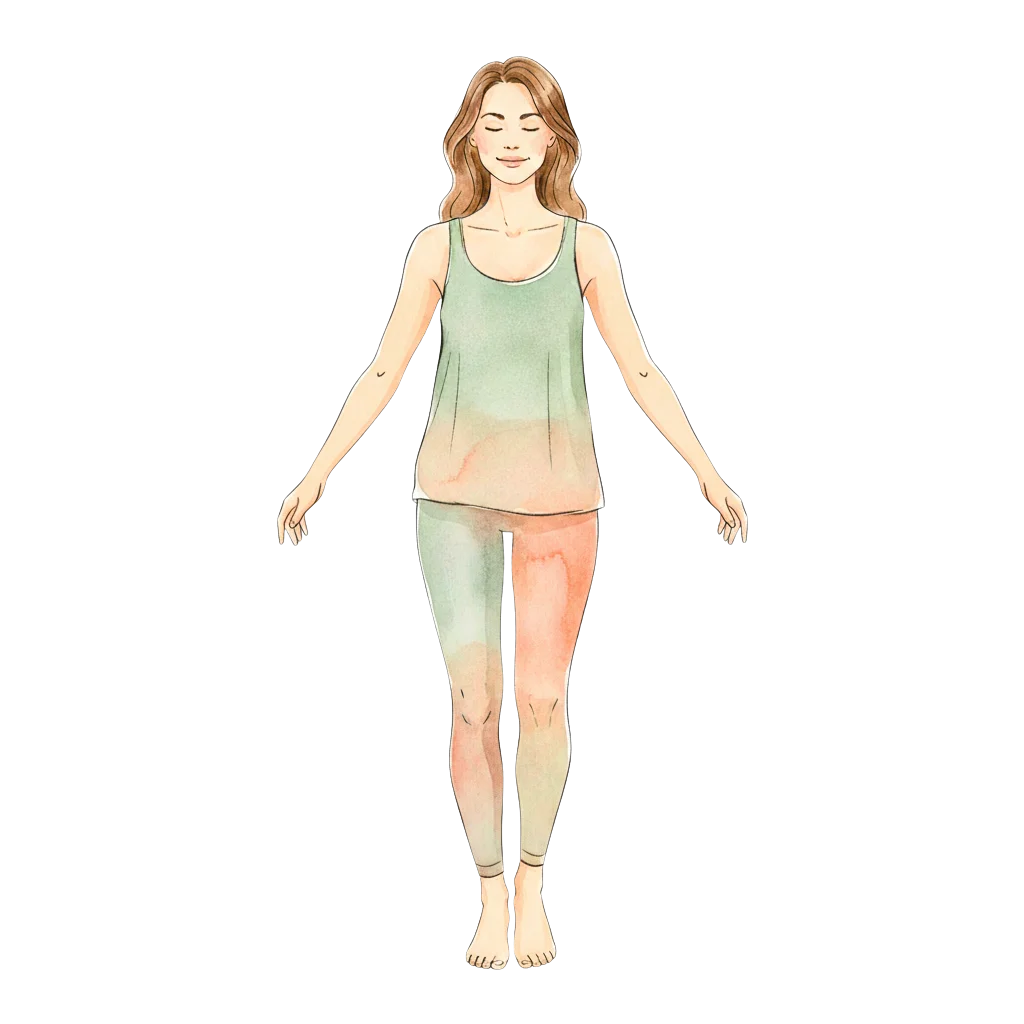
Tap body zones to discover connected symptoms and related conditions.
Join 77+ women discussing chronic illness
Real experiences shared across Reddit, TikTok, and health forums
Forcing myself to *really* get dressed and getting outside every day even when I don’t have to. Even if it’s a clean matching sweat suit and putting some earrings on and taking the dogs for a short...
I could have written this minus a few details (I have two kids, one marriage), but he was the fun friend, I was the adult parent. Lots and lots of missing details, but I cannot stay here....
I am in disbelief myself sometimes🤣 #chronicillness #chronicillnessawareness #chronicpain
I am in disbelief myself sometimes🤣 #chronicillness #chronicillnessawareness #chronicpain
Reading others' stories is the first step. Join to share yours.
Community
A safe space for women navigating chronic illness
Frequently asked questions
Common questions about Chronic illness
How we research and fact-check
Every article on Wellls is researched using peer-reviewed medical literature, clinical guidelines, and real patient experiences from 4 online discussions.
Sources: We reference 42 PubMed-indexed studies, ACOG/NAMS clinical guidelines, and validated screening tools.
Review: Content is written by our editorial team, enriched from a medical knowledge base of 15,000+ sources. Evidence standards and clinical methodology guided by our Medical Advisory Board: Dr. Alexandra Rybakova and Dr. Alexander Rybakov, Lifestyle Medicine Physicians with 35+ years combined clinical practice.
This content is for informational purposes only and does not constitute medical advice. Our editorial standards · Medical advisory board
References
42 sources reviewed for this chronic illness guide
- 1.PMC review (2024). Severe mental illness and the perimenopause
- 2.Expert consensus (2024). Menopause depression: Under recognised and poorly treated
- 3.Systematic review (2024). Effects of exercise on depression and anxiety in postmenopausal women
- 4.Expert panel (2018). Guidelines for evaluation and treatment of perimenopausal depression
- 5.Frontiers in Psychology (2024). Association between chronic diseases and depression in middle-aged (CHARLS)
- 6.Mahmoodzadeh et al. (2024). Dimensions of Resilience Among Women with Autoimmune Conditions
- 7.THORESCI study (2024). Chronic stress exposure and implications for chronic disease
- 8.Review (2024). Exercise and inflammatory bowel disease: effects on symptoms and QOL
- 9.Systematic review (2024). Midlife progression: systematic review of middle-aged women's experiences
- 10.Fatigue journal (2024). Pacing for management of ME/CFS: systematic review and meta-analysis
History of updates
Current version (March 11, 2026) — Content reviewed and updated based on latest research
First published (March 9, 2026)
Explore related problems
Women who experience chronic illness often also deal with these
Your personalized plan is ready
You've been managing your health like a second job. The appointments, the medications, the explanations, the performance of wellness. Our programme doesn't add to your to-do list. It gives you evidence-based pacing protocols, anti-inflammatory strategies, and a community of women who understand what 'How are you?' actually means when you're living with chronic illness in midlife.
1,294 women explored their chronic illness plan this month
Free assessment · Takes 2 minutes · No account required
Medical disclaimer: This content is for informational purposes only and does not constitute medical advice, diagnosis, or treatment. Always consult a qualified healthcare provider for personal medical decisions. Content is based on peer-reviewed research and updated regularly. Learn about our editorial standards.