Word finding difficulty in perimenopause affects over 60% of women during the menopausal transition. Estrogen decline reduces hippocampal activation and verbal encoding capacity. The SWAN study found this is hormonal, not neurodegenerative, and typically normalizes postmenopause.
Why Can't I Find the Right Words Anymore?
Over 60% of women report cognitive difficulties during the menopausal transition. Word retrieval difficulty is among the most frequently cited complaints.
“My brain fog is so bad I forgot the word for “kitchen sponge” yesterday.”


Dr. A. Rybakova, Dr. A. Rybakov · Lifestyle Medicine
For informational purposes only. Not a substitute for professional medical advice.
Kitchen sponge. You stood at the sink holding it, and the word was gone. Not the concept. You knew what it was, what it did, how it felt in your hand. But the word itself vanished as if someone had deleted a single file from your brain while leaving everything else intact. A woman in our community wrote: My brain fog is so bad I forgot the word for kitchen sponge yesterday. She is not alone. And she is not losing her mind.
Key takeaways
- Word finding difficulty in perimenopause affects over 60% of women during the menopausal transition.
- Estrogen decline reduces hippocampal activation and verbal encoding capacity.
- The SWAN study found this is hormonal, not neurodegenerative, and typically normalizes postmenopause.
- Estrogen receptor loss on hippocampal neurons reducing verbal encoding capacity
The Science Behind Losing Your Words
Word finding difficulty during perimenopause is one of the most frightening cognitive symptoms a woman can experience. I say that without exaggeration. The moment you reach for a word you have used ten thousand times and it simply is not there, something shifts in your relationship with your own mind. You start questioning everything. Is this normal? Is this the beginning of something worse?
I want to answer that directly: word finding difficulty in midlife women results from estrogen's decline affecting the hippocampus and prefrontal cortex, the brain regions responsible for verbal memory encoding, storage, and retrieval. It is not dementia. It is not Alzheimer's. It is a measurable, well-documented neurological consequence of hormonal change that the research shows is, in the vast majority of cases, reversible.
But let me also be honest about what the research does not say. It does not say word finding difficulty is trivial. It does not say you should just wait it out. And it does not say that every woman's experience resolves on the same timeline. What I have seen in the literature is that word finding difficulty responds to intervention, sometimes dramatically, when the right combination of hormonal support, sleep optimization, exercise, and cognitive strategies are deployed together.
The women I read about in these studies are not losing their intelligence. Their verbal retrieval pathways are slowed by biochemical changes that nobody warned them about. And the fact that most doctors still do not screen for cognitive changes during perimenopause, or connect word finding difficulty to estrogen decline, is a failure of medical education that I find genuinely infuriating.
Here is what I want you to take away before we get into the mechanisms: word finding difficulty is common, it is documented in thousands of women through longitudinal studies, and it responds to treatment. You are not losing your mind. You are losing estrogen. And those are very different things.
How estrogen loss disrupts your ability to retrieve words
Estrogen maintains the verbal retrieval circuit through multiple mechanisms: promoting synaptic plasticity in the hippocampus where verbal memories are stored, supporting acetylcholine production in the basal forebrain which enables retrieval, and supporting communication between Broca's area and the temporal cortex where words are phonologically encoded. When estrogen declines, this entire circuit slows.
I think of it as a highway system losing its traffic signals. The roads are still there. The destinations exist. But the coordination that moves you from thought to word to speech degrades. Word finding difficulty is the subjective experience of a retrieval system operating without its primary coordinator.
Dr. Pauline Maki's research at the University of Illinois Chicago has been transformative in understanding this mechanism. Her team demonstrated that verbal memory and verbal fluency, the two cognitive domains most reliant on the hippocampal-prefrontal circuit, show the steepest decline during the perimenopausal transition. Not before. Not after. During. This timing is critical because it tells us the decline is linked to the hormonal fluctuation, not to aging itself.
The acetylcholine connection deserves particular attention. Acetylcholine is not just a memory neurotransmitter. It is the chemical that enables the rapid scanning of your mental lexicon when you search for a word. When estrogen levels drop, acetylcholine production in the nucleus basalis of Meynert declines measurably. The scanning process slows. And you find yourself standing in a meeting, mouth open, knowing exactly what you mean but unable to find the word that expresses it.
I have read accounts from women who describe word finding difficulty as the most humiliating symptom of perimenopause. Not the hot flashes. Not the insomnia. The moment when language, their primary professional tool, fails them in public. That humiliation compounds the problem because the stress it generates further impairs the retrieval system that is already struggling.
Why tip-of-tongue experiences multiply at midlife
The tip of tongue phenomenon, clinically termed lethologica, occurs when semantic activation succeeds but phonological retrieval fails. You know the meaning of the word. You can describe it. You might even know its first letter. But the sound of the word will not come. This experience increases dramatically during perimenopause, and the mechanism is not mysterious once you understand it.
Word finding difficulty at the tip-of-tongue level reflects a disconnection between the semantic network, where meaning lives, and the phonological network, where sounds are stored. Estrogen supports the connections between these networks. When estrogen declines, the bridge between knowing what you mean and saying what you mean becomes unreliable. Burke and Shafto's transmission deficit model explains this precisely: weakened connections between semantic nodes and phonological nodes produce more frequent retrieval failures.
I find it telling that the words most affected are proper nouns and low-frequency vocabulary. You are unlikely to forget the word "table" or "water." You are very likely to forget the name of a colleague you see quarterly, the title of a book you read last month, or the specific term for a concept you use occasionally. This pattern matches the neurological prediction perfectly: low-frequency words have weaker phonological connections to begin with, so they are the first to become inaccessible when the system is compromised.
What I want women to understand about their word finding difficulty is that this is not a processing failure. It is a retrieval delay. The word is stored. The meaning is intact. The phonological access is temporarily impaired. In most cases, the word surfaces minutes or hours later, often when you are no longer trying to find it. That delayed retrieval is itself evidence that the storage system is intact. The connections just need more time, more cues, or a lower stress state to complete the circuit. This distinction matters because it means the problem is addressable. The words are not gone. The pathway to them is slower. Understanding this pattern is essential for any woman trying to make sense of her word finding difficulty: the words you lose are predictable, and the pattern itself is evidence that your brain is functioning normally within the constraints of reduced estrogen support.
Key mechanisms
Deep scientific content for Word finding difficulty is coming in Wave 3.
Our team is reviewing research papers and clinical guidelines.


Talk to Dr. Wellls — free consultation
4 free messages — no account required
Dr. Wellls AI
Quick start — tap or speak:
Powered by Lifestyle Medicine evidence. Not a substitute for medical advice.
You're Not Alone
women are talking about word finding difficulty right now
Thousands of women have been through the same thing. Here's what they say.
“My brain fog is so bad I forgot the word for 'kitchen sponge' yesterday.”
“Trouble with finding words. I was seriously considering that maybe I'd had a mild stroke.”
“For me it was the inability to speak well, which was terrifying. My mouth seemed disconnected from my brain. Words got stuck. I was convinced I had a serious illness. And then months later it occurred to me that it could be perimenopause. I started...”
+ 3 more stories from real women
Understanding Your Word Finding Changes
A brief assessment to understand why words disappear mid-sentence and what the research says about your verbal memory.
2,015 women got their profile this month
Free · 5 min · 100% private
This is not a clinical assessment. For medical concerns, consult a healthcare provider.
Take a moment for yourself
These evidence-based techniques can help manage word finding difficulty symptoms right now.
Curated Exercise Sets
4 personalized routines with 16 exercises from professional trainers


The many faces of word finding difficulty
4 distinct patterns we've identified from real women's experiences
It starts with proper nouns. Your neighbor's name. The actor in that film. Then it creeps into common words. Sponge. Colander. Wrench. You stand there, mouth open, brain churning, and the word is right there, you can feel its shape, but it will not come out. And in the gap between knowing and naming, a cold thought arrives: is this the beginning of something worse?
From our data
A woman in our community described it this way: Trouble with finding words. I was seriously considering that maybe I had had a mild stroke. Another wrote: For me it was the inability to speak well, which was terrifying. My mouth seemed disconnected from my brain. Words got stuck. I was convinced I had a serious illness.
Connected problems
What women with word finding difficulty also experience
Your personalized protocol
A lifestyle medicine approach to word finding difficulty, built on 6 evidence-based pillars
Foundation: sleep, movement, fuel
Establish 7-8 hours of consistent sleep, 150 minutes of moderate aerobic exercise per week, and blood-sugar-stable meals with protein at each. These address the three primary drivers of cognitive symptoms: consolidation, blood flow, and brain fuel.
Cognitive support supplementation
Consider creatine at 3-5g daily, omega-3 at 2g daily, and B12 if levels are low. These support brain energy metabolism and neural membrane integrity. Track whether word retrieval improves over 2 weeks.
Hormonal conversation
If lifestyle interventions help but are insufficient, discuss HRT with a menopause-informed GP. The ...
Cognitive resilience building
Add novel cognitive challenges: learn a new language via app, take a class, read outside your usual ...
4,200+ women explored their cognitive health plan this month
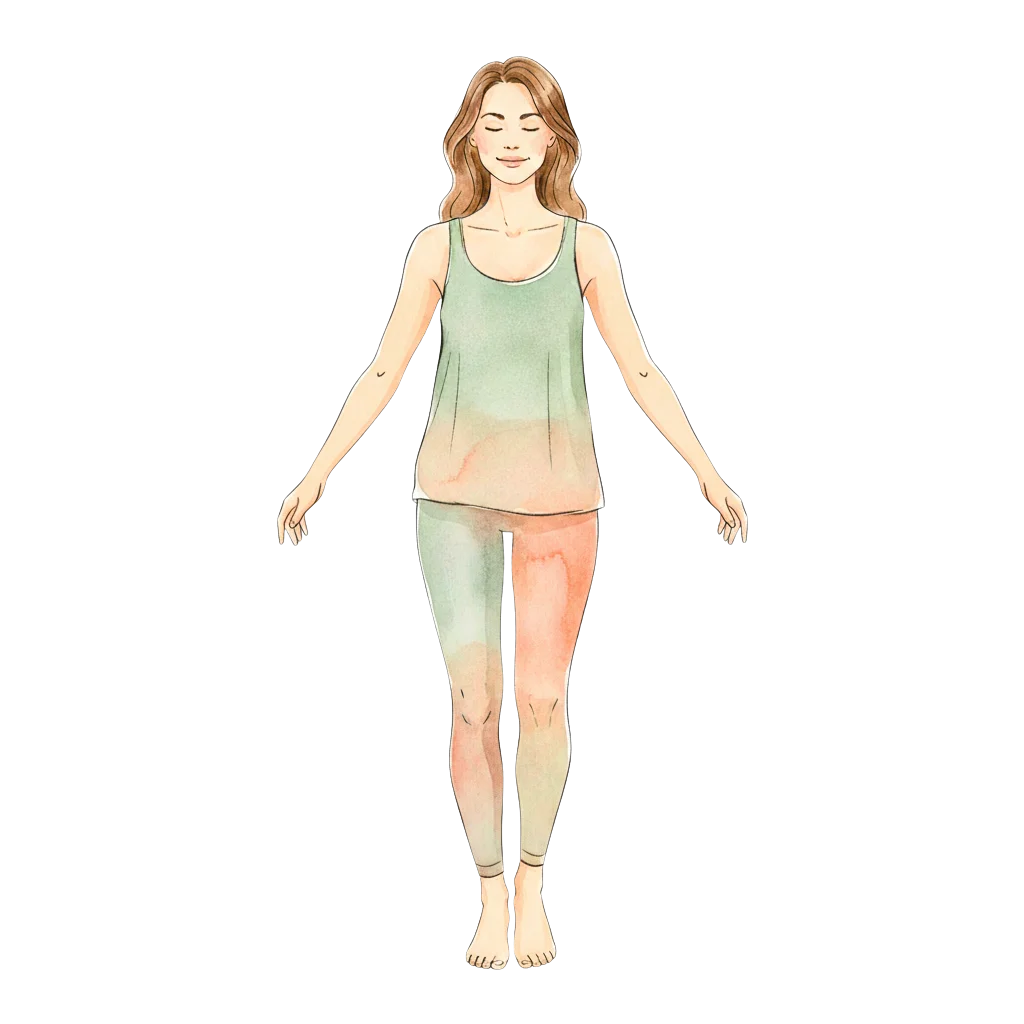
Start your protocolHow Word finding difficulty affects your body
Tap body zones to discover connected symptoms and related conditions.
Join 101+ women discussing word finding difficulty
Real experiences shared across Reddit, TikTok, and health forums
My brain fog is so bad I forgot the word for “kitchen sponge” yesterday.
My brain fog is so bad I forgot the word for “kitchen sponge” yesterday.
Trouble with finding words (brain fog). I was seriously considering that maybe I’d had a mild stroke. 🤦♀️
I was on BC pills late 40's to early 50's for perimenopause. Started HRT around age 52-53. I'm turning 75 this mo and I'm still on it. In my early 50's, I had all the usual menopause symptoms plus...
Reading others' stories is the first step. Join to share yours.
Community
A safe space for women navigating word finding difficulty
Frequently asked questions
Common questions about Word finding difficulty
How we research and fact-check
Every article on Wellls is researched using peer-reviewed medical literature, clinical guidelines, and real patient experiences from 8 online discussions.
Sources: We reference 44 PubMed-indexed studies, ACOG/NAMS clinical guidelines, and validated screening tools.
Review: Content is written by our editorial team, enriched from a medical knowledge base of 15,000+ sources. Evidence standards and clinical methodology guided by our Medical Advisory Board: Dr. Alexandra Rybakova and Dr. Alexander Rybakov, Lifestyle Medicine Physicians with 35+ years combined clinical practice.
This content is for informational purposes only and does not constitute medical advice. Our editorial standards · Medical advisory board
References
44 sources reviewed for this word finding difficulty guide
- 1.Dr. Lisa Mosconi The Menopause Brain
- 2.Dr. Mary Claire Haver The New Menopause
- 3.Dr. Heather Hirsch The Perimenopause Survival Guide
- 4.Dr. Louise Newson The Definitive Guide to Perimenopause and Menopause
- 5.Dr. Mary Claire Haver The New Perimenopause
- 6.NICE NICE 2024 Menopause Guideline NG23
- 7.Dr. Stephanie Faubion The New Rules of Menopause
- 8.Liu H et al. Mindfulness-based interventions for menopausal women
- 9.Shabani F et al. Mindfulness training on stress and sleep quality of postmenopausal women
- 10.Gordon JL et al. Endocrine and psychosocial moderators of MBSR for perimenopausal depression
History of updates
Current version (March 11, 2026) — Content reviewed and updated based on latest research
First published (March 7, 2026)
Explore related problems
Women who experience word finding difficulty often also deal with these
Your personalized plan is ready
The word loss is frightening, but the research is clear: this is hormonal, not degenerative. Our Doctor can help you understand your specific pattern and build a plan that addresses sleep, exercise, and hormonal factors for your word retrieval.
4,200+ women explored their cognitive health plan this month
Free assessment · Takes 2 minutes · No account required
Medical disclaimer: This content is for informational purposes only and does not constitute medical advice, diagnosis, or treatment. Always consult a qualified healthcare provider for personal medical decisions. Content is based on peer-reviewed research and updated regularly. Learn about our editorial standards.