Fix Your Posture — Workout 2
Exercise Breakdown
13 exercises in Workout 2
Strength7 exercises12m 5s
“I wanna make sure I've got that nice tucked under pelvis, my tummy is nice and hard.”
“Keep them tight up, and then also stay engaged from here as you come down.”
“Ten pulses... come slightly down, squeeze back up through the glutes.”
“Make sure we've got shoulder, hip, knee, nice straight line.”
“Pushing that belly button in towards the spine, tensing up through that core.”
“Really squeezing on that top glute there of the leg that I'm extending back with.”
Flexibility2 exercises3m 5s
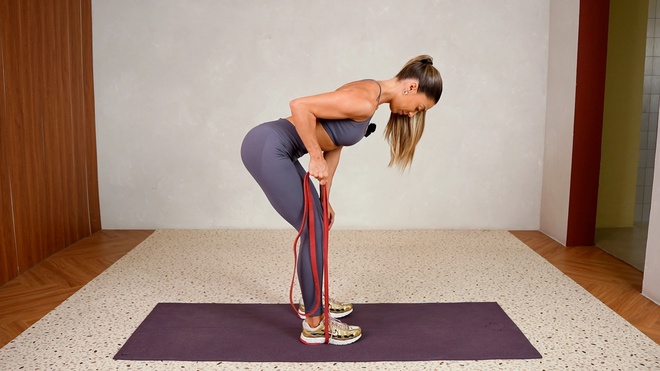
“Try and keep your posture nice and upright, so we're not folding here through the upper back.”
“Keep myself nice and upright, move the body forward, move with the stretch.”
Balance1 exercise1m 45s
“Think core nice and tight. Push through, get that nice straight alignment on the spine.”
Cool-down2 exercises2m 10s
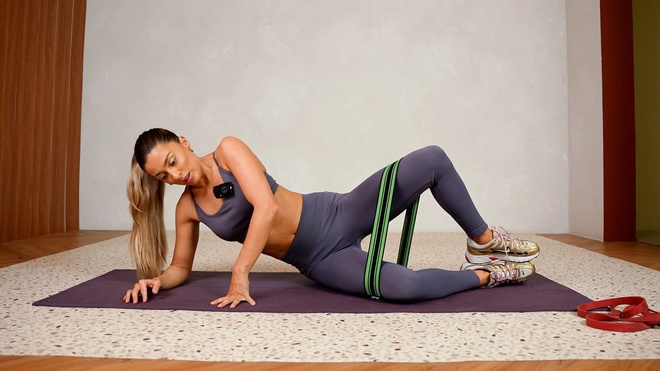
“Try and push the hips out towards the side, but keeping your back nice and straight.”
“Really kind of releases that tension through the lower spine.”
pilates1 exercise1m 50s
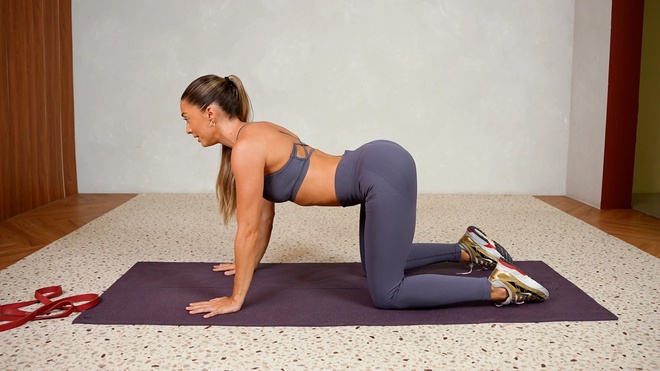
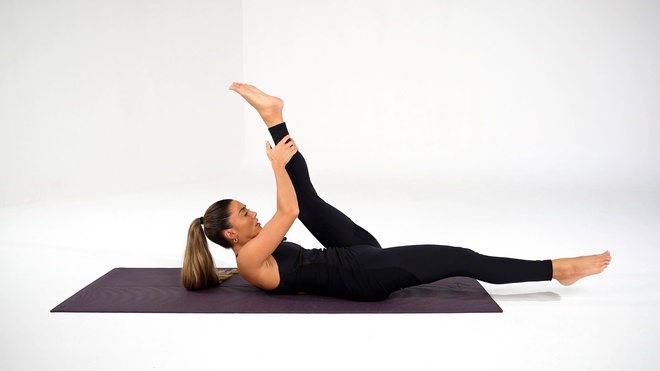
“I'm pushing my belly button down towards the floor, so I'm keeping that nice core contraction.”
Muscles Targeted
Primary
Secondary
Equipment & Modifications
Equipment Needed
- band
- mat
Don't Have Equipment?
You can substitute with:
Available Modifications
- Push down for a few seconds and release if it is super painful
- Add a loop band above the knees to make it tighter
- Bottom knee bent for support
Coaching Highlights from Sophie Jones
“I'm pushing my belly button down towards the floor, so I'm keeping that nice core contraction — I tell every new client the same thing: if you can't feel the muscle working, slow down until you can. Speed is not the goal.”
Form
“As I lift my leg off the floor, what I don't wanna happen is my hips drop too far down. This is non-negotiable — I've seen the injury that happens when you skip this step, and it's not worth the two extra reps.”
Safety
“Really kind of releases that tension through the lower spine. Some days you show up and everything clicks. Other days it's a fight from the first rep. Both count.”
Motivation
“Sophie teaches like a physiotherapist who happens to coach workouts. Every cue has anatomical intent behind it. When she says 'feel the connection,' she means a specific muscle-brain pathway.”
Form
Health Benefits
Desk workers. Phone-scrollers. Anyone who wakes up feeling like they slept in a pretzel. If your upper back rounds forward, your neck aches by noon, and your hips feel locked after sitting — this 25-minute morning routine with Sophie Jones addresses exactly that pattern. Women in their 30s and 40s dealing with early postural changes from pregnancy, breastfeeding, or simply years of computer work will notice the difference within two weeks. It's not dramatic exercise. It's the maintenance your spine never got.
depression
90% relevantendorphin release; BDNF increase; serotonin boost; dopamine via goal completion
marriage strain
90% relevantstress reduction through parasympathetic activation; emotional regulation and mindfulness; endorphin release for mood elevation; structured routine for stability and self-care; improved body awareness and interoception
divorce consideration
90% relevantstress reduction through parasympathetic activation; endorphin release for mood elevation; establishing routine and structure during a period of upheaval; improving self-efficacy and body awareness; gentle energy boost without overstimulation
relationship communication breakdown
90% relevantStress reduction through parasympathetic nervous system activation; Improved emotional regulation and self-awareness; Enhanced body-mind connection to process emotions; Endorphin release for mood elevation and resilience; Establishment of a consistent self-care routine
motherhood burnout
90% relevantParasympathetic nervous system activation to reduce stress and anxiety; Improved body awareness and interoception to reconnect with self; Gentle strength building to combat physical fatigue and improve posture; Cortisol regulation through morning movement and mindful practices; Pelvic floor and core stability to address common postpartum physical stressors
Relevant For
Frequently Asked Questions
What does this morning workout focus on?
Posture correction and spinal mobility — specifically glutes, core, spine, with secondary attention to shoulders, lower back, hips. Morning exercise has unique benefits: a study by Morales-Palomo et al — found morning workouts reduce waist circumference and blood pressure more effectively than afternoon sessions. Sophie Jones designed this 25-minute routine to undo the damage from yesterday's sitting. Tight pecs, weak upper back, compressed spine — that's the modern woman's posture. This fixes it, one rep at a time. This is one of the most effective posture correction exercises sessions in the program.
What equipment do I need for this workout?
You'll need: band, mat. Don't have these? towel, light dumbbells work as substitutes — I've coached women through this with filled water bottles and it works. The resistance is what matters, not the brand. Sophie Jones shows form with standard equipment, but anything that adds load will do. Just make sure it's comfortable to grip — slippery objects and high-intensity moves don't mix. This pairs well with a resistance band for glutes exercises approach. This pairs well with a core strengthening exercises approach.
Is this workout suitable for beginners?
Built for beginners. Sophie Jones demonstrates modifications throughout — options like: Push down for a few seconds and release if it is super painful; Add a loop band above the knees to make it tighter. The pace allows you to learn form before adding speed — I always tell new clients: your first month of any program is about neural patterning, not muscle exhaustion. Your brain needs to learn the movement before your body can load it. This workout respects that. This pairs well with a upper glute exercises approach.
How long is this workout?
Approximately 25 minutes, including warm-up and cool-down. Sophie Jones wastes zero time — 13 exercises, no standing around, no 3-minute rest periods. The ACSM recommends 150 minutes of moderate or 75 minutes of vigorous exercise per week. Two or three of these sessions gets you there. That's 40-60 minutes per week of actual exercise. The rest of your week is yours.
Are there modifications available?
For every exercise. Sophie Jones cues modifications as they come up: Push down for a few seconds and release if it is super painful; Add a loop band above the knees to make it tighter; Bottom knee bent for support — I'll say this once: using a modification is not failing. It's choosing the version that lets you maintain form for the entire set. A half-range pushup with a flat back beats a full-range pushup with a sagging spine every time. Pick the version where your technique stays clean.
Why should I exercise in the morning?
Because the research says it works differently than afternoon exercise — and the difference matters. Morales-Palomo et al — found morning exercise reduces waist circumference and blood pressure more than the same workout done in the afternoon. A separate study showed morning exercisers had better sleep quality that same night. For women dealing with perimenopause-related sleep disruption, that's not trivial. Your circadian rhythm responds to morning movement. The rest of your day runs better because of it.
Can I do this workout if I have back pain?
These posture-correction exercises are often exactly what back pain needs — weak postural muscles and tight hip flexors are the most common drivers of non-specific lower back pain. A systematic review on posture correction through exercise found active training outperforms passive bracing. But 'back pain' covers a wide range. If you have sharp, shooting pain, numbness, or a recent injury — see your doctor first. For the dull, desk-job ache that builds up by 3 PM? This is your medicine.
How long before I see posture improvements?
Most women notice a difference within 2-3 weeks of consistent practice. Not structural change — that takes months. But you'll catch yourself sitting taller. Your shoulders will feel less hunched at your desk. The Pilates posture research shows measurable improvements in spinal alignment after 8-12 weeks of regular practice. Sophie Jones designed this series as a progressive program, so stick with it. Your body spent years learning bad posture. Give it more than a week to relearn good posture.
Related Workouts & Topics
More from Fix Your Posture
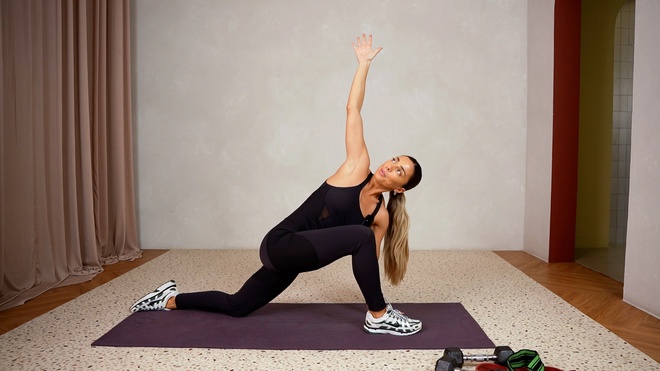
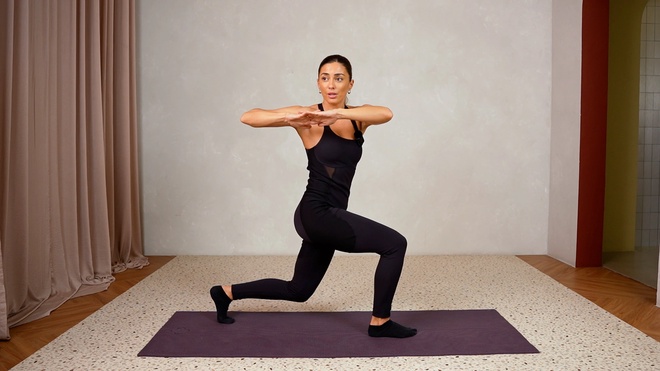
More with Sophie Jones
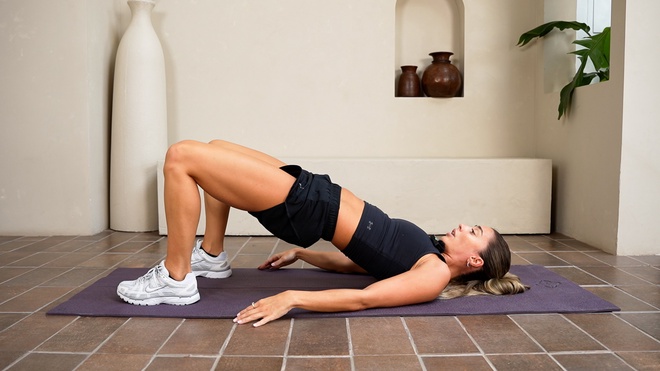
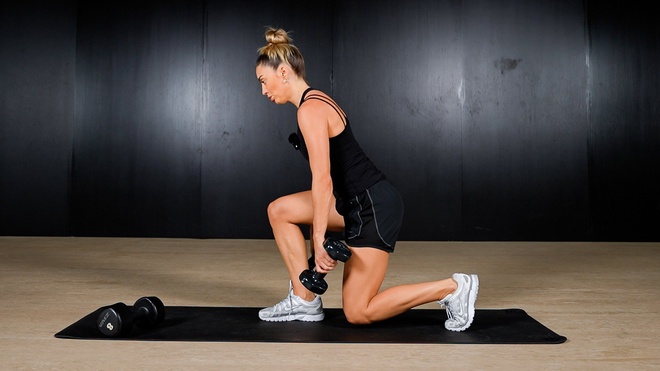
Browse Exercise Collections
Helpful For These Concerns
About the Trainer

Sophie Jones
Morning Exercise Trainer
From: Fix Your Posture