Strength Fundamentals — Workout 2
Exercise Breakdown
11 exercises in Workout 2
Warm-up2 exercises1m 44s
“Sit onto your bum, cross your legs, and we're just gonna do a nice lat stretch.”
“Try and push into the feet, push into the heels, and then just opening out those hips.”
Strength7 exercises28m 17s
“Keep the chest forward, drag it, and pull it into you.”
“Squeezing the abs, squeezing the core, push through there.”
“Imagine you're trying to pinch a pencil between your shoulder blades.”
“Squeezing those hamstrings, squeezing them glutes as I go.”
Cool-down2 exercises2m 25s
“Stretch out that core, stretch out them hips.”
“Walk over to one side, stretch through, hold it there.”
Muscles Targeted
Primary
Secondary
Equipment & Modifications
Equipment Needed
- dumbbells
Don't Have Equipment?
You can substitute with:
Available Modifications
- Stay on toes if lacking flexibility
- Hold onto a chair for balance
- Stand higher if experiencing lower back pain
- Use one heavy dumbbell or two lighter ones
- Perform from the knees
- Perform from the toes
- Feet on the floor
- Feet lifted up
Coaching Highlights from Sophie Jones
“Try and push into the feet, push into the heels, and then just opening out those hips — I tell every new client the same thing: if you can't feel the muscle working, slow down until you can. Speed is not the goal.”
Form
“Front foot is nice and flat. We're not driving through the knees. This is non-negotiable — I've seen the injury that happens when you skip this step, and it's not worth the two extra reps.”
Safety
“If you're getting lower back pain, just bring yourself up a little bit higher. Nobody gets a medal for collapsing halfway through. Pick the version where your form stays clean for the full set.”
Modification
“Sophie teaches like a physiotherapist who happens to coach workouts. Every cue has anatomical intent behind it. When she says 'feel the connection,' she means a specific muscle-brain pathway.”
Form
Health Benefits
Women in their 30s and 40s who haven't touched a weight in years — or ever. This 30-minute beginner session with Sophie Jones is built for you. If you're noticing that everyday things feel heavier, that your grip is weaker, that you can't open jars as easily — that's sarcopenia starting. Not a disease. A process. And resistance training is the one intervention proven to reverse it. You don't need to be fit to start. You need to start to get fit.
unexplained weight gain
90% relevantmuscle mass preservation (metabolic rate); insulin sensitivity improvement; cortisol management; body composition over scale weight
doctor dismissal
90% relevantParasympathetic nervous system activation to reduce stress and anxiety often associated with medical gaslighting.; Improved body awareness and interoception to help women better articulate symptoms and advocate for themselves.; Enhanced core strength and stability to build physical resilience and a sense of groundedness.; Increased self-efficacy and confidence through mastery of movement, empowering women to trust their own bodies.; Gentle strength building to support overall health and combat the physical toll of chronic stress.
hormone imbalance
90% relevantStress reduction and cortisol regulation through parasympathetic activation (Yoga, Pilates); Improved insulin sensitivity and metabolic health (Strength Training, moderate Cardio); Support for bone density, crucial for hormonal changes (Strength Training); Enhanced circulation and lymphatic flow (Yoga, Stretching); Pelvic floor health and core stability (Pilates, Yoga); Improved sleep quality and circadian rhythm regulation (Morning Exercise, Yoga)
menopause education gap
90% relevantbone density support through resistance training; hormonal regulation and stress reduction via parasympathetic activation (Yoga); pelvic floor and core stability for symptom management (Pilates); improved mood and cognitive function through regular movement; enhanced body awareness and self-efficacy
aging appearance
90% relevantIncreased collagen production and skin elasticity through resistance training; Improved circulation and nutrient delivery to skin cells; Enhanced muscle definition and tone to reduce appearance of sagging; Better posture to create a more youthful and confident appearance; Stress reduction and cortisol management (via Yoga/Pilates) to mitigate cellular aging; Improved lymphatic drainage to reduce puffiness
Relevant For
Frequently Asked Questions
What muscles does this strength workout target?
Primary: core, upper back, hips. Secondary: hamstrings, glutes, shoulders. But I want to be honest about what 'target' means in a core strengthening exercises context — it means loading those muscles enough to trigger adaptation. A 2024 systematic review by Gonzalez-Galvez et al — confirmed resistance training increases lean mass and reduces body fat in postmenopausal women. Sophie Jones programs 11 exercises across 30 minutes, which gives you enough volume per muscle group to actually matter. Not enough to be a bodybuilder. Enough to be strong where it counts.
What equipment do I need for this workout?
You'll need: dumbbells. Don't have these? water bottles, canned goods work as substitutes — I've coached women through this with filled water bottles and it works. The resistance is what matters, not the brand. Sophie Jones shows form with standard equipment, but anything that adds load will do. Just make sure it's comfortable to grip — slippery objects and high-intensity moves don't mix. This pairs well with a lower back dumbbell exercises approach. This pairs well with a resistance band workout approach.
Is this workout suitable for beginners?
Built for beginners. Sophie Jones demonstrates modifications throughout — options like: Stay on toes if lacking flexibility; Hold onto a chair for balance. The pace allows you to learn form before adding speed — I always tell new clients: your first month of any program is about neural patterning, not muscle exhaustion. Your brain needs to learn the movement before your body can load it. This workout respects that. This pairs well with a resistance band exercises approach.
How long is this workout?
Approximately 30 minutes, including warm-up and cool-down. Sophie Jones wastes zero time — 11 exercises, no standing around, no 3-minute rest periods. The ACSM recommends 150 minutes of moderate or 75 minutes of vigorous exercise per week. Two or three of these sessions gets you there. That's 40-60 minutes per week of actual exercise. The rest of your week is yours.
Are there modifications available?
For every exercise. Sophie Jones cues modifications as they come up: Stay on toes if lacking flexibility; Hold onto a chair for balance; Stand higher if experiencing lower back pain — I'll say this once: using a modification is not failing. It's choosing the version that lets you maintain form for the entire set. A half-range pushup with a flat back beats a full-range pushup with a sagging spine every time. Pick the version where your technique stays clean.
How heavy should my weights be?
Heavy enough that the last 2-3 reps feel genuinely challenging. If you can chat easily through every set, go heavier. A 2024 RCT by Ioannidou et al — showed the combination of free weight training with progressive overload produced the best body composition changes in postmenopausal women. Sophie Jones demonstrates with a specific weight, but your body is different. Start conservative, increase by 1-2 lbs every week or two. Progressive overload — not starting heavy — is how you get strong.
Will strength training make me bulky?
No. And I'm tired of this question existing, but I understand why it does. Women don't have the testosterone levels to build massive muscle naturally. What resistance training does: it builds lean tissue that raises your resting metabolic rate, strengthens your bones, and makes daily life easier. Martins Sa et al — reviewed dozens of studies — postmenopausal women who strength trained gained modest muscle and lost significantly more fat. You'll look leaner, not bigger. That's physiology, not opinion.
How often should I do strength training?
Two to three times per week is the evidence-based recommendation. The UK consensus statement on exercise for bone health (Brooke-Wavell et al., 2022) recommends progressive resistance training 2-3 days/week for osteoporosis prevention. Your muscles need 48-72 hours to repair and adapt. Sophie Jones programs this series so you can do Workout 1, rest a day, then do Workout 2. That rhythm works. Consistency over intensity, every time.
Related Workouts & Topics
More from Strength Fundamentals
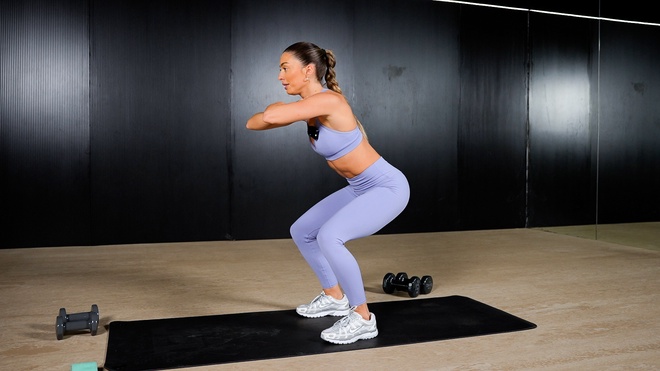
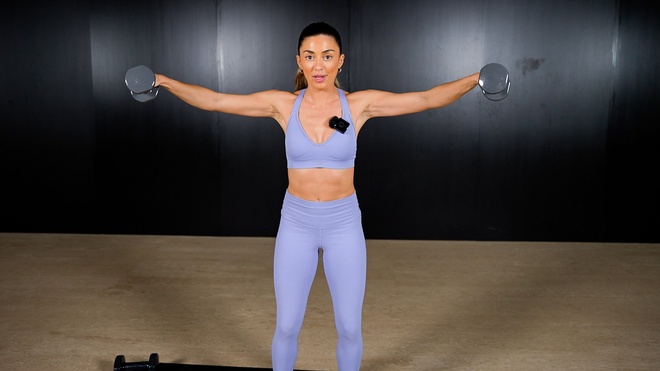
More with Sophie Jones
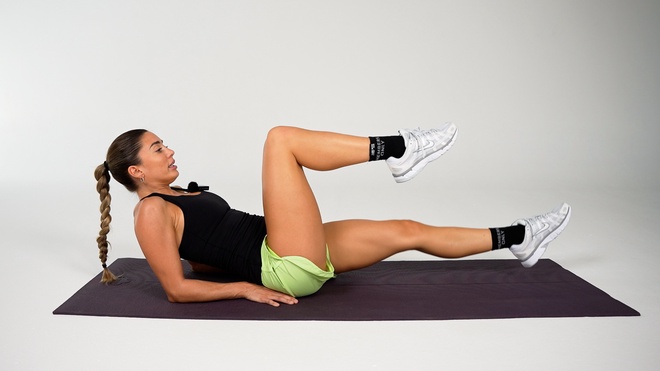
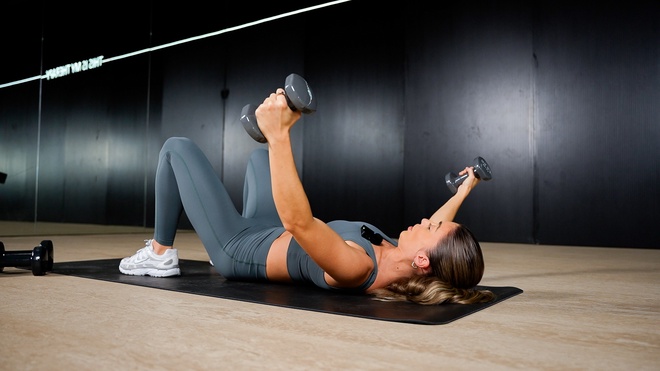
Browse Exercise Collections
Helpful For These Concerns
About the Trainer
Sophie Jones
Strength Training Trainer
From: Strength Fundamentals