Yoga Body Balance — Session 5
Exercise Breakdown
17 exercises in Session 5
Warm-up3 exercises2m 28s
“Inhale, lift the arms up, and on your exhale, rotate the wrists down.”
“Flick the fingers as fast as you can.”
“Shifting the body weight forward onto your wrists, spread your palms out.”
Strength3 exercises3m 49s
“Sending the arms back like wings, and then lifting up to the top.”
“Pushing through the heels, coming up nice and slow.”
“Coming down a bit deeper every time, pointing through the toe.”
Flexibility4 exercises5m 27s
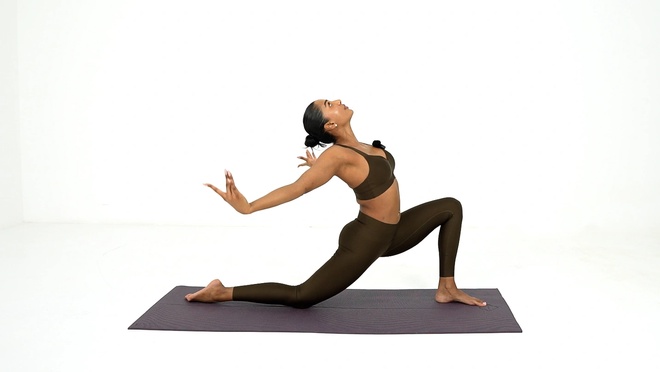
“Slowly lower the back knee down. As we do that, we push the hips down.”
“Think of a very strong back leg. Can we lower down onto the forearms?”
“Notice how you feel lowering onto the forearms... maybe you can rock side to side.”
Balance3 exercises3m 17s
“Squeeze your core in, hug your right knee into the chest.”
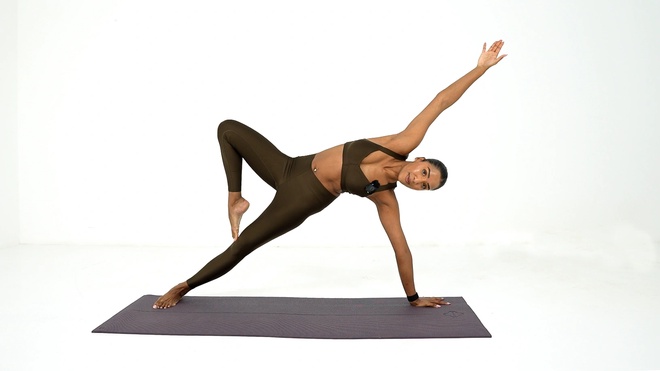
“Shift your weight forward, and then gently lift the back leg.”
“Walk the fingertips forward, and gently lift the back leg up. Flex the foot.”
Cool-down1 exercise1m 7s
“Hands down to your lower back, roll the shoulders back, push the hips forward.”
yoga3 exercises3m 18s
“Melting the chest down a bit more, squeezing the biceps, lifting the tailbone a little higher.”
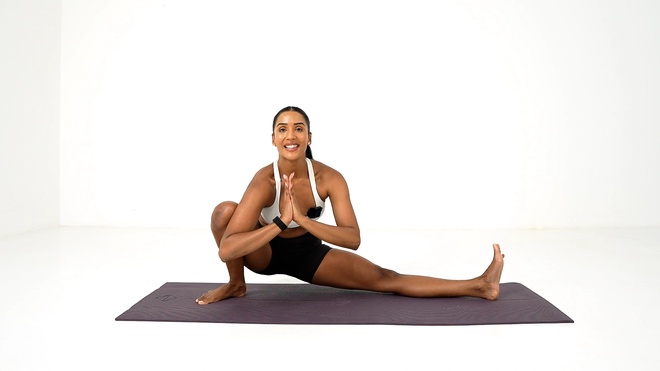
“Bend your right knee, lowering the right hand in front of the right foot. Straighten your left leg.”
“Look under the left hand. Index and middle finger touch.”
Muscles Targeted
Primary
Secondary
Equipment & Modifications
Equipment Needed
- mat
Don't Have Equipment?
You can substitute with:
Available Modifications
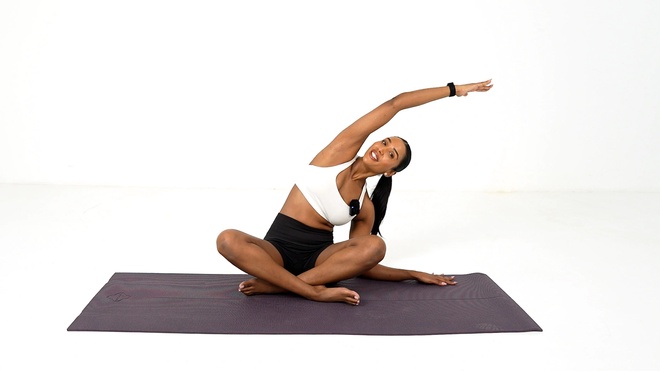
- Hold the stretch longer on one side if desired
- Hand to lower back
- Hand to inside of thigh
- Interlace hands behind back
- Stay on hands instead of forearms
- Bend back knee and hold foot (Chapasana)
- Stay on forearms
- Extend arms fully and lower forehead
Coaching Highlights from Mish Naidoo
“Bend your right knee, lowering the right hand in front of the right foot. Straighten your left leg.”
Form
“If you can bend the back knee, hold your foot and kick this foot up into our hand.”
Modification
“It pumps the blood into the forearms... so during our planks and chaturangas, we feel a lot stronger.”
Motivation
“I believe movement should feel good first and challenge you second. When I design a stretch sequence, I'm thinking about the woman who's been hunched over her laptop for eight hours, the one whose shoulders live somewhere near her ears. We start gentle. We earn the deeper stretches.”
Form
Health Benefits
Women navigating Pelvic Floor, anxiety will find this session particularly relevant. The focus on hips and glutes addresses the specific tension patterns and movement deficits that often accompany these conditions. No prior experience needed — every movement has a modification.
pelvic floor weakness
90% relevantpelvic floor strengthening; core stability; breathwork
anxiety
90% relevantparasympathetic activation; cortisol reduction; GABA boost via rhythmic movement
insomnia
90% relevantmelatonin support via relaxation; nervous system downregulation; muscle tension release
low libido
90% relevantpelvic floor strengthening; blood flow to pelvis; body reconnection; parasympathetic activation
depression
90% relevantendorphin release; BDNF increase; serotonin boost; dopamine via goal completion
Relevant For
Frequently Asked Questions
What muscles does this yoga workout target?
The primary focus here is hips, glutes, shoulders. You will also feel work in your quads, spine — I designed these 17 movements across 25 minutes so each body area gets attention without rushing through transitions. The sequencing follows a natural flow that lets your body warm into deeper ranges gradually. Perfect for yoga poses for beginners. Great for anyone interested in yoga poses names. Great for anyone interested in yoga for lower back pain.
What equipment do I need for this workout?
You'll want mat. Don't have one? A thick towel, carpet works fine — I've taught this sequence with improvised props more times than I can count. The movement matters more than the equipment.
Is this workout suitable for beginners?
Yes. Absolutely. No prior experience needed. Every exercise includes form cues, and there are modifications throughout. Here is what I tell new students: if something feels wrong — sharp pain, dizziness, strain in your neck — back off. Yoga should challenge you, not punish you.
How long is this workout?
About 25 minutes, start to finish. That includes warm-up and cool-down — I never skip those, and neither should you. The main work covers 17 movements. Some days that flies by. Some days minute 20 feels like an hour. Both are normal.
Are there modifications available for this workout?
Yes. Modifications are cued throughout. Examples: Hold the stretch longer on one side if desired; Hand to lower back; Hand to inside of thigh — I've been teaching long enough to know that the 'full expression' of a pose isn't the goal. The goal is finding the version that challenges YOUR body without breaking it. Use every modification offered. That's not weakness — that's intelligence.
Do I need yoga experience for this class?
Yes — I built this for women who are either starting fresh or coming back after a break. Every exercise includes form cues, and there are modifications throughout. Here is what I tell new students: if something feels wrong — sharp pain, dizziness, strain in your neck — back off. Yoga should challenge you, not punish you.
How often should I do this yoga workout?
Two to three times per week is the sweet spot for most women. Daily is fine too if your body responds well — yoga is forgiving that way — I've seen better results from consistent shorter sessions than from one heroic weekend marathon. Pair it with a different movement style on alternate days — a walk, some light strength work, even just stretching at your desk.
Can yoga help with Pelvic Floor?
There is clinical evidence supporting yoga for Pelvic Floor. The mechanism: pelvic floor strengthening — I want to be honest though — movement is one piece. It's powerful, but it works best alongside sleep, nutrition, and stress management. If Pelvic Floor is significantly impacting your quality of life, talk to a specialist. This workout can be part of your plan, not your entire plan.
Why is breathing so important in yoga?
Breathing is not decoration. In yoga, your breath literally determines how deep you can go into a movement and how your nervous system responds. Exhale on effort, inhale on release — that's the basic pattern. But here is what most instructors don't say: if you can't breathe smoothly in a position, you've gone too far. Your breath is your honest feedback system. The diaphragmatic breathing in this session activates your parasympathetic nervous system — the 'rest and digest' mode that most women in their 30s and 40s desperately need more of. This session is particularly effective as a yoga for stress relief option.
Related Workouts & Topics
More from Yoga Body Balance
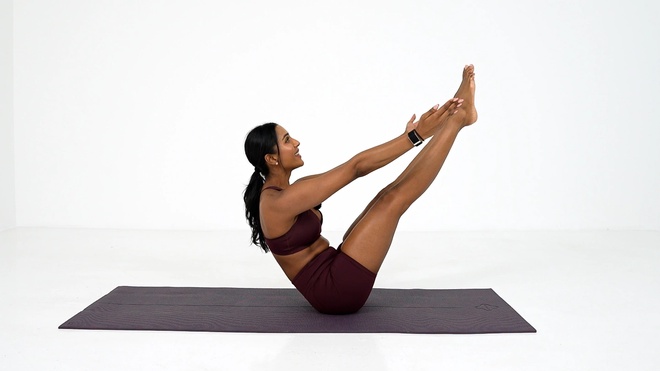
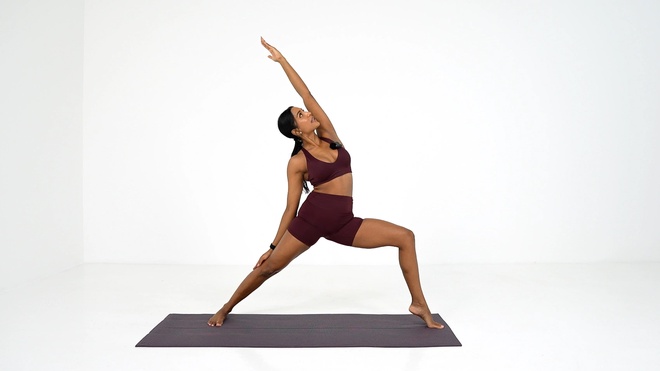
Browse Exercise Collections
Helpful For These Concerns
About the Trainer
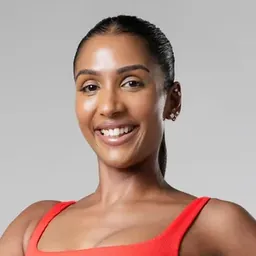
Mish Naidoo
Yoga Trainer
From: Yoga Body Balance