Back Health — Sciatica Exercises & Upper Back Stretches (Workout 6)
Exercise Breakdown
10 exercises in Workout 6
Warm-up2 exercises2m 54s
“Pull the belly button in as we breathe in, stacking the vertebrae on top of each other.”
“Exhale, move in the complete opposite direction, pulling the head and tailbone in.”
Strength4 exercises8m 16s
“Push the floor away, just like doing a plank except our legs are bent.”
“The hips don't want to lift; try to maintain the same bear plank height.”
“I'm not actually doing a push-up with my arms; I'm depressing and elevating the scapula.”
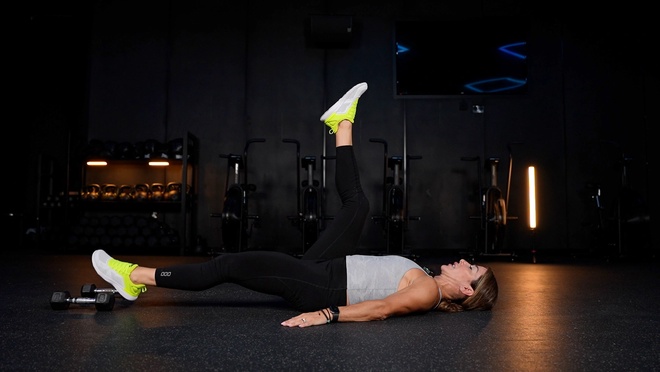
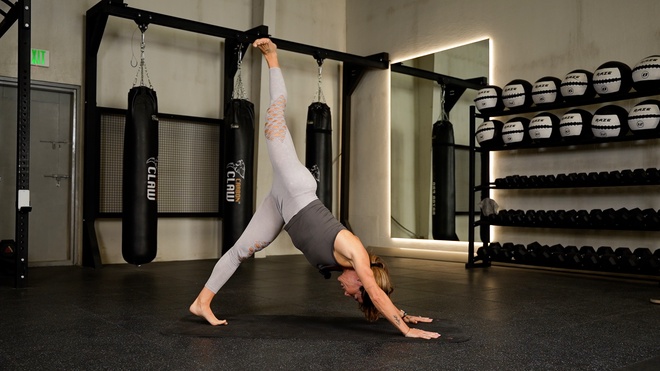
“Try and feel where the engagement is coming from; what is holding your leg up?”
Flexibility2 exercises3m 33s
“Inhale as we lift because we are extending and lengthening.”
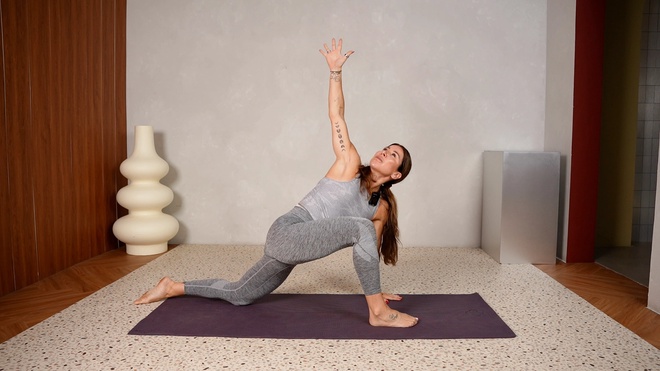
“Inhale, open, reach the hand up, taking it just a little bit further.”
Balance1 exercise3m 19s
“No movement in the torso; literally the leg is moving around inside of the hip joint.”
Cool-down1 exercise2m 43s
“Slide one arm under the gap to counterbalance the rotations.”
Muscles Targeted
Primary
Secondary
Equipment & Modifications
Equipment Needed
- mat
Don't Have Equipment?
You can substitute with:
Available Modifications
- Start with the first variation (hand to temple) before progressing to the full reach
- Make circles smaller to keep pelvis stable
- Tap foot down on the floor between circles for balance
- Take arms above head to work the core even more
- Can be performed against a wall
- Bottom knee can be bent for stability
- Flex the ankle to increase posterior leg engagement
Coaching Highlights from Linda Chambers
“I'm not actually doing a push-up with my arms; I'm depressing and elevating the scapula. People get confused by the name 'scapula push-up' — it looks like a push-up that's barely moving. But the movement is all in the shoulder blades: spreading apart, then squeezing back together. The arms stay straight. Your serratus anterior is doing all the work, and most people have never used it on purpose.”
Form
“Fingertips to the temples; try not to put your hand on the back of your head to avoid pulling the head forwards — I see this mistake in every class. Hand behind the head, elbow rotating — and the neck is doing the twisting, not the thoracic spine. Temple position keeps the neck out of it. The rotation should come from the ribcage, nowhere else.”
Safety
“Find our maximum range, and then find just a little bit more at the top. Thoracic rotation is one of those things where your body will give you 80% of your range out of habit, and then stop. The last 20% is where the stiffness lives. Hold at the end range, breathe into it, and let the ribcage open. That last little bit is where the real upper back stretches happen.”
Motivation
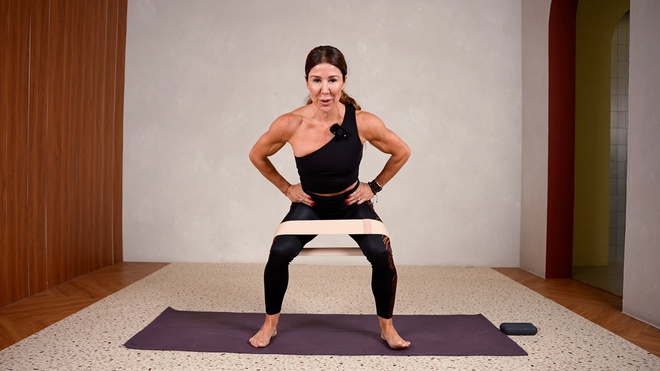
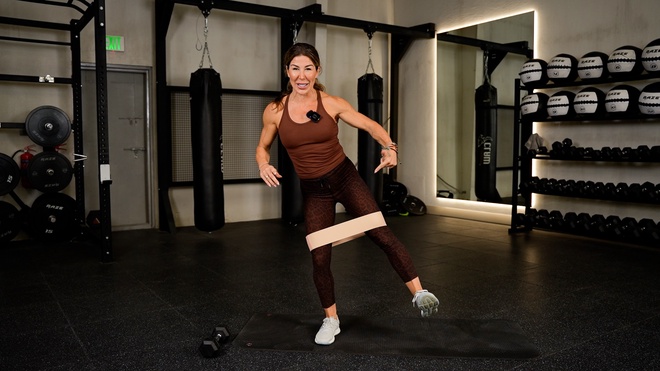
“No movement in the torso during hip circles — the leg moves independently within the hip joint. This is harder than it sounds. The hip wants to drag the pelvis along for the ride. Your core has to hold the pelvis dead still while the femur rotates. If you feel your torso rocking, make the circles smaller. The exercise is hip dissociation, not hip-and-everything-else movement.”
Form
Health Benefits
Two groups especially. First: women with sciatic-type symptoms from a tight piriformis — the 3D hip circles mobilize the deep hip rotators that sit directly on top of the sciatic nerve, and the side-lying leg lifts strengthen the gluteus medius so the pelvis stops dropping and pulling on that nerve. Second: desk workers with upper back and shoulder pain. The thoracic rotation sequence and scapula push-ups directly address the rounded, stiff upper back that comes from years at a keyboard. The bear plank and bear crawl are the most functional exercises in the entire Back Health course — they train patterns you actually use: lifting grocery bags, picking up children, getting off the floor.
body pain
90% relevantImproved range of motion and joint lubrication; Enhanced body awareness and proprioception to identify and correct movement patterns; Strengthening of stabilizing muscles (e.g., core, glutes) to support painful areas; Reduction of muscle tension and fascial restrictions; Parasympathetic nervous system activation for pain modulation and stress reduction
administrative post
90% relevantposture correction; spinal decompression; muscle activation (deep core); stress reduction; improved circulation
chronic pain
60% relevantpain gate modulation; endorphin release; joint mobility improvement; muscle tension release
workplace safety
60% relevantimproving postural alignment to reduce strain from repetitive tasks or prolonged sitting; enhancing body awareness to identify and correct ergonomic inefficiencies; increasing flexibility and range of motion to prevent musculoskeletal injuries; strengthening core and stabilizing muscles to support the spine and joints; reducing muscle tension and stress accumulation from workplace demands
nerve tingling
60% relevantNerve gliding and flossing to improve nerve mobility and reduce compression; Gentle stretching to release muscle tension that may impinge nerves; Improved posture and body mechanics to alleviate nerve impingement; Core and pelvic floor strengthening (Pilates) to support spinal health and reduce nerve pressure; Mindful movement (Yoga) to reduce pain perception and promote relaxation
Relevant For
Frequently Asked Questions
What muscles does this back pain workout target?
This workout splits its focus between two areas most people neglect. Up top: thoracic rotations mobilize the thoracic spine, scapula push-ups strengthen the serratus anterior and lower trapezius — a systematic review confirmed these are among the most effective exercises for correcting upper back posture. Down below: 3D hip circles and side-lying leg lifts target the gluteus medius and deep hip rotators. The bear plank and crawl tie it all together, challenging the entire shoulder girdle and core under load. It's a lower back workout that addresses what's happening above and below the lumbar spine.
What equipment do I need for this workout?
A mat for the floor exercises — thoracic rotations, bear plank, scapula push-ups, side-lying leg lifts. Thick towel or carpet works. The standing roll down and 3D hip circles are equipment-free.
Is this workout suitable for beginners?
Yes, with one honest caveat: the bear crawl is the most advanced exercise in the entire Back Health course — I've had clients who breeze through Workouts 1-5 and hit a wall here. That's fine. Stay with the static bear plank hold — knees one inch off the ground, hold it, breathe. The crawl adds movement, and you can get there when the hold feels stable. The thoracic rotations start simple (hands at temples) before adding the full arm reach. Every exercise has a regression. No ego required.
How long is this workout?
20 minutes, 10 exercises. The final workout in the Back Health course, but it keeps a beginner-friendly pace with breathing space between exercises. The ACSM recommends at least 20 minutes of neuromotor exercise 2-3 times per week. This session includes coordination work (bear crawl, hip circles) that most lower back workout routines skip entirely.
Are there modifications available for this workout?
For every exercise. Thoracic rotations: stay with hand-to-temple before trying the full arm reach. 3D hip circles: shrink the circles, or tap the foot down between each one for balance. Bear crawl: stay with the static bear plank hold. Scapula push-ups: do them against a wall instead of the floor if wrist pressure is an issue. Side-lying leg lifts: bend the bottom knee for stability — I cue all of these live.
What sciatica exercises are in this workout?
Three exercises go after sciatica specifically. The 3D hip circles mobilize the hip joint and release tension in the deep rotators — including the piriformis, which sits directly on top of the sciatic nerve and can compress it when it's tight. Side-lying leg lifts strengthen the gluteus medius; when this muscle is weak, the pelvis drops during walking and increases sciatic nerve tension. Thoracic rotations reduce compensatory lumbar rotation — because if your upper back won't twist, your lower back will, and that irritates lumbar nerve roots. Important: if your sciatica comes from a confirmed disc herniation with nerve compression, get your doctor's clearance first. These sciatica exercises are for muscular and postural causes.
What are the best upper back stretches for desk workers?
The thoracic rotation sequence in this workout. Two variations, both effective: hand-to-temple rotations target pure thoracic spine mobility. The arm reach version adds a shoulder opening component — upper back and shoulder stretches in one movement. Research on thoracic mobility shows these exercises improve posture and reduce strain on both the lower back and shoulders. But here's what makes this workout different from just stretching: the scapula push-ups strengthen the muscles that keep shoulder blades flat against the ribcage. Most desk workers don't need more stretching. They need mobility combined with the strength to hold the new position. That's what this session delivers.
What is a bear plank and why is it good for lower back workout?
A bear plank is not a full plank. You're on all fours — hands under shoulders, knees under hips — and you lift your knees one inch off the ground. Legs bent at 90 degrees. It looks unimpressive and feels brutal. The bent-knee position shifts the challenge to the quads and changes the center of gravity, making your core work differently than in a forearm plank. Clinical researchers actually use the bear plank to assess deep core function. The bear crawl adds coordinated movement — opposite hand, opposite foot, while keeping hips at that one-inch hover height. Both train the core through stabilization, not flexion. The spine doesn't bend. That's why it belongs in a lower back workout.
Are the best exercises for lower back pain the same as sciatica exercises?
Significant overlap, but not identical. The best exercises for lower back pain generally focus on core stability and spinal mobility — that's Workouts 1-4 in this course. Sciatica exercises add a specific layer: hip rotator mobility (3D hip circles), gluteus medius strengthening (side-lying leg lifts), and neural tension management. The sciatic nerve runs through or under the piriformis, so you need exercises that address the hip and pelvis, not just the spine. This workout combines both approaches — making it a lower back workout that also covers sciatic symptoms. If you have both issues, this is where the two tracks converge.
Related Workouts & Topics
More from Back Health


More with Linda Chambers
Browse Exercise Collections
Helpful For These Concerns
About the Trainer

Linda Chambers
Back Pain Trainer
From: Back Health